Dive Brief:
- Victoria’s Secret & Co.’s “promo detox” paid off in Q1, as a boost in full-price selling helped exceed expectations. Adjusted gross margin expanded by 240 basis points to 37.6% year on year.
- Sharper differentiation between Victoria’s Secret and the Pink label contributed to sales and market share gains. Overall Q1 net sales rose 15% to $1.6 billion, with low double-digit increases at both brands.
- Comps rose 13%, the fourth straight quarter of growth, with comps at stores up 10%. Net income surged 20-fold to $57 million. The company raised its top- and bottom-line expectations for 2026 and said net sales would top $7 billion.
Dive Insight:
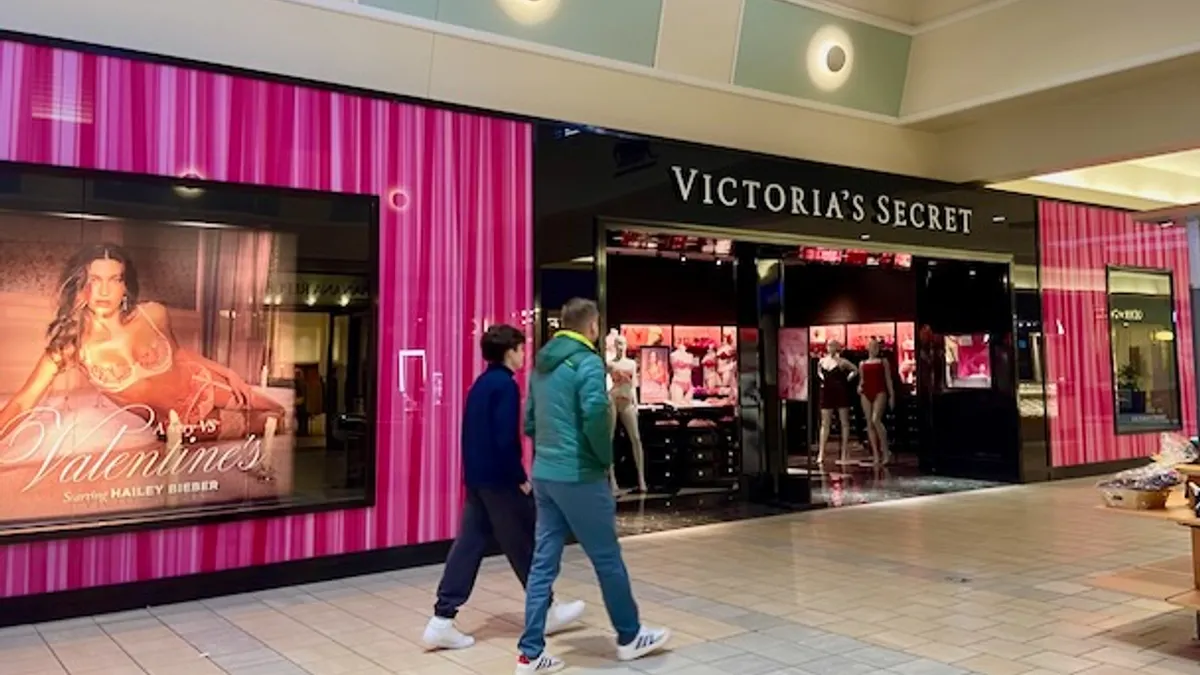
On Tuesday, Victoria’s Secret not only released a better-than-expected Q1 performance but also began trading under its new stock ticker, VSXY. The letters serve as a symbol of the company’s newfound confidence in projecting sexiness, after struggling for years to update a marketing approach that many observers, including one-time customers, saw as clueless at best.
During a conference call with analysts Tuesday, CEO Hillary Super described the worlds inhabited by the company’s brands: “For Victoria's Secret, that world is sexy, glamorous and luxurious,” she said. “For Pink, it is bold, playful and irreverent.”
The effort to accentuate Pink’s distinct branding got a boost this week with the appointment of a chief merchant there, a role that had been left unfilled under previous leadership. This clarity and the fresh take on sexiness are important, according to GlobalData Managing Director Neil Saunders.
“For the Victoria’s Secret brand, sexy is back – and has been for a while – but the cultural lens through which it is focused is about empowerment and self-expression, not objectification,” he said in emailed comments. “This may seem like a subtle difference, but it is an absolutely critical one that allows the brand to have a clear and distinct voice in the market without all of the toxicity that previously surrounded it.”
The company took market share in the period, with sales growth across channels and geographies and new customers across income levels and ages, Super said during a conference call on Tuesday. Its strongest growth in Q1 was from households with annual incomes under $50,000 and over $200,000, she said.
The share and comparable sales gains are important indicators, according to Jefferies analysts led by Corey Tarlowe.
“This combination is key to us, suggesting the brand is not only retaining core customers but expanding its customer file at a mid-single-digit+ pace, reinforcing improved relevance and traffic trends across the platform,” Tarlowe said in a Tuesday client note.
Super described “highly disciplined” efforts to drive growth with the right merchandise and marketing, which has allowed the pullback from promotions and markdowns.
“The result is a healthier, more brand-led business,” she said, noting strong average unit retail growth in Q1 plus a double-digit Valentine’s Day sales increase at Victoria's Secret, Pink and the beauty business.
In contrast to what some other apparel companies have experienced, the surge in the use of GLP-1 medications has not been a major factor. Super downplayed the impact of weight-loss medications, saying that 3% or fewer existing customers are buying smaller sizes. New customers are “slightly smaller” but that could be increased market share from younger shoppers, ages 18 to 24, she said.