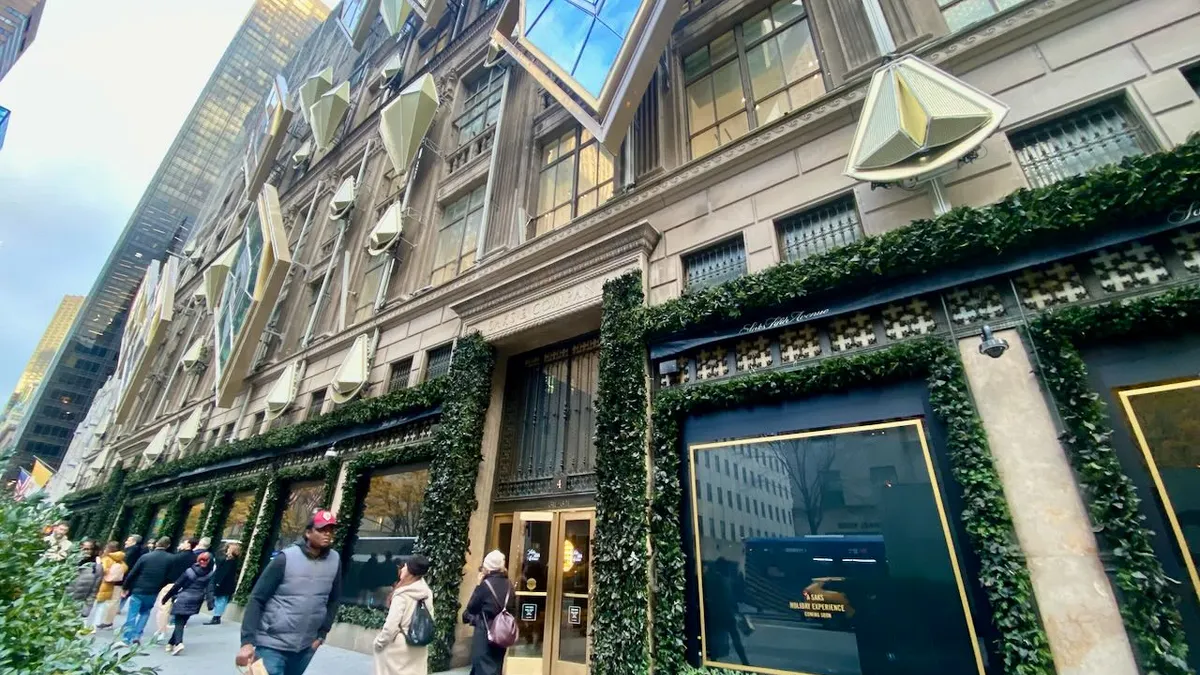
In late 2024 Saks Global started out with grand ambitions, forging a $2.7 billion deal that brought together luxury department stores Saks Fifth Avenue, Neiman Marcus Group and Bergdorf Goodman under one umbrella. On Friday, the company wrapped up the bankruptcy that became necessary barely a year later, emerging as “Exemplar Luxury Group.”
“The debt-fueled acquisition of Neiman Marcus always made bankruptcy a likely destination for Saks Global,” GlobalData Managing Director Neil Saunders said at the time of the filing.
Bankruptcy came swiftly, but the company came through it fairly quickly, too. In less than six months, the luxury retailer is exiting Chapter 11 a leaner enterprise. Here are five major castoffs enabled by the process.
1. Lots of debt
Saks Global staggered into bankruptcy court with a debt burden that made it nearly impossible to continue operations. When the company filed in January it revealed $3.4 billion in debt, which did not include a $1.25 billion mortgage on the Saks Fifth Avenue flagship property or another $428.1 million loan associated with Hudson Bay properties.
The company is hardly debt free, but it has lightened its load by a lot. The retailer now carries about $840 million, including $340 million on its asset-based loan facility and $500 million of exit term loans. Still, that could be enough to prevent Exemplar from properly investing in its turnaround, according to Saunders.
“There is still a huge pile of debt that’s going to prevent Saks from spending big on capital projects to improve customer experience or operations,” he said.
2. Lots of stores
Getting out of leases before they expire is another perk of the bankruptcy process, and Saks Global took full advantage of that to close underperforming stores.
Before the filing, Saks Global operated more than 150 stores: 33 full-line Saks Fifth Avenue locations, 81 Saks Off 5th off-pricers, 36 full-line Neiman Marcus locations, 5 off-price Last Call stores and two Bergdorf Goodman locations.
Bergdorf remains intact, with its two stores across the street from each other on the Upper East Side of Manhattan. Neiman Marcus closed just three locations, plus the downtown Dallas store, which city leaders had fought to save, is closing after all.
The Saks name shrunk the most. The full-line footprint has been halved, with just 15 Saks Fifth Avenue stores going forward, and Saks Off 5th closed most of its fleet.
Saks Global drastically shrunk its footprint in bankruptcy
Some analysts expected more closures at malls where Saks Fifth Avenue and Neiman Marcus are both anchors. It turns out that the traffic to both retailers are strong at those centers, according to research from advisory firm Octus.
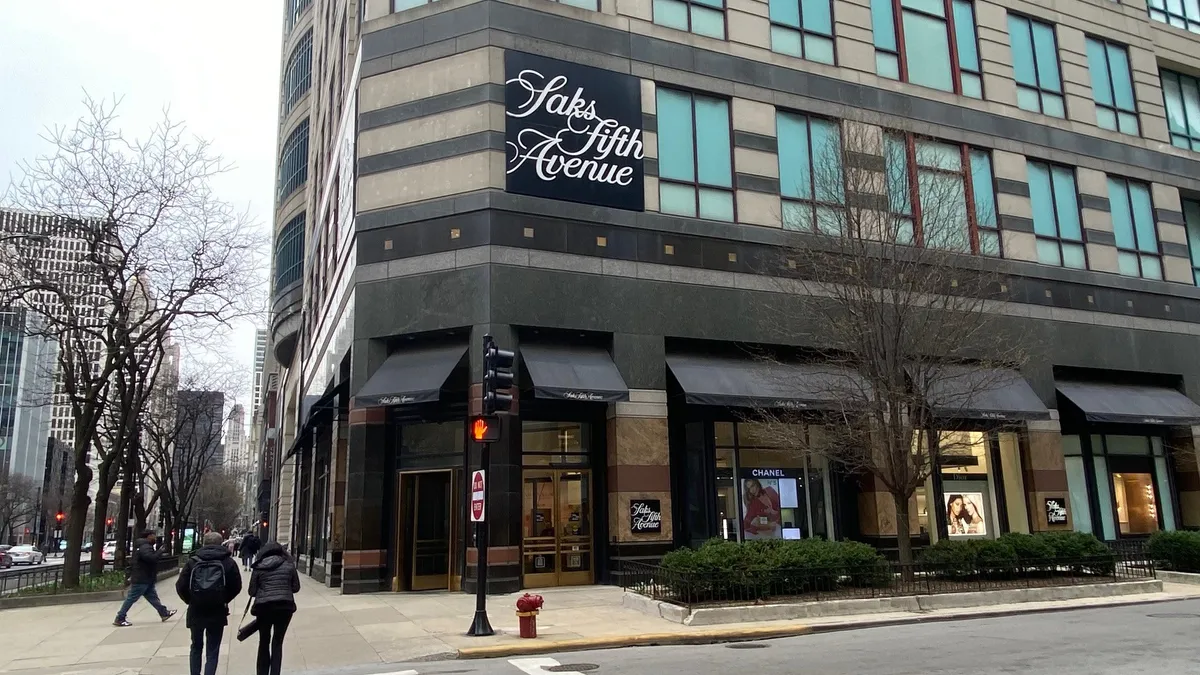
More surprising is the decision to close important flagships like Saks Fifth Avenue on Michigan Avenue in Chicago, according to Michael Appel, founder of turnaround and strategic advisory firm Appel Associates. That and a few other Saks closures may have been based on performance when the stores had inadequate merchandise.
“Longer term that might not be a smart move,” he said by phone. “You have to look at whether it’s a market you should be in, and then you have to be willing to support that for a period of time until you can get it back on track.”
3. Nearly the entire off-price operation
The bankruptcy process has left Saks Fifth Avenue’s off-price business a shadow of its former self.
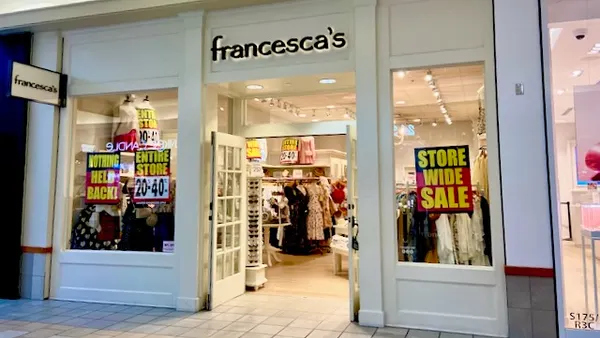
Saks Global closed about 70 Saks Off 5th stores, leaving open only a dozen to unload residual inventory from its luxury banners. The move is designed to allow Exemplar to focus more squarely on full-price selling in the luxury market but observers say that could leave money and market share on the table.
“They think that they’re going to replace all that off-price volume with full-price volume, at margin?” Glenn McMahon, managing partner at MAC Advisory and Consulting, told Retail Dive last month. “I don’t understand that thinking.”
The company also shut down Saks Off 5th’s e-commerce — once the centerpiece of the off-pricer’s growth strategy — entirely. Neiman Marcus’ Last Call fleet, already shrunk down to just five stores, has also shuttered.
Rival Nordstrom by contrast continues to expand its off-price Rack operation — its biggest driver of customer acquisition — to stoke growth. Nordstrom’s full-line and Rack stores, along with Bloomingdale’s, have already taken market share from the Saks Global retailers in recent quarters.
4. Its vendor problem
All year, Geoffroy van Raemdonck — the former Neiman Marcus Group CEO who stepped down at the time of the merger deal but returned as Saks Global CEO when the bankruptcy was announced — has provided steady updates as fed-up suppliers came back into the fold.
Early last month the number of vendor partnerships was up to 700-plus, reversing an exodus that cost the retailer in a myriad of ways. In 2025, sales tanked as suppliers increasingly withheld inventory over missed and delayed payments, leaving racks bare. With ABL debt largely based on inventory value, an estimated $550 million loss in inventory receipts in the second half of last year also lowered Saks Global’s borrowing base.
After hearing from van Raemdonck, several vendors who previously complained that Saks Global was breaking its promises expressed willingness to give the retailer another chance, though some said they would demand at least some payment up front.
Exemplar’s post-bankruptcy financing may become strained if jitters remain and too many vendors make such stipulations. As it is, the company doesn’t expect to be profitable for three years. Exemplar Luxury Group will side-step vendor payments to some extent thanks to consignment and concessions, though according to the company it is reducing those distribution modes. In fact, the retailer said this week that it is leaving bankruptcy with 45% fewer concession and marketplace agreements than it had in January before its filing.
5. Richard Baker
Richard Baker is no longer an executive at Saks Global — or Exemplar — and some say his retail career may be over.
For a brief moment in the new year, Baker, who was executive chairman, took the CEO reins from Marc Metrick, who oversaw the company’s disastrous first year as a luxury department store conglomerate.
Within a couple of weeks, though, Baker was supplanted by van Raemdonck and later faced demands — even subpoenas — to release communications pertinent to the company’s operations and the merger deal itself. That particular dispute has apparently been resolved, though Baker is objecting to the company’s exit plan, claiming he has been denied promised indemnification rights, per court documents.
Baker is seen by many in the industry as a slayer of iconic retailers. That includes Lord & Taylor, which his firm, NRDC Equity Partners, acquired in 2006. Various Lord & Taylor properties were sold, and in 2019 apparel rental site Le Tote bought the department store then almost immediately filed for bankruptcy. The Lord & Taylor now found online, after its IP was acquired two years ago, is not the same iconic retailer known for its dresses and other fine apparel for the middle class.
NRDC in 2008 acquired centuries-old Canadian department store Hudson’s Bay Co., which in turn went on to acquire Saks Fifth Avenue in 2013. To accomplish last year’s tie-up of Saks, Neiman and Bergdorf’s, Saks Global spun off Hudson’s Bay. In short order the Canadian icon, which traces its roots to the 1600s, was in bankruptcy and liquidated.
Baker, a real estate mogul, has consistently treated his involvement in retail as a series of transactional opportunities, according to Mark Cohen, a former department store executive who previously ran retail studies at Columbia Business School. Neither Saks Fifth Avenue nor Neiman Marcus Group were exactly thriving when he took them over, but their operations suffered further during his leadership, Cohen said by phone.
The Saks Global bankruptcy likely marks the end of Baker’s tenure in the industry because investors are unlikely to support him at this point, he said.
“Baker has never put anyone in charge who had a clue how to run the business, nor he has never supported the people he's hired to run the business,” he said. “He has been masquerading as a retailer since he got into the business. The mask has now been ripped off because nothing that he's done — and I mean absolutely nothing — has been successful.”
CORRECTION: This story has been updated to reflect that Exemplar Luxury Group is reducing its consignment and concession distribution and that its debt post-bankruptcy is down about 75% to $840 million.