Dive Brief:
-
Deckers Brands, which runs Hoka, Ugg and Teva, topped $1 billion in Q1 revenue for the first time. Net sales in the period rose 5.7% year on year to $1.02 billion, with Hoka up almost 8%, Ugg up 5% and other brands down over 18%.
-
Wholesale net sales rose more than 2% to nearly $667 million while direct-to-consumer net sales rose 13% to nearly $353 million.
-
Gross margin expanded by 60 basis points to 56.4% and net income tumbled nearly 7% to $130 million.
Dive Insight:
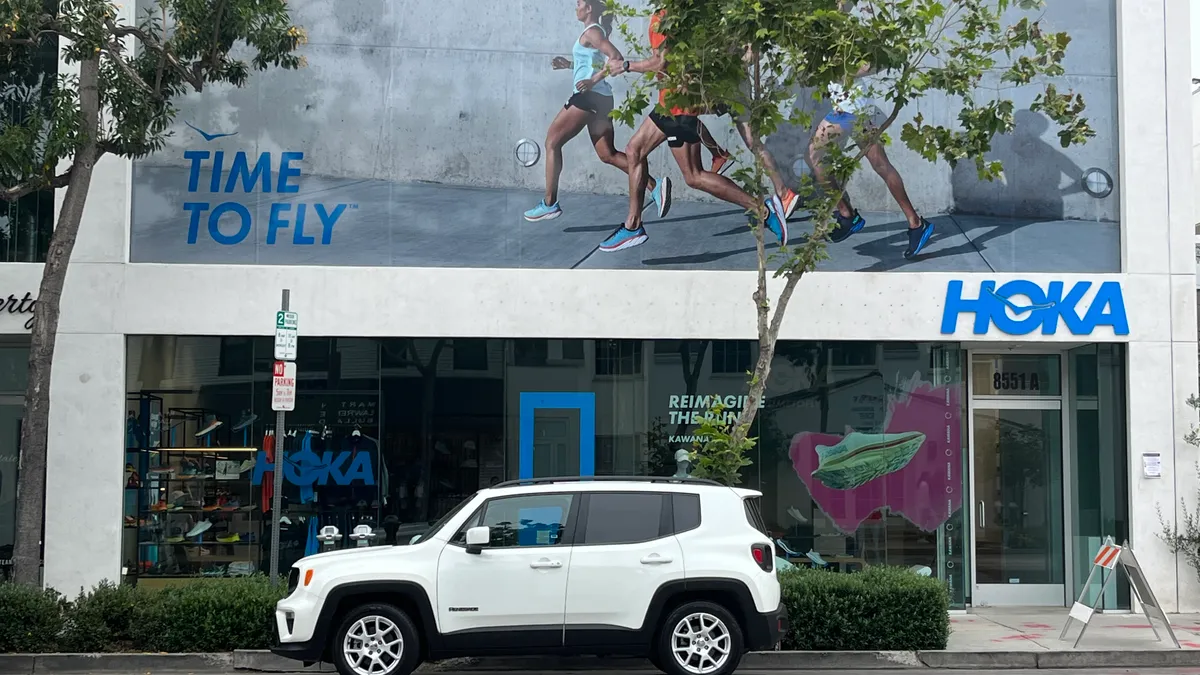
In the second half of the year, Hoka will be getting a boost from new partnerships with what Deckers CEO Stefano Caroti called “elevated, quality retailers.”
Growth at the brand, which in Q1 contributed over $703 million in net sales compared to Ugg’s $278 million, is centered on direct-to-consumer sales, which rose 17% in the quarter. Hoka’s wholesale rose just 3%, driven by the U.S. market, executives told analysts Thursday.
The company expects Hoka to accelerate in the second half of the year — though maybe not as much as some analysts — and maintain its record of high-single-digit percentage growth, and for Ugg to also maintain its mid-single-digit growth rate.
“At Hoka, we're expanding consumer participation through a more differentiated product portfolio, growing international reach and building an innovation pipeline that continues to elevate the brand,” Caroti said. “With Ugg, we're broadening relevance across seasons, categories and consumer segments, creating new avenues for long-term growth.”
Needham analysts led by Tom Nikic see both brands “growing nicely (even if the growth isn't as exceptional as it once was).”
“DTC trends are solid, inventory/margin dynamics are favorable, and valuation is compelling to us,” Nikic said in a Friday client note.
The market could be “undervaluing the progress Hoka is making in diversifying its product assortment,” according to UBS analysts led by Jay Sole.
“This is expanding Hoka’s [total addressable market] and driving market share gains,” he said in a research note Friday, noting Deckers’ report that the brand’s new Clifton 11 and Clifton Pro styles are resonating with customers. “Importantly, the Clifton Pro is helping Hoka attract a younger, male consumer.”
But Hoka’s full strength for the year depends a lot on the second half, according to Wells Fargo analysts led by Ike Boruchow. Deckers still expects Hoka net sales to increase by a low-double-digit percentage compared to last year, but that’s below expectations, he said in a Thursday client note.
Near-term, some investors may view this “as a visible deterioration in Hoka demand,” he said.