

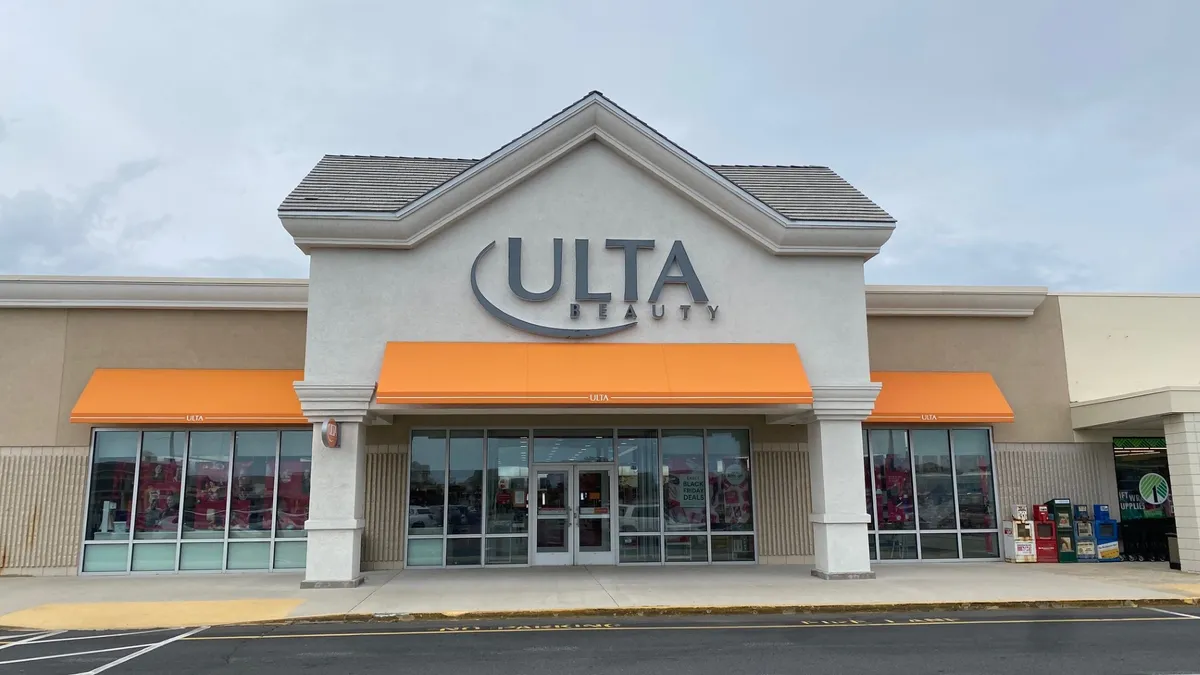
Social media users flooded Ulta Beauty’s Instagram posts this week sharing their frustration about the company’s work with surveillance technology provider Flock after a campaign by activist organization UltraViolet went viral.
Ulta Beauty uses automated license plate readers from Flock in some of its store locations, a source familiar confirmed to Retail Dive.
The technology is deployed at less than 1% of Ulta’s storefleet nationwide, which has a total of around 1,500 locations. The cameras do not use facial recognition, the source told Retail Dive.
Flock has garnered widespread public criticism of its technology in recent months, with vandalism of the license plate readers growing. Some local and state governments are reconsidering the installation of Flock's technologies.
Ulta did not respond to questions about when its relationship with Flock began. Flock did not respond to Retail Dive’s questions about its relationship with Ulta.
Retail crime remains a focus for industry groups, with the National Retail Federation and Retail Industry Leaders Association pushing for federal legislation to combat organized theft.
Flock lists organized retail crime as a use case for its technology on its website, saying that companies can “add known offenders to LPR custom hotlists and get alerted immediately when they enter” parking lots.
In a blog post from April of last year, Flock highlighted how its license plate reader cameras helped in the arrest of suspects by the Fairfax County Police Department in Virginia linked to organized retail crime at multiple Ulta stores.
Flock's AI chatbot on its website describes Ulta as “one of Flock Safety's retail partners, utilizing our technology to help identify repeat offenders and prevent fraud,” when asked if the beauty retailer is a customer.
Ulta's director of organized retail crime, Rory Stallard, noted the retailer had seen increased violence in stores after the COVID-19 pandemic, according to a recap post from Flock Forward’s August 2025 event.
“We were looking for technology that would help us bridge the gap and collaborate [with law enforcement],” Stallard said, according to Flock’s blog post from Aug. 14 of last year. “It really centered around our company culture and protecting our associates and our guests. So, by taking some of the things that we were doing and leveraging some of that technology to help us solve crimes faster, we can eliminate some of these bad actors from being in our store, we can prevent [crime], and we can try to be more proactive versus reactive. Flock really fit the bill for some of the things that we wanted to be able to do.”
Stallard also attended a Flock Forward conference last month, per a now-deleted LinkedIn post where he expressed appreciation for the event's opportunity to network with law enforcement and private sector connections.
Flock updated its terms and conditions in August amid growing public criticism over the use of its technology across the U.S.