
Over the last five years, retail media has largely become synonymous with digital ad buys — on-site placements expanding into social, programmatic and connected TV. The investment story is real: U.S. retail media ad spending is expected to reach $69.33 billion in 2026. But here's where the dominant narrative quietly fails: More than 80% of retail sales still take place in physical stores, yet the industry conversation has largely ignored what happens inside them.
According to eMarketer's Path to Purchase 2025 report, 48% of U.S. shoppers discover new brands and products in physical stores, ahead of e-commerce platforms (41%) and social media (39%). And when shoppers discover a product online, 40% still visit a physical store before making a purchase.
These aren't separate journeys. They're one continuous shopping experience that moves fluidly between screens and shelves. An omnichannel retail media strategy should move with it.
Said another way: Online and in-store aren't competing channels — they're the same shopper journey, running at the same time. A media strategy that only accounts for one half is, by definition, incomplete.
Why physical retail belongs in the media plan
The physical store is not a legacy channel. It's where most purchase decisions are made, and for retailers with loyalty programs, apps and transaction data, it's also where first-party data can be activated to deliver more personalized experiences at the highest-intent moment in the journey.
Physical stores are also where brand discovery is most likely to convert immediately. eMarketer's Path to Purchase research shows that after discovering a new brand or product in-store, 31.5% of shoppers purchase it right away, compared with 19.1% on retail sites and 10.4% on brand sites. The physical environment doesn't just support the journey. In many categories, it closes it.
Yet despite this, media strategies remain heavily weighted toward digital. Even excluding Amazon's outsized online share, in-store retail media accounted for just 3.3% of remaining retail media spend in 2025. The disconnect isn't about demand — advertisers increasingly want in-store inventory. Rather, it's about infrastructure, planning frameworks and the habit of treating channels as separate budget lines rather than connected touchpoints.
What most 'omnichannel' strategies actually are
Most retail media strategies that claim to be omnichannel are, in practice, multi-digital strategies. They span on-site, off-site and CTV — all of which are digital environments — while treating in-store as a separate "shopper marketing" or "trade" investment owned by a different team with different objectives and different KPIs.
The result is fragmented execution that reaches the same shopper across multiple touchpoints with no coherence between them. A consumer who browsed a product on a retailer's app sees a sponsored search result, a social retargeting ad and a CTV spot. But when they walk into the store, the media strategy that followed them there goes silent. The moment of highest intent is the moment with the least coverage.
According to a Forrester survey cited by Digiday, 36% of U.S. retail media spend comes from existing trade marketing budgets and 26% from shopper marketing — each owned by different teams. That structural fragmentation is often what's preventing omnichannel execution, not intent or technology.
How retailers can close the gap
Retailers that treat stores as strategic media assets, not just fulfillment hubs, are positioning themselves to capture brand investment that the current all-digital allocation is leaving underserved. A few principles that separate the leaders from the rest:
-
Package a complete omnichannel story for brand partners
If your go-to-market narrative stops at digital inventory, brands have no framework to integrate in-store into their larger retail media plan. Retailers who can offer on-site, off-site and in-store inventory as a connected, full-funnel solution will build stronger partnerships and earn a larger share of the media budget. The pitch isn't "we also have screens." It's "we can reach your shopper from the first digital signal to the moment they complete a transaction, and we can prove what worked."
-
Activate first-party data across digital and physical environments
The same loyalty data, purchase history and behavioral signals that power on-site personalization can inform in-store targeting and measurement. Retailers with strong first-party data infrastructure are uniquely positioned to connect digital intent to physical conversion and to prove that connection to advertisers. That closed-loop capability is increasingly what brands require before committing sustained retail media investment.
-
Move media closer to the point of purchase
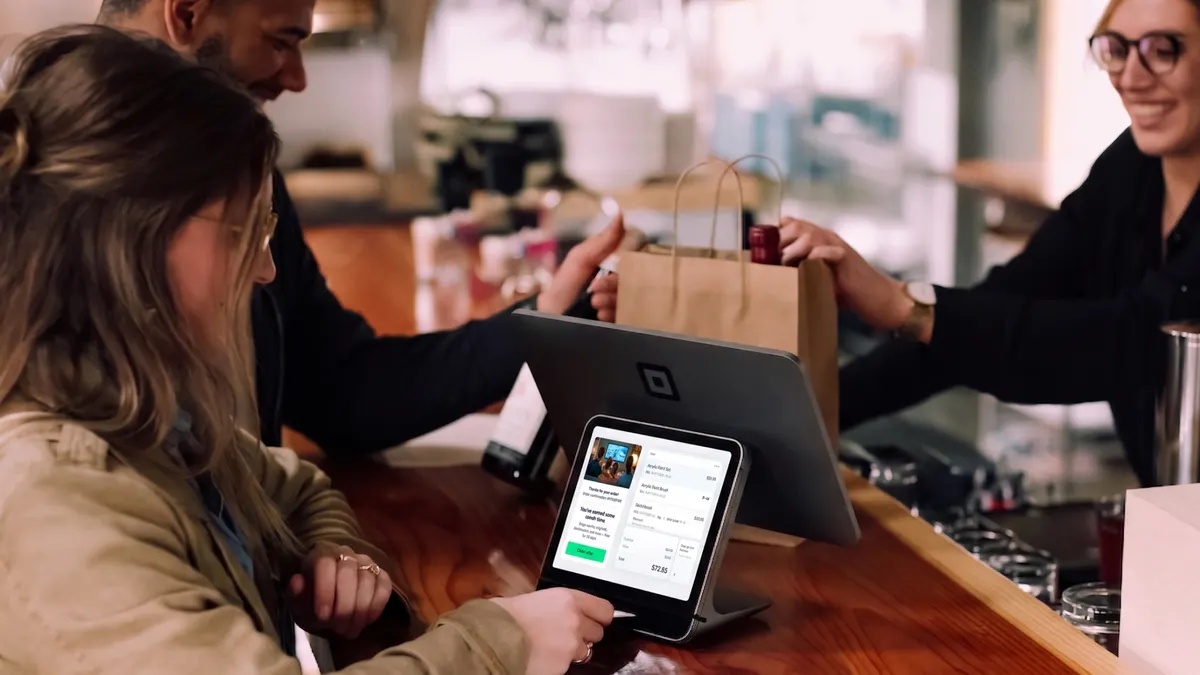
Post-purchase placements on POS terminals, self-checkout kiosks and smart checkout screens create a deterministic link between ad exposure and transaction data that no digital format can replicate. Each exposure ties to a shopper ID, a completed purchase and a downstream outcome. For retailers building a media offering that can credibly prove incrementality, the checkout environment is the most defensible place to start.
How brands can execute across the full journey
Retailers can build the infrastructure, but an omnichannel strategy only delivers when brands show up with an equally integrated approach. Three common execution gaps:
-
Unify planning across siloed teams
On-site, off-site and in-store spend typically sit with different teams — each with different objectives, KPIs and agency relationships. The result is three disconnected campaigns that happen to involve the same retailer. The fix is aligning e-commerce, brand, shopper and performance teams around a single plan with shared goals across every environment. When teams optimize for total retailer impact rather than individual channel metrics, the strategy starts to reflect how shoppers behave.
-
Build creative for the context, not just the campaign
When brands repurpose digital assets across physical environments without adaptation, in-store media underperforms and the retailer absorbs the cost of generic ad experiences. In-store creative, especially at checkout, operates in a completely different context from a social feed or a product detail page. The shopper's mindset, the time available and the action you're asking them to take are all different. Creative built for conversion at the physical point of decision looks nothing like creative built for consideration in a digital environment.
-
Treat in-store media as a full-funnel channel, not a single tactic
Many brands make the mistake of defining in-store as either an awareness vehicle or a last-mile conversion trigger. In practice, it can — and should — do both, often within a single store visit. A shopper who saw a brand's CTV ad last night, encountered a mid-aisle display this morning and then received a personalized post-purchase offer at checkout has experienced a genuinely omnichannel interaction — one that most retail media strategies are not currently designed to create or measure.
The omnichannel opportunity is already open
Retail media is no longer just about selling digital advertising space. The brands and retailers who redefine it as a full-journey strategy — one that connects digital intent to physical conversion and measures both — will be better positioned to capture the budgets that are, right now, looking for that proof.
The infrastructure to do this is emerging. Platforms that connect authenticated shopper identity across digital and physical environments — closing the loop from first signal to final transaction — are what will turn omnichannel retail media from a planning aspiration into a reality. The retailers and brands that build toward that infrastructure now will be better positioned as the rest of the market catches up.