

Dive Brief:
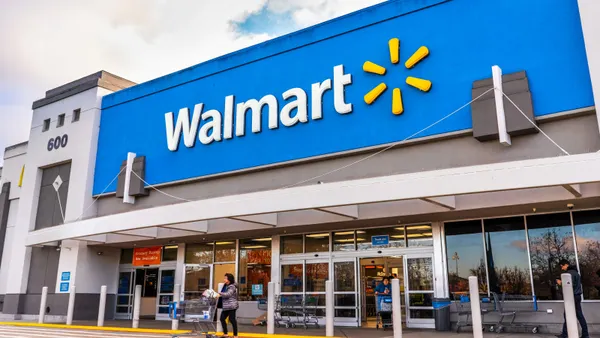
- Walmart Inc.’s e-commerce business once again made gains in Q3, with Walmart U.S. online sales growing 23% year over year. Fulfillment speed is “becoming increasingly important” and serving as a competitive advantage as 96% of U.S. households can be reached in three hours or less, Walmart U.S. President and CEO Dave Guggina said on an earnings call Thursday.
- The company’s new combined Walmart+ and Sam’s Club Plus membership deal — which debuted in October — is seeing early success. At Sam's Club, the company has “seen already a couple million new members come in,” Walmart CEO John Furner said on the call.
- Walmart's overall Q3 revenue grew 5.2% to $188.8 billion, per a press release. The retailer raised its full-year guidance, now expecting net sales to increase 4.9% to 5.2% instead of the previous range of growth from 4% to 5%.
Dive Insight:
Another strong quarter for Walmart shows shoppers are still flocking to the retailer’s stores and website — despite public discourse about dynamic pricing concerns with Walmart.
The consumer is stable and resilient despite some pressures, particularly in the first part of the year, Furner said when asked about the overall health of shoppers.
“[Walmart] is gaining share, margins remain healthy, and the company is leaning further into value while higher-margin businesses scale,” Jefferies analysts said in an emailed note Thursday. “We believe continued share gains and solid holiday execution should support further earnings upside over time.”
Over 80% of e-commerce orders in the U.S. are fulfilled from stores, inclusive of the retailer’s online marketplace orders, executives noted on the call.
Additionally, Walmart’s e-commerce business is getting to a point where it is “pretty close to break-even” when excluding advertising, Walmart CFO John David Rainey told analysts.
“On e-commerce, as has been the case in a few previous quarters, e-commerce in the U.S. is driving all the comp numbers,” GlobalData Managing Director Neil Saunders said in a statement. “This is because it's the main arena in which Walmart is winning new customers — especially higher-income ones. There's probably a need for more balance, especially given the investment being made in stores, but given the extremely integrated nature of the operation, which relies on stores, this doesn't matter all that much in the short term.”