Any retailer looking forward to Black Friday this year is already late.
At a time when inflation remains stubborn — with grocery prices surging again last month and fuel prices still elevated — consumers began holiday shopping a while ago in order to stretch their budgets. Some even started over the summer. Well before November across the country, signs of holiday shopping were evident in the form of decorations, full parking lots and long lines, even for relatively limited discounts, according to Meghann Martindale, a principal at real estate firm Avison Young, where she is senior director of U.S. retail strategy.
“If that energy is any indication, we’re headed for a solid holiday selling season,” she said by email. “The question is how much early spending grows the total and how much simply moves it forward.”
In fact, more than half of U.S. consumers this year wanted to hear about Black Friday and Cyber Monday deals at least a month in advance, according to research from Sinch, which provides the technology for customer messaging like texts.
The promotional sales event, once thought of as the day after Thanksgiving, is also stretching later into the season, according to Bank of America. Nearly 30% of U.S. consumers plan to do most of their holiday shopping in early to mid-December, up from about 20% last year, which overshadows Black Friday as a new peak time, the researchers found.
The fourth quarter is a make-or-break period for a lot of retailers, and, lucky for them, more than 90% of U.S. consumers are buying gifts this year, with 65% buying a treat for themselves, according to a survey from The Harris Poll conducted in October. But their customers have a lot more than that on their lists. More than half host a holiday gathering, 65% travel and 60% attend a show or other event.
That all costs money in an era when finances are strained.
“It doesn't mean Black Friday is going away,” Lora Monafred, head of consumer card products at Bank of America, said by phone. “It just might mean that the holiday shopping window is becoming more spread out, and consumers are giving themselves more time to compare prices. Maybe keep an eye out for a different promotion and make sure that they're getting the best deal on what they're buying.”
Here’s what else to know about Black Friday this year.
Shoppers want transparency
Consumer trust in advertised promotions is strained, and AI isn’t necessarily helping. More than a third of consumers say that in recent years they have actually encountered a holiday-themed scam attempt, according to Bank of America.
Globally, about a fifth of consumers actively distrust promotional pricing at the holidays, with about half trusting advertised prices at least somewhat, according to research from Boston Consulting Group. Trust tends to be higher in the U.S., the firm found.
Trust could erode further in the U.S., though, as federal and state regulators work to uncover and correct what they see as deceptive pricing practices, as when prices ring up at the register higher than advertised.
In part due to trust issues, consumers in the U.S. may be moving away from AI shopping assistants, according to Bank of America. More than 70% will refrain from using AI tools for holiday shopping, up from nearly half last year. Over a third say that’s because AI robs them of the personal aspect of finding gifts, but over a quarter say it’s because they don’t trust AI-generated recommendations.
Still, BCG finds generative AI morphing into a “tool of choice for finding and comparing products and offers,” with more than half of consumers using it to shop in 2026, up 8 percentage points year on year.
“As AI becomes a larger shopping channel, U.S. retailers need to ensure their products, prices, and promotions are accurately represented and easily discoverable,” Brad Loftus, BCG’s North America retail lead, said by email. “For this holiday season, that means engaging shoppers early and checking how AI-enabled discovery represents them, with transparency at the center of the strategy.”
Resale in, social media out
In their search to find worthy items without bursting their budgets, consumers are getting thrifty.
Retail spend in October rose 5% year over year, with more spending at discount stores, big-box retailers and secondhand stores, according to Bank of America data.
“We hear a lot of people say, ‘It's the thought that counts,’” Monafred said. “People are geting creative. Maybe a re-gift exchange. There's a thriftiness. They're sticking closer to their budgets, or at least they're trying to. What we're seeing is that consumers are resilient. They're still spending, but they're shifting how they're spending.”
Buying a used gift is “still a little tricky,” though, according to Janine Stichter, consumer retail and lifestyle brands analyst at U.S. Bancorp’s BTIG.
“I don't know that it's entirely mainstream, but it definitely seems to be shifting in that direction. And it probably depends a little bit on who you're talking about,” she said by phone. “I think luxury sites like The RealReal that are better at authenticating and can deliver you goods in more of a close-to-new fashion are doing better, seeing that gifting benefit.”
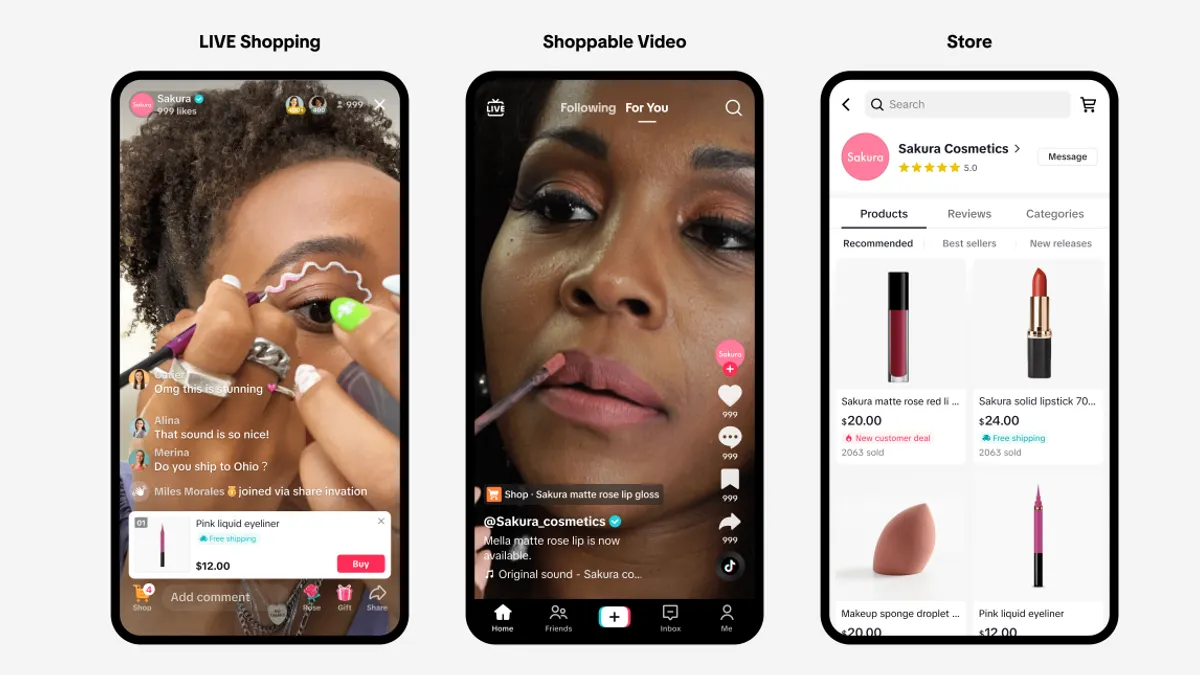
Meanwhile, fewer consumers seem influenced by apps like TikTok or Instagram. More than 60% of consumers say viral content has no influence on their holiday purchases, and direct shopping via social media plummeted from 35% a year ago to 14% this year, according to Bank of America.
Stores still matter
Shopping online to find gifts, compare prices and make purchases in many ways is the preferred channel for consumers across income and generational cohorts. But stores still matter immensely.
“Honestly, it’s both. Consumers move seamlessly between stores and digital. To them, it’s now all retail,” Martindale said. “However, each serve a vastly different purpose, and stores take on special meaning during the holidays.”
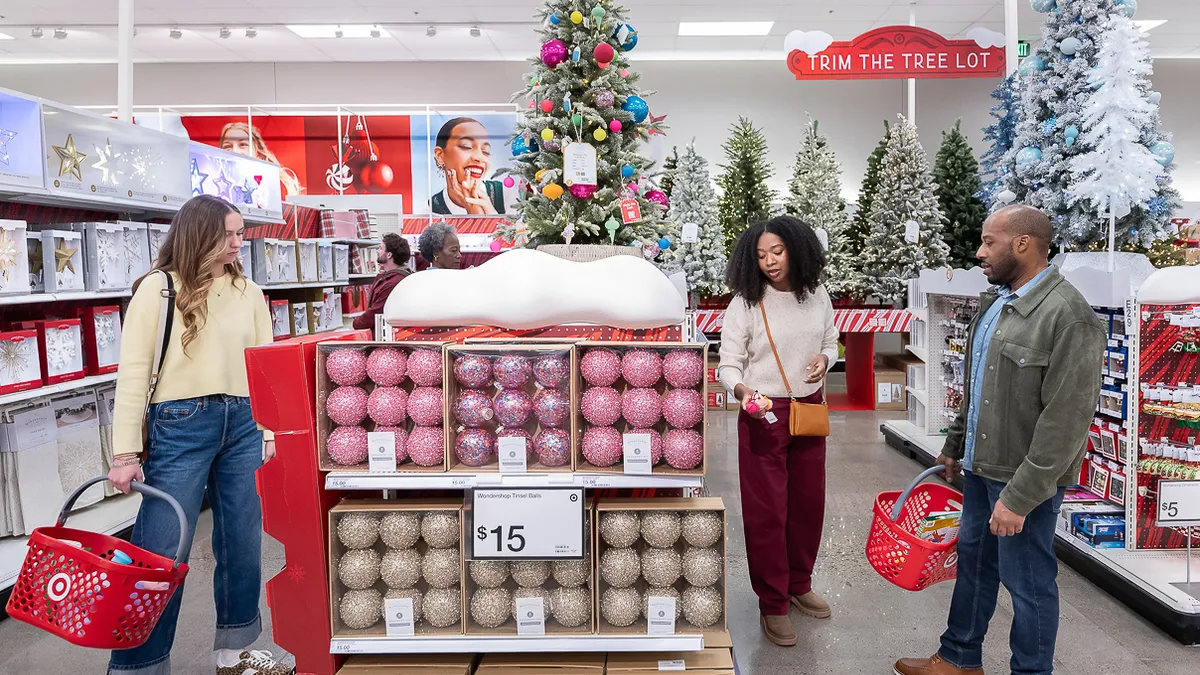
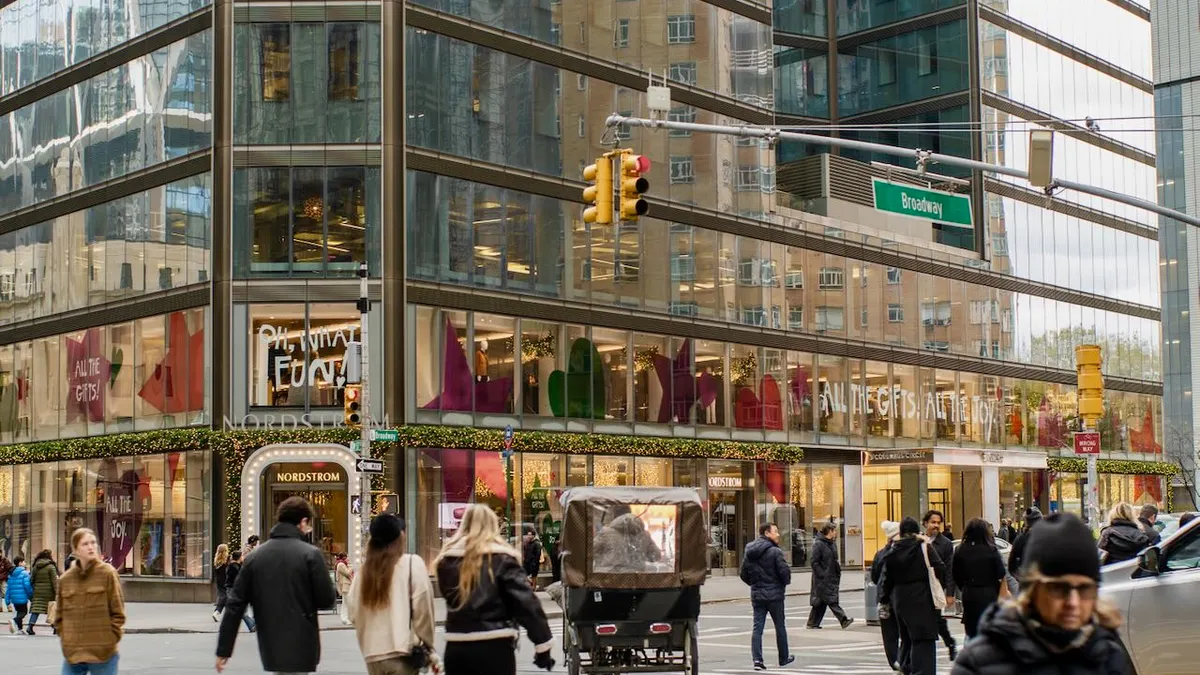
Shopping in person is delightful thanks to the lights, decorations, events, gathering and discovery. The sense of community that is forged in an actual place can also be helpful to retailers, according to Anjali Burkins, senior director of North America retail strategy at O9 Solutions.
“Community can be one of a retailer’s most valuable tools, not just for driving foot traffic but for understanding what customers actually want,” Burkins said by email. “I know a beauty retailer that hosts localized events to introduce shoppers to emerging brands they may not otherwise discover. These events create a two-way relationship. Customers get to explore something new, while retailers get a firsthand look at what generates excitement, what resonates and what people are willing to buy.”
In-real-life shopping is especially appealing to younger generations, and stores that aren’t well merchandised risk turning those customers off, according to Stichter.
“At a time for the holiday when being in stock is extremely important, I think retailers really need to put their best foot forward and not disappoint the consumer when they go to shop in person,” she said.
Stores can also make an indelible impression that stays with customers well past the season, Martindale said.
“That shared sense of festivity is something you can’t replicate online,” she said. “You can buy a gift online in minutes. A holiday shopping outing can become a memory.”