Rising prices and rampant uncertainty are driving both retailers and their customers to be mindful this holiday season.
For some U.S. households, careful planning is vital. In lower-income cohorts, fewer managed to pay all their bills on time in the past 12 months compared to a year ago, according to a survey from The Financial Health Network and the University of Southern California. Moreover, the number dealing with “unmanageable levels of debt” tops 30%, those researchers found.
Going into the season this year, 45% of consumers surveyed by cash-rewards app Ibotta describe their household finances as insecure, and over 70% say saving money will be a priority this year.
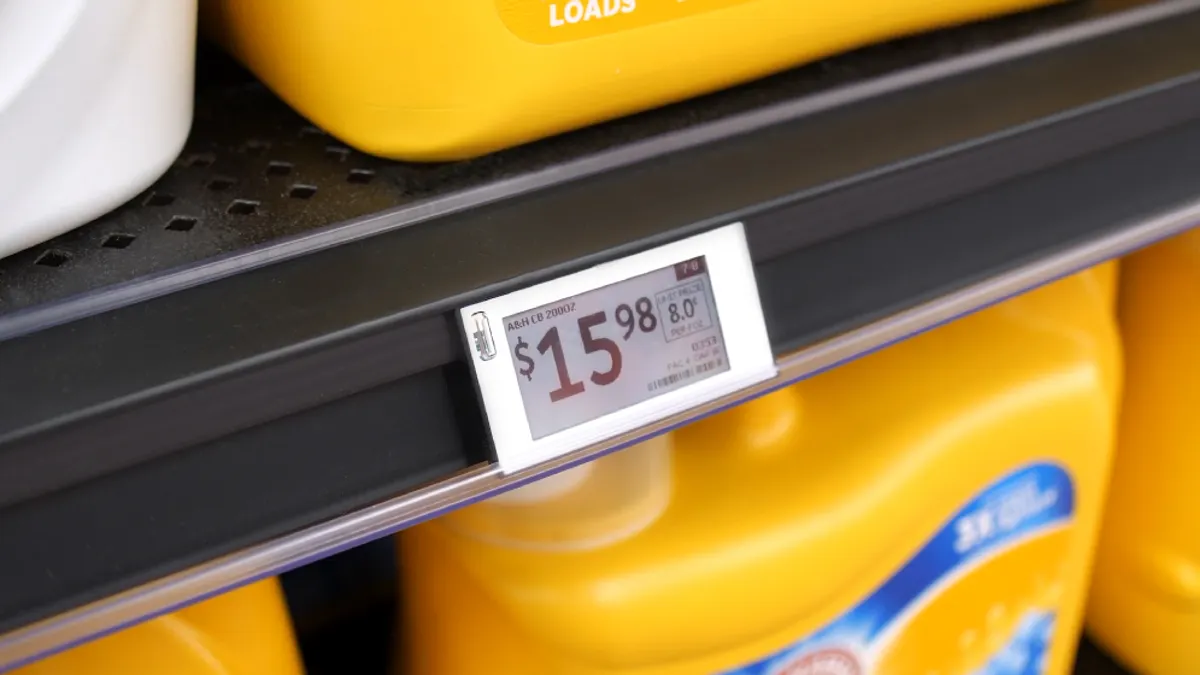
Since January 2018, prices have risen precipitously, according to Numerator. Low-income consumers are confronting prices that are up by more than a third, and high-income consumers are paying over 30% more.
Consumers are expecting gifts and other seasonal items to cost more this year, too, according to research from Accenture. Because many are now tapping savings or turning to high-interest credit cards to cover their everyday bills, holiday expenses loom larger, according to Dat Ngo, an accountant and personal finance adviser at Vetted Prop Firms. Some families will need to “set a firm holiday budget,” he said by email.
“The real problem is not one expensive month. It is entering January with credit card balances that take months to pay off, while regular expenses continue,” he said. “A smaller holiday is much easier to recover from than several months of expensive debt.”
While more than 30% of U.S. consumers expect their holiday budgets to be bigger than a year ago, more than half of those expecting to spend the same or more say it’s because everything is more expensive, Accenture found.
“Consumers are just having to be a little bit more thoughtful and intentional about where they're spending, why they're spending, and how they're spending,” Kelly Askew, global retail industry lead at Accenture, said during a virtual event held by Retail Dive earlier this month.
The plan
As they shell out more for essentials like groceries, fuel and other bills, consumers are tackling their holiday shopping lists from different angles.
To stretch their budgets, they’ve started sooner — as early as this summer. More than a third of shoppers bought items for the holidays during sales events over the summer, and 30% anticipate starting earlier than they did last year, according to Ibotta’s research. More than twice as many people did holiday shopping over the summer months this year compared to last year, according to Accenture.
Promotions — be it Prime Day, Labor Day, Black Friday or any other sales event — largely determine what shoppers buy, more so than gift lists, family recommendations or a brand's reputation, Ibotta found.
AI will be helping consumers stay within their budgets. Those surveyed by Accenture said they expect generative AI to influence 45% of their holiday spending, and finding deals was the top use case, followed by comparing options and deciding where to buy.
The selection
Price isn’t the only factor driving consumers’ choices, though. People want value and to find what they’re looking for. This could be tricky this year, as retailers are keeping inventories lean, according to Phillip Blee, consumer equity research analyst at William Blair.
This will likely mean fewer last-minute shoppers, according to Blee and Askew
“Everyone's a little bit concerned that inventory is light, and that out-of-stocks could happen,” Blee said, speaking at the Retail Dive virtual event. “So I think consumers want what they want, and value is important. But value doesn't mean just deep discount or low price, right? The consumer wants the quality product, and they want it at the right price.”
That includes newness, Blee said. During the pandemic, as their supply chains roiled, retailers stocked up on goods whenever they could. They ended up with too much inventory as their customers got tired of what they had on offer. This has put retailers “on edge” when it comes to inventory planning for the holidays, he said.
“Especially with transportation costs being so high, input costs being so high, tariffs being all over the place, I think that there's a lot of risk for them to take on with inventory,” he said. “So I think that they're feeling very much ... that they need to keep inventory light. I think that they would prefer to potentially miss out on a little bit of sales in order to avoid an inventory glut at the end of the season that would require high clearance rates on an already very expensive product.”
The place
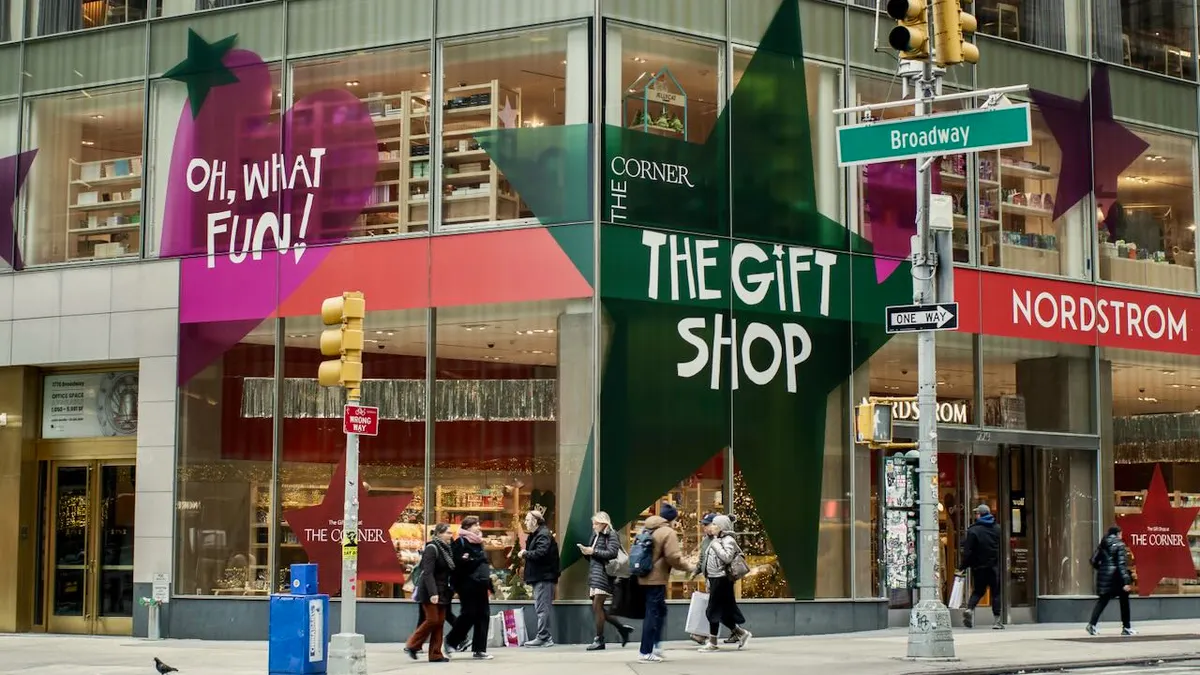
It’s easier than ever to shop online, with opportunities on mobile, social media and, increasingly, via AI. But consumers still gravitate to brick-and-mortar stores, including at the holidays.
Some of that is practical: Over 40% of shoppers go to stores to check out the merchandise before they buy, according to Accenture. Shoppers even prefer stores over generative AI tools when it comes to getting advice or recommendations, those researchers found.
People trust stores, but it’s more than that, Askew said.
“A third of people say they visit it for inspiration and ideas and just kind of the vibe and energy that comes in a retail environment around the holidays,” he said.