

Dive Brief:
- Marking Reformation’s first earnings report as a public company, the apparel brand on Thursday said second quarter net revenue increased about 24% year over year to $155.2 million. Its direct-to-consumer net revenue grew 21.2% while wholesale increased 48.7%, per a press release.
- The DTC growth was driven by a nearly 23% increase in active customers, but offset partly by a 1.4% decline in DTC net revenue per customer because new customers typically begin at lower spend levels. Reformation’s net income increased 79.4% to $12.4 million during the period.
- The retailer expects full fiscal year net revenue to grow in a range from 18.6% to 19.5%, reaching $602 million to $606 million.
Dive Insight:
Reformation was aiming for a $1 billion valuation when it went public in July, but initial trading wound up being at the lower end of its projected price range.
The company’s valuation reflects healthy skepticism, but future store growth and category extensions indicate potential, William Blair analysts said in a Friday note.
“While we understand some skepticism around any newly public apparel retailer, between these drivers and the clear visibility in the model … we have deeper conviction in out-year estimates, and the compelling opportunity for shares at these levels,” the William Blair analysts said. “We see the largest risk as volatility in the model, which comes with short lead times that are more reactionary in nature.”
Reformation’s IPO filing outlined how it operates a shortened lead time for merchandise production.
“Rather than making large inventory bets up to 12 months in advance like many brands, we respond to what customers actually tell us they want,” Reformation CEO Hali Borenstein said on a call with analysts Thursday. “Our supply chain is built for speed, sustainability and quality. We produce more than 50% of our products in 60 days or less and approximately 90% of DTC revenue comes from styles with proven performance behind it.”
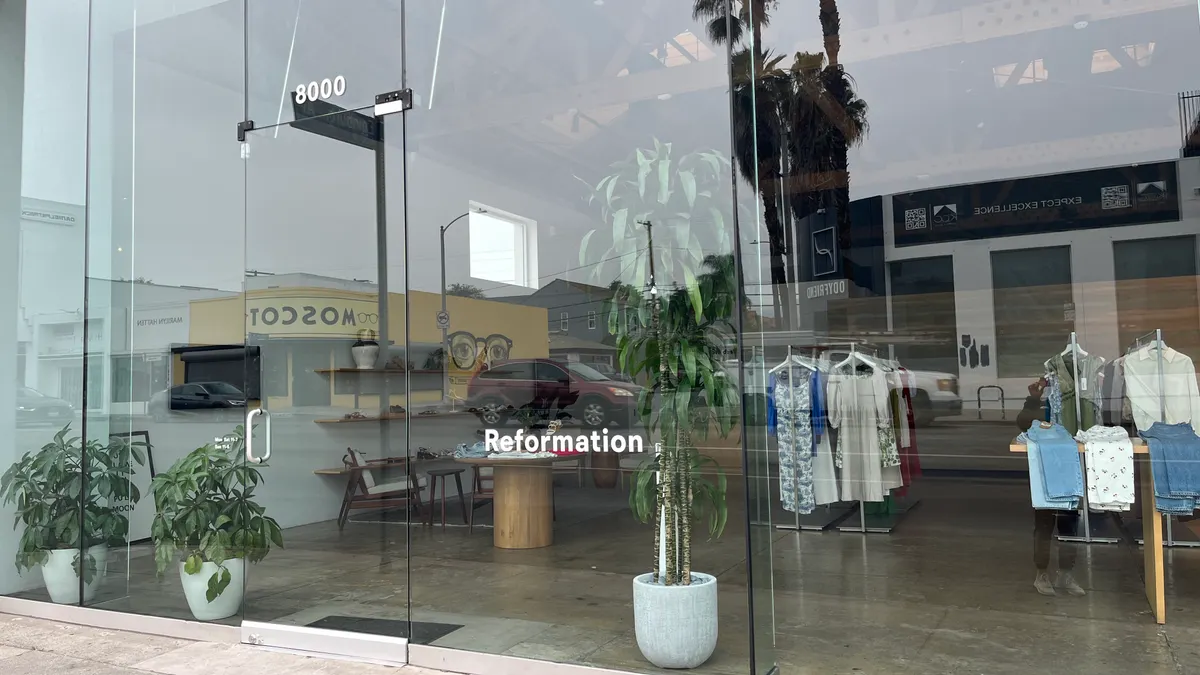
Looking at its store footprint, Reformation operated 70 stores at the end of Q2 and has a path to double that fleet over the next five years, Borenstein added.
The brand expects to open nine to 10 stores in the second half of the year for a total of 15 to 16 new stores in total for 2026, CFO Joshua Moore said on the call.