Dive Brief:
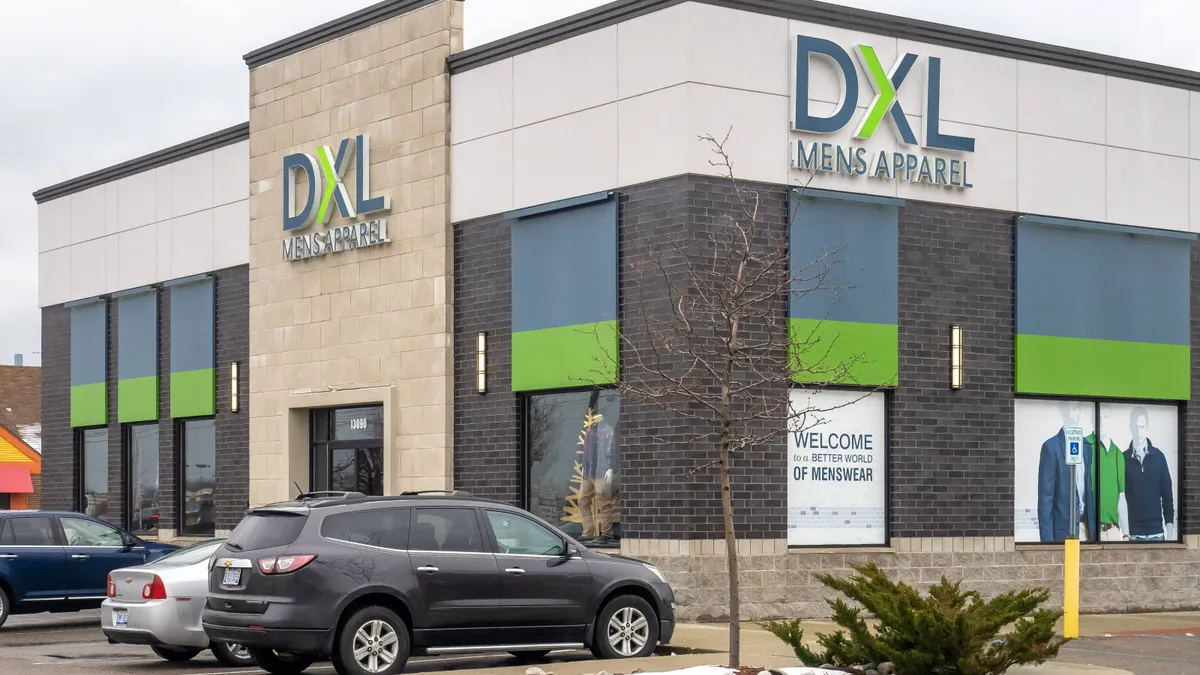
- Destination XL’s second quarter sales declined 3.4% year over year to $111.6 million, per a Wednesday release.
- Net income for Q2 was $2 million, driven largely by a $4.6 million refund for tariffs, and up from a net loss of $265,000 a year ago. Overall comparable sales were down 3.5% in the quarter, with stores down 4.3%, and direct business down 1.6%. “Store traffic remains our most significant challenge,” CFO Peter Stratton told analysts on a Wednesday call.
- The company also said in its release that a previously planned merger with FullBeauty, which it was trying to halt, was “no longer advisable” and “not in the best interests of DXL and its stockholders,” referring stockholders to a Sept. 2 filing with the U.S. Securities and Exchange Commission.
Dive Insight:
Newly installed Interim CEO Lionel Conacher told analysts that Destination XL’s business was continuing to improve, adding that there were “clear signs that a resumption in sales growth is imminent.”
However, second quarter sales declines were somewhat worse than the 2.1% year-over-year sales decrease reported in the previous quarter, albeit an improvement over the company’s 6% year-over-year sales decline reported in the fourth quarter.
“Based on customer surveys and related insights, the overall slowdown in customer traffic appears to reflect the combination of weight loss journeys, shifting spending priorities, and delayed purchasing decisions,” Stratton told analysts. He added that in order to change the company’s sales trajectory, it would need to close some stores, including three this year. Next year, he said, “there's going to be a few dozen” stores that are coming up for lease and renewal, although not all of those would shutter, and the company would examine those closures on a case-by-case basis.
“The punchline here is we need to improve our return on assets,” Stratton said. “Targeting stores that have a high probability of transferring volume to another store allows us to make the total store portfolio more productive.”
As part of its turnaround plan, the company appointed Jimmy Olsson to the newly created role of chief growth officer on Sept. 2. Olsson, who previously held executive and leadership roles at Todd Snyder, Walmart, Coach, American Eagle Outfitters and Gap Inc., said on the call with analysts that looking ahead, the company would be employing a four pillar growth strategy to “drive more traffic, sharpen product storytelling and create stronger reasons for customers to shop with us.”
Part of that plan is to focus on the company’s FitMap body scanning technology, Olsson said.
“We've now scanned more than 150,000 customers, and our most recent 12-month cohort shows scanned customers spending more than they did before scanning,” Olsson said.
He also said that focusing on fit was “the right lens for how we're addressing a genuine structural shift in our customer with GLP-1 medication adoption. Based on our customer surveys, a meaningful portion of our customer base is currently using GLP-1 medications, and it's indicated while they are on their weight loss journey, they stop buying apparel altogether for a period. But a majority tell us that they intend to come back to DXL once they reach a stable size.”
In addition, Olsson said its growth strategy would include expanding the retailer’s private label brands, building brand awareness and driving new customer acquisition
“I want to be direct and transparent with you that [driving new customer acquisition] is the priority most exposed by this quarter's traffic miss,” Olsson said.