Dive Brief:
- Ralph Lauren revenue increased 14% year over year to $2 billion in the first quarter of fiscal 2027, beating the company’s previous estimates and driven by strong growth in North America and Asia.
- North America revenue grew 13% to $740 million for the quarter. Year-over-year comps for the company’s largest region rose 9%, with a 10% increase in brick-and-mortar growth and an 8% increase in digital. Wholesale revenue in the region was up 22%.
- Asia revenue increased 24% to $589 million, led by China, which was up more than 40% year over year. Meanwhile, Europe revenue grew 7% to $594 million, where there has been “ongoing uncertainty in the consumer environment from elevated energy costs and disruption to Middle East partner sales and tourism,” CFO Justin Picicci said on a call with analysts.
Dive Insight:
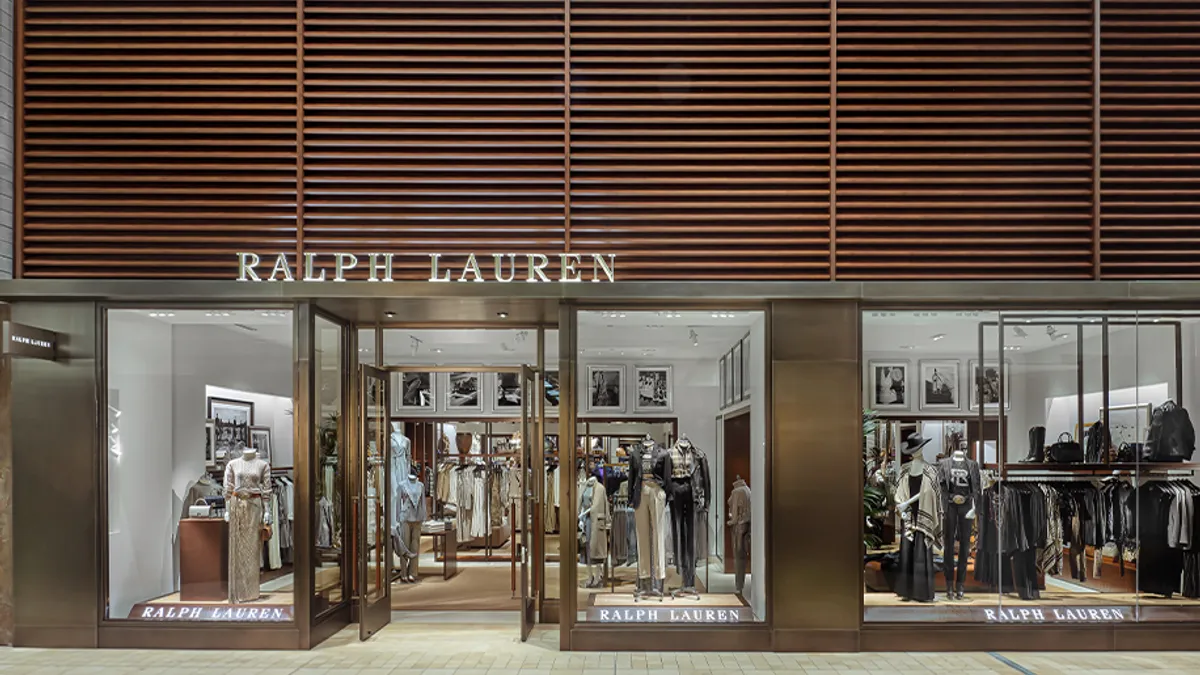
Across every region and channel, customers want to buy into the luxury lifestyle dream Ralph Lauren is selling.
Needham analysts led by Tom Nikic said that first-quarter DTC increases represented “the 37th straight quarter of growth, and the 7th double-digit increase” over the last eight quarters. In addition, Nikic said North America wholesale was “expected to remain strong” throughout the first half of fiscal 2027.
The company raised its outlook for fiscal 2027, with revenues expected to increase 5% to 6% based on its better-than-expected first quarter results, according to the earnings release.
Picicci said the company’s outlook “maintains a prudent view of consumer demand in EMEA,” and includes the expectation of certain headwinds resulting from energy pricing changes and U.S. tariffs.
“By region for fiscal 2027, we still expect North America revenue to grow approximately low single digits,” Picicci told analysts. “We are encouraged by our strong first quarter performance with continued momentum in our direct-to-consumer channel and healthy wholesale sell-out.”
In emailed comments, Neil Saunders, managing director of GlobalData, said while Ralph Lauren’s first quarter revenue growth was “exceptional rather than a new normal,” the company’s brand heat was “red hot.”
“Part of this is driven by the position of the brand which offers classic pieces that can be worn for everyday purposes, for more formal occasions, or even for very casual moments,” Saunders said. “In the mind of the consumer, the ability to wear products extensively equates to good value for money — even if price points are higher than midmarket brands. This position is further enhanced by the quality of the garments and the fact that many are timeless and so won’t suddenly go out of style.”