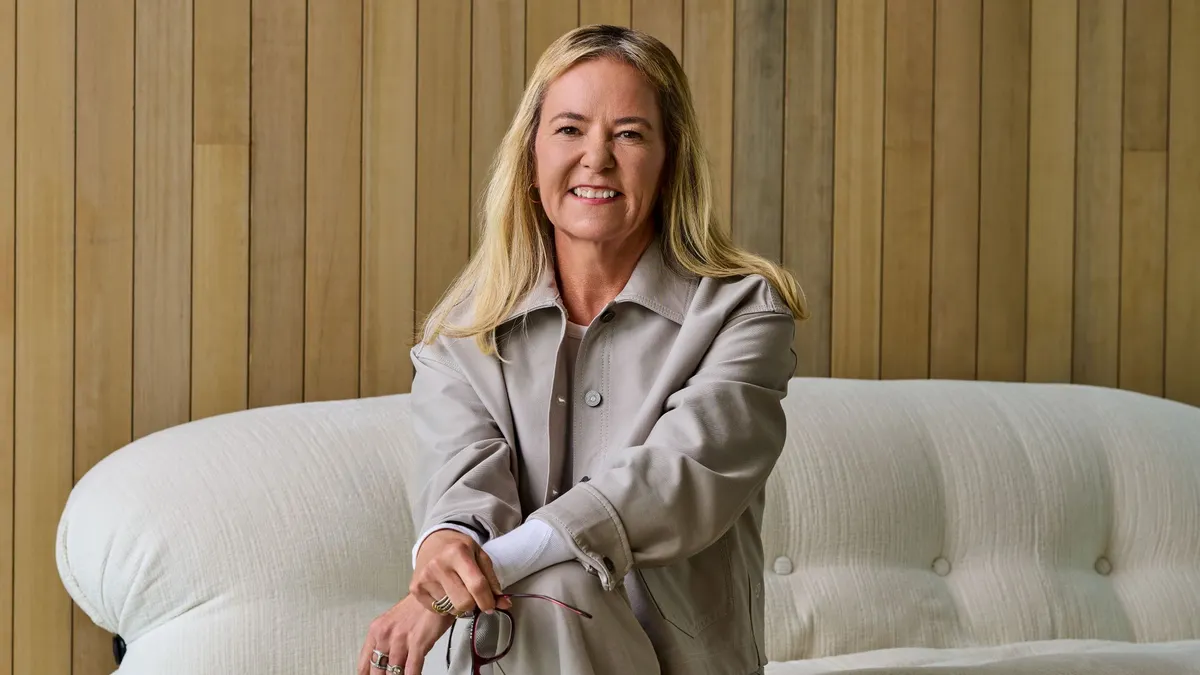
On paper, Heidi O’Neill is a logical CEO choice for Lululemon. She spent almost 30 years at Nike, many of them deeply involved in women’s active apparel, and also oversaw stores and DTC efforts at the activewear giant. It would also give a business highly targeted at women a female CEO.
And yet initial reactions were mixed, at best.
Williams-Blair analysts called her an “out-of-left-field” pick, BNP Paribas Equity Research expressed disappointment in the move and even more positive analysts said they weren’t sure if she was the correct choice. Lululemon founder Chip Wilson, perhaps predictably, also spoke out about the appointment.
“I genuinely hope that Heidi is the right person for lululemon, but a near 30-year veteran of [Nike] is not the symbol of transformative, creative-first leadership that can instill shareholder confidence in today's world,” Wilson wrote shortly after the announcement.
Indeed, Lululemon’s shares were down after news of the appointment.
Lululemon's stock price now trades around the same level as when Calvin McDonald first started
O’Neill’s icy reception also may reflect her close ties to the John Donahoe era at Nike, which led to the current yearslong turnaround at the activewear giant. But she was up against tough comparisons from the start, with activist firm Elliott Investment Management in December pushing for Lululemon to hire Ralph Lauren veteran Jane Nielsen as its next CEO, a suggestion many observers applauded.
“In terms of Ms. [O'Neill’s] capabilities, we believe it is an intriguing choice,” Needham analysts led by Tom Nikic wrote. “We believe that she was a potential candidate for [Nike’s] CEO role (a job that eventually went to Elliott Hill). And her direct experience in the athletic sector, for the industry leader no less, is a positive.”
At her core, O’Neill remains a logical choice for a retailer like Lululemon. Examining her likelihood of success, though, requires looking back at what worked for her predecessor, what Lululemon needs now and if the market will give her a chance to deliver it.
The beauty executive who built an athleisure powerhouse
When Calvin McDonald joined Lululemon from Sephora in 2018, then-Chairman Glenn Murphy called his position at the helm “enviable.”
McDonald was walking into a leadership team that already consisted of Sun Choe and Celeste Burgoyne, two executives who would become key players in Lululemon’s growth streak. Stuart Haselden had just been promoted to chief operating officer. He would go on to lead Away two years later and now runs fast-growing outdoors brand Arc’teryx. Those three had largely run the brand after former CEO Laurent Potdevin stepped down.
“There’s always more we can do, there’s always more opportunities for our business. But, because we’re in a strong position today, Calvin can take his time,” Murphy said. “He can do a lot of listening, he can meet with people, he can understand our strategy and our processes and our operations, and what makes the company tick.”
The strength of Lululemon’s leadership team is what also gave the brand the confidence to take its time in choosing an executive. And when it did, Murphy said McDonald had the “full confidence of the board.”
“We really believe he clearly is the right CEO for the future for the Company and will take us from strength to strength,” Murphy said.
By and large, Murphy was right. McDonald more than tripled Lululemon’s net revenue during his tenure, from $3.3 billion to over $11 billion. He also nearly doubled the retailer’s store footprint, which sat at 811 as of Lululemon’s latest annual report.
Calvin McDonald oversaw enormous growth at Lululemon
“I think the Calvin regime was great for six years and not for the seventh,” Matt Powell, a senior adviser with BCE Consulting, said in an interview. “If you believed everything you read today, we'd say Calvin was a failure from the jump, and that simply was not true. Did they make some missteps at the end? Do they maybe need a fresh direction and point of view? I think every company goes through that — and so I don't think that he can really be saddled with things that were fatal either.”
Indeed, in some respects McDonald has been “discredited” in recent months as Wilson and others bemoan Lululemon’s recent trajectory, Jessica Ramírez told Retail Dive. Ramírez, who is the co-founder and managing director of The Consumer Collective, sees McDonald’s tenure as a solid era for the company, led in part by his partnership with product leader Choe.
When Choe left Lululemon for Vans, “that's when we started to see the faults,” Ramírez said. “If we look in comparison, Vans is doing pretty well since she arrived … he grew that company alongside Sun very well.”
A strategy-minded CEO, paired with a strong creative leader, can be a powerful combination in retail — and one that has succeeded at companies, including Burberry and Coach in the past, according to Ramírez. McDonald’s work with Choe was similar, and the executive also brought a fresh perspective from his work in the beauty category that helped Lululemon improve visual merchandising in stores and advance localization efforts.
As Lululemon welcomes a new CEO, Wilson has repeatedly called for a product visionary to lead the retailer, but analysts say that isn’t the only way forward.
“I couldn't disagree more,” Powell said of Wilson’s views. “I think Chip Wilson thinks he's a merchant prince — and I think he thinks he's got the Midas Touch and therefore only Chip Wilson can make Lulu right again … he's trying to paint himself as God's gift to activewear, and it's just not there.”
Activewear is in a different place than when Wilson ran Lululemon, Powell noted, and Wilson himself was the cause behind the athleisure brand’s original see-through pant scandal, among other missteps.
Lululemon does need to address its product blunders, and O’Neill will need to hire a strong team around her to address that, but it doesn’t all need to come from her, according to analysts.
Despite disappointment from some corners around her appointment, the Nike veteran is better positioned to solve Lululemon’s problems than some of the other names bandied about, Ramírez said, including Nielsen. Nielsen had strong CEOs at the companies she helped turn around, muddying the waters on how much she was responsible for at those businesses.
“Your CFO runs the numbers,” Ramírez said of Nielsen’s history as a finance executive. “That's what they do. They're not running product. They're not running strategy.”
What Lululemon needs
Lululemon’s critics aren’t wrong about the retailer’s need for change. The athleisure brand needs a product reset and a strategy for returning to growth in North America, but they might be wrong about O’Neill’s chances at delivering that.
Criticisms leveled at O’Neill include that she hasn’t held a CEO role and that, despite coming from an activewear powerhouse, she was connected to one of its weaker eras. It’s hard to know how much O’Neill is at fault for a strategy led by Nike’s former CEO, but the fact remains that she had multiple decades of experience working her way up the ranks at the brand prior to Donahoe’s arrival.
A product leader who has vast experience in women’s apparel and DTC bodes well for Lululemon, but she will also be joining a much smaller organization and entering the role under circumstances very different from McDonald’s. Rather than a happily chugging business, O’Neill will be entering a retailer that needs to produce results swiftly.
North America, responsible for most of Lululemon's revenue, has slowed in recent years
Lululemon’s international business is still growing strongly, but it represents a relatively small fraction of the retailer’s sales compared to the North American market. The threat of stalled sales in that region is real, but it’s not dire.
“Lulu is the No. 1 women's activewear brand in the world, and they're in no danger of giving up that position,” Powell said. “The sales are not good at Lulu, and I think maybe they need to take a couple of steps back to take steps forward again — and that's OK. Nike is going through the same thing. They've taken some steps back, but they're going to be OK.”
What O’Neill needs to focus on when she joins is reconnecting with the brand’s consumer and understanding what it is they want from Lululemon’s products.
The company will need to produce compelling products to get back in customers’ good graces — Wilson is sounding the alarm for good reason on that front. But now O’Neill will be doing it at a company actively battling its founder over how to run the business, with many opinions already stacked against her.
“I think that's a real danger here, that people have already made up their mind that she's a failure,” Powell said, calling O’Neill “the obvious choice” to run Lululemon.
“There are many competent retail executives out there. Heidi is one of them,” Powell said. “And if there's a prolonged fight with Wilson over this now … that's going to be a very challenging position for any executive.”