Dive Brief:
- J.C. Penney’s struggles continued in Q2 as total net sales fell more than 8% year on year to $1.3 billion. Active, home, jewelry, beauty and salon were strongest, with weakness in some apparel segments.
- Gross margin reached 39.2%, hit by higher product costs and pricing actions related to them, category mix changes and higher promotions. Net income shrank by more than 50%.
- Store traffic and online sales improved toward the end of Q2 and into Q3, and credit card enrollments and its loyalty program both reported double-digit growth, the company said in financial filings Friday.
Dive Insight:
J.C. Penney had a rougher Q2 than its rivals in the department store segment, as Dillard’s and Macy’s eked out small top-line gains in the period and Kohl’s sales declined less than 1%. For the first half of 2026, Penney’s total net sales are down 6.5%.
“The sales decline over last year isn’t particularly convincing, especially as it puts JCPenney towards the bottom of the retail league table,” GlobalData Managing Director Neil Saunders said by email. “The market, even just for department stores, grew during the quarter, so JCP’s sales dip represents a serious loss of market share.”
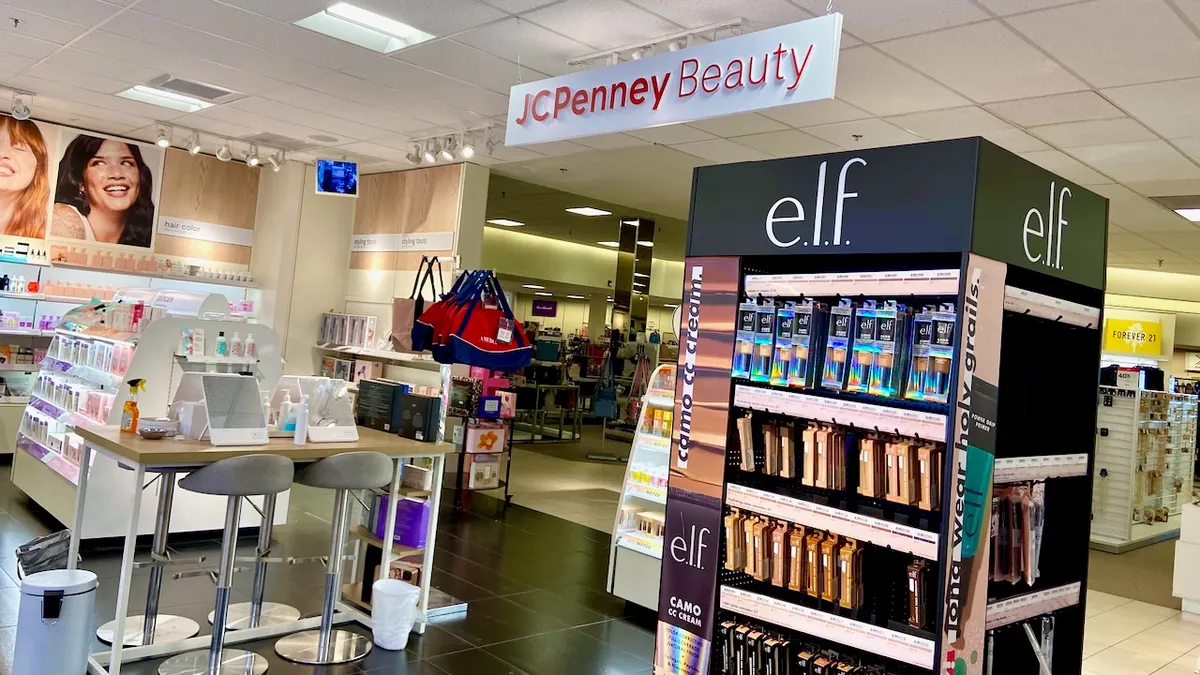
There’s a lack of momentum despite some creative marketing and noticeable improvement in stores, he said. Penney itself said that lower unit inventory, in-stock gaps and softer demand in seasonal categories hurt apparel sales.
There were some bright spots in the quarter. Active apparel sales grew about 12% year over year, thanks to Nike, team sports and select Adidas footwear, with GlobalData calling out effective World Cup merchandising.
Furniture grew 41%, jewelry 9% and salon about 7%, the latter thanks to both retail and services. The retailer also seems to have recovered nicely from the termination of its Sephora partnership nearly four years ago. Sephora moved its shop-in-shops to Kohl’s, where they have actually been a drag on sales in recent quarters.
Penney said Q2 beauty sales got a boost from skin care and new color launches, including Milani and K-beauty. The retailer “has been quite thoughtful about creating a modern proposition that replaces Sephora,” Saunders said.
“The problem is that, to work properly, a department store needs almost all of its departments to work,” he said. “But JCP doesn’t fire on all of these cylinders, so it remains under pressure.”
Moreover, while another chain might close underperforming locations, that’s less likely given that two of Penney’s landlords are also its owners, according to Saunders.
The department store launched a marketplace late in the quarter, and it’s outperforming expectations so far. JC Penney Marketplace is expected to contribute incremental growth to the company’s e-commerce sales over the long term. For the holidays, J.C. Penney said it will continue its “value focused pricing activities,” center holiday presentations on “clear value and family moments,” and maintain its monitoring of the “consumer environment and customer response and make strategic adjustments as necessary.”
More broadly, the retailer has the benefit of being part of Catalyst Brands, which provides financial and operational support and seems focused on the longer term.
“JCP remains financially stable and with the backing of Catalyst and investors it’s really not going anywhere,” Saunders said. “And, to be fair to the company, it’s not being run into the ground in the way Sears was — on the contrary, there is investment and effort to rebuild things.”