Every year, the Grinch with his Grinch feet ice-cold in the snow, has the epiphany that Christmas is about more than just gifts. It’s about togetherness, joy and the other intangibles that accompany the season.
A host of characters, including wide-eyed Cindy-Lou Who, are always there to show him the true spirit of Christmas — and this year is no different. A marketing effort from Walmart this year shows the child protagonist once again moved by an urge to help the people of her town. To help them score deals, that is.
Wholesome and consumerist at the same time, Walmart’s big holiday marketing play this year is a fitting metaphor for the holiday season as a whole. Shoppers still want to have a merry Christmas, but they’re struggling to find the funds to do so.
“There's a real joy deficit for consumers,” Katie Thomas, who leads the Kearney Consumer Institute, told Retail Dive.
It’s not helping that brands are “basically doing anxiety-enforcing messaging,” she said. “You're stressed out, everything's expensive and you're getting that told back to you. You're in the comments on TikTok and everyone's like, ‘Oh, I can't even afford my groceries’ … We're all kind of in that echo chamber of reinforcing that anxiety.”
Mired in high prices and armed with buy now, pay later, consumers are making it work. Now, it’s up to retailers to strike the right balance between shoppers’ hearts and wallets.
The consumer will ‘melt slowly’
While the holidays are traditionally a time of more emotional marketing, including tactile efforts like catalogs, it’s important to place campaigns within the financial context of the consumer. Relentless inflation and the ever-changing state of tariffs have put a strain on shoppers’ wallets that’s impacting how they think about gifting.
More than 60% of shoppers anticipate holiday expenses will put financial strain on them and 58% expect higher prices on gifts this year, a Bank of America study found. As a result, the vast majority, 87%, of consumers plan to shop at discount retailers this season, while just over half are considering gifting dupe products.
Higher-income shoppers will drive purchasing during the season, while middle- and lower-income consumers will be more cautious, Christina Boni, senior vice president of corporate finance at Moody’s Ratings, said in emailed comments in November. Similar to Bank of America, Boni predicts a bump to discounters and off-price retailers as shoppers seek deals.
“Many consumers may also resort to increasing their credit balances to support their holiday spending as inflation outpaces real wage growth,” Boni said.
Thomas also suggested resale could be an option for gifting this year. Gen Z is leading that trend, with many of them using resale as a starting point for certain products. Overall, there’s been a 9% increase in shoppers’ willingness to gift resale products, according to Thomas, bringing that metric up to 64% this year.
Anjee Solanki, national director of retail services at Colliers, indicates it’s less about shoppers not spending on the holidays and more about them spending in different ways. For example, consumers might opt to bring a group activity like ornament painting to holiday events versus individual gifts.
While core family members will still likely receive presents, there may be smarter gifting trends, including buying affordable luxuries like face masks or less expenditure on wrapping accoutrements.
“I think gift giving will shrink and people will look at gift giving in a way that is going to be slightly different,” Solanki said.
“Intentional” is a word that comes up a lot when it comes to how shoppers are spending this year. Intentional about who they’re gifting to, intentional about how much they’re buying for loved ones and intentional about when they spend. Retailers like Urban Outfitters have observed shoppers holding out for deeper discounts as the season progresses, and the popularity of deal days like Black Friday — including among some of the youngest holiday shoppers — shows just how much price is top of mind.
According to Thomas, there are tactical ways to market to a cautious consumer like this, and many brands are already employing them. One of the most obvious is to stretch out the holiday season, giving shoppers more opportunities to spread out their spending and ease the financial burden on any given month. That’s been a strategy for multiple years now, led by the October sales events from retail giants including Walmart, Target and Amazon.
Retailers can also adopt an empathetic tone when talking to consumers, according to Thomas, and avoid playing games on pricing. After years of rising prices and shrinkflation, consumers are especially sensitive to price increases — and to retailers artificially discounting products. One shopper Thomas spoke to said she buys a replacement of the same sweater every year and the sale price this year is running her the same as full-price last year.
“The challenge with both this and shrinkflation is: You're going to see the consumer melt slowly,” Thomas said. Shoppers may swallow their disappointment this year and go ahead with their purchases, but it will harm consumer trust in the long term, she noted. “It is more sensitive this year, but I don't think you'll see it reflected in numbers either.”
Bring in the joy
After months of being “inundated” with deals and discount terminology, there’s a real place for retailers to connect with shoppers in a more emotional way as the season winds down. Key to Solanki is that those efforts are “thoughtful and sincere,” a message retailers can pass on to retail staff to execute in stores as well.
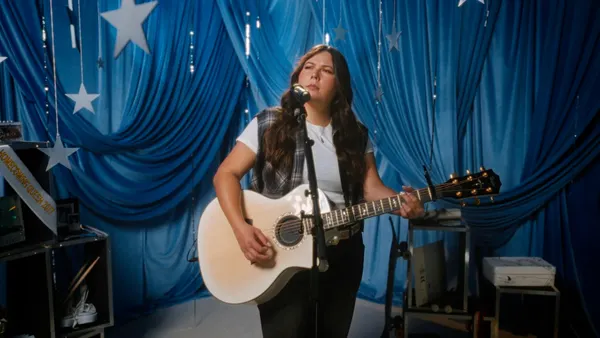
Gap won kudos this year for a variety of upbeat ad campaigns featuring Katseye and Parker Posey, but took the tone down for a holiday ad starring Sienna Spiro, who sang an a cappella version of “The Climb.” Home Depot, meanwhile, showed the journey of one Christmas tree to a young boy’s home, and Etsy leaned into feelings of connection and understanding.
Consumers have grown tired of discount messaging, Thomas said. “If you don't do it right, you're accused of being misleading or tone deaf. So then they're coming back to the emotional because it's the holidays — this is an easy time to do emotional.”
Getting emotional doesn’t have to be serious, either. Target, which stirred up many feelings last year with its “hot Santa” effort, has brought the charismatic Kris K back to its marketing lineup this year, a move the retailer said was driven by shoppers’ desire for more joy this season. An upbeat Starbucks ad shows marker-drawn characters playfully running across coffee cups, while Maybelline actually produced a microdrama Christmas content series.
Tapping into the senses is another way to bring some joy into the season, Solanki noted. As proven by the longevity of pumpkin spice everything, certain scents and taste profiles can be particularly evocative for shoppers. Retailers can also create joy through seasonal merchandising like gift sets and product bundles, according to Thomas, or by leaning into limited-edition flavors like peppermint.
Brand imagery, whether in digital content or through physical efforts like catalogs, can also be used to evoke an emotional response. Solanki, who lives in California, described one ad where the steam of a hot beverage was visible.
“It was joyful because it reminded me I can't wait for Christmas because I'm going to be in Europe and it's going to be nice and cool,” Solanki said.
Solanki predicts in-store engagement will also be popular throughout the holiday season as a way to bring more levity to the season. Target, for one, announced in-store toy demos at the start of the season, while QVC held a two-day Holiday House pop-up in New York in November.
Bringing joy into the shopping experience doesn’t have to come at the expense of sales, either.
Solanki cited one Spirit Halloween store she went to this fall that had a haunted house inside, which was not only entertaining for customers but also gave them ideas for costumes or accessories to purchase.
“The joy in these families — I don't care if you're an adult or a child, everyone was engaged in this haunted house,” Solanki said.