
Retail is defined by customers’ desire for ease and convenience.
Whether in B2C or B2B, buyers expect seamless delivery of exactly what they need, when they need it. But this is only possible when you have fully modernized order management systems on the backend.
When a shopper wants a sweater in a particular color that’s sold out in one location, you need an interconnected order management system that shows up-to-the-minute inventory levels across store branches so you can meet customer expectations.
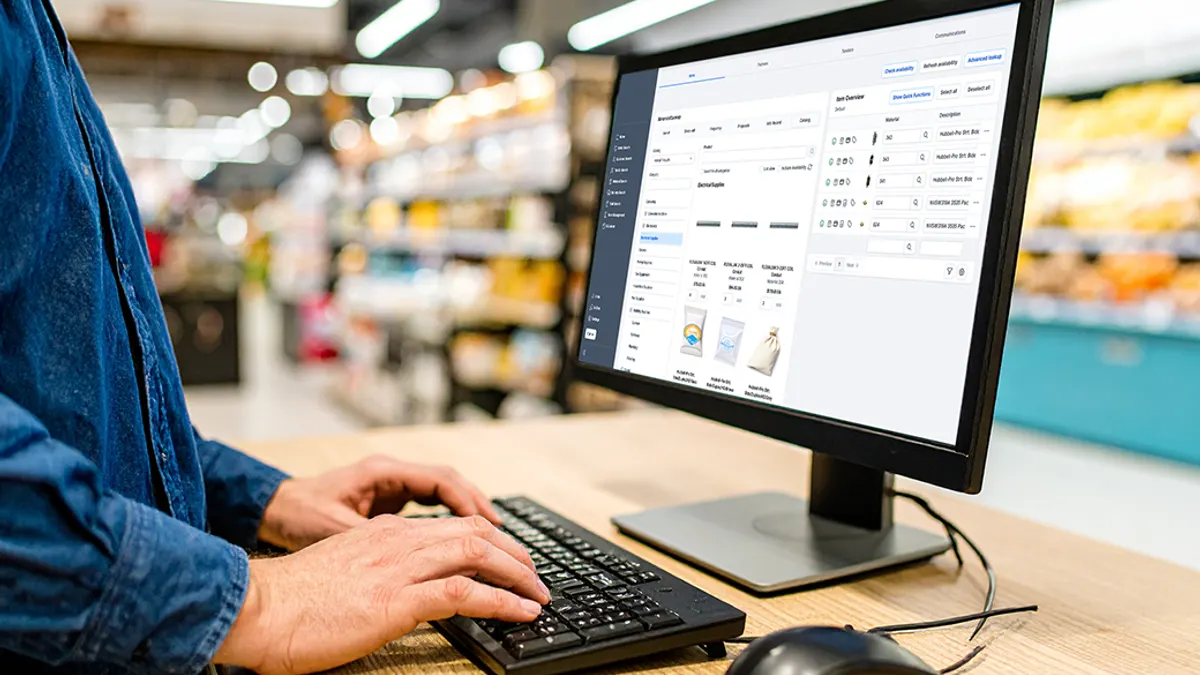
When a contractor orders all the materials for a new kitchen installation, those items must arrive together, accurately priced and available in real-time. You need a backend system that can compile complex, multi-line orders with a few clicks and let you track inventory levels so you can guarantee timely delivery.
These kinds of scenarios are difficult for legacy tech to achieve, but to the average customer, they’re the baseline expectation.
To make things more complicated, the very structure of most retail organizations has become more involved over the past few years. Now that customers use more touchpoints to shop, brands are expanding across more channels and integrated retail, in which one company is at once manufacturer, wholesaler and retailer, is on the rise.
These complex retail arrangements make inventory and order management especially convoluted, but that doesn’t mean the customer will let you off the hook. They’re still expecting ease and convenience every step of the way.
The only way to meet these expectations is with fully modernized order management. Without cleaning up your backend and refining your order management processes, you can’t achieve the inventory accuracy, process automation or flexibility that let you compete in modern retail.
The Inventory Crisis: A Symptom of Broken Order Management
A core ingredient of successful order management is good inventory management, something that has only gotten more difficult in recent years.
Chain Store Age reports that these challenges, combined with tariffs and similar upheavals, mean 63% of retail managers struggle at least once a week to find stock their system says is on-hand and 77% to report losing sales because they could not locate stock quickly enough.
One of the most common culprits behind inventory issues is a disconnect between point-of-sale, fulfillment and ecommerce systems. When too many point solutions and silos proliferate, a complete view of your inventory becomes elusive.
Systems that update slowly also cause confusion and delays. Meanwhile, legacy software bolted onto older ERP systems is often difficult to navigate, which leads employees to make mistakes.
Why Have Retailers Overlooked Order Management?
Like most legacy tech challenges order management issues didn’t happen overnight. Retailers adopted point solutions and custom integrations to solve immediate needs, but over time those fixes created data silos and technical debt.
At the same time, many organizations prioritized front-end innovation such as mobile apps, loyalty programs and personalization services, while neglecting the backend systems to power them. Without modern order management, these customer-facing investments struggle to deliver ROI.
When you have a sales order management environment mired down in legacy customizations and bolt-on tools, it can cause problems that can negate most customer-facing innovations that may be happening, such as:
- Delays in order visibility
- Inaccurate inventory numbers
- Stock-outs and empty shelves
- Data silos that inhibit omnichannel commerce
- Employee frustration or higher employee turnover
All of these issues culminate in lost time, lost sales and ultimately, lost revenue.
What Retail Needs Now: Modernized, Automated Sales Order Execution
Modern sales order management is defined by some key traits:
- It’s intelligent enough to surface the information you need when you need it with the help of AI
- It’s connected to every channel your organization sells through (retail, wholesale, ecommerce, etc.)
- It’s embedded directly into your ERP, not clumsily bolted on
- It’s intuitive to use so employees can master it quickly
Imbuing your order management with these traits requires a little clean-up of your existing ERP environment to minimize customizations, as well as modernized software that centralizes data in one workspace and simplifies tasks with AI and automation.
This work can be involved, but the results are powerful. Some of the benefits you may see include:
- Real-time information access
- AI-powered search and validation
- Automated workflows
- Faster onboarding & improved CX
The Business Impact: Growing Customer Trust
The impact of improved order management trickles throughout the organization, contributing to faster fulfillment, fewer returns and greater customer trust.
When your team can quickly find exact inventory levels or locate every single product needed in a complex order, customers are happier.
It also saves your team time. When employees have accurate, up-to-date information consolidated in a centralized dashboard, the hours saved can be significant.
Real businesses that have updated their order management systems have seen:
- A 15% growth in sales
- A 25% improvement in customer satisfaction
- A 40% increase in order input speed and accuracy
- A reduction in employee onboarding from four months to four days
What Retailers Should Do Next
Interested in refining your approach to order management? Here are some high-level steps to take to begin transforming your sales execution.
Re-think how you view order management
Order management may not be flashy, but if it’s not functioning well, your business grinds to a halt. Think about how you approached order management in the past and brainstorm what it would look like if you started treating order management as the core part of your business strategy it is.
Assess the current sales order flow
What happens between the time someone places an order and the moment they receive it? How many systems are involved and how many different pages must an employee navigate?
Do a complete audit of your current order management processes so you have visibility into where inefficiencies and bottlenecks exist.
Evaluate opportunities for automation or AI
Take another look at the sales order flow. Where are employees performing manual tasks that could be sped up with automation?
Automation technologies can move orders through workflows faster and with fewer errors, while generative AI can speed up search queries and let employees use natural language to find exactly what they need.
Build toward a clean core strategy
ERP experts recommend building towards a “clean core” approach, which minimizes technical debt by discouraging custom bolt-ons and integrations. While many third-party tools do serve some purpose, the more you can “clean” your ERP instance, the more efficient your tech stack will be in the long run.
Future-proof Your Business with Modernized Sales Order Management
In an era when customers have higher expectations than ever, you can’t risk letting outdated, cobbled-together tech slow you down. You need a backend sales order management system that’s easy to use, flexible and able to deliver real-time visibility. This visibility into order status and inventory data improves employee and customer experiences alike, helping you thrive in today’s market.