Dive Brief:
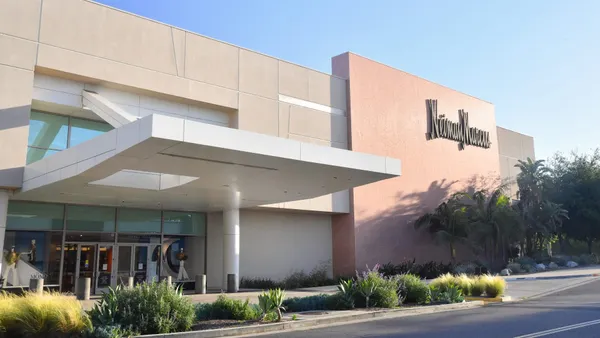
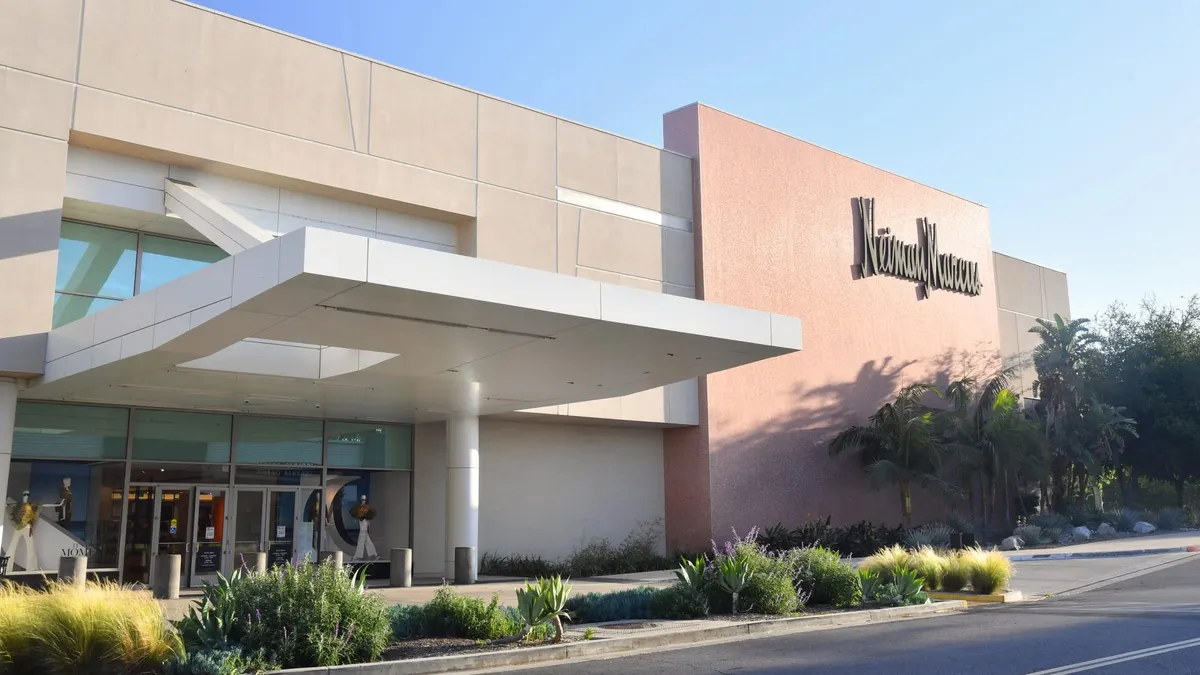
- Saks Global on Friday announced the closure of 15 more full-line stores – 12 Saks Fifth Avenue and three Neiman Marcus locations – and said its remaining footprint is likely to remain intact.
- The luxury department store company, which filed under Chapter 11 in January, previously said nine other full-line locations and nearly all off-price stores are closing.
- Some 500 vendors have resumed shipping inventory, up from its previously announced 400, Saks Global also said. Failure to pay suppliers was a major factor in the company’s declines all last year.
Dive Insight:
When Saks Fifth Avenue and Neiman Marcus Group closed on their $2.7 billion merger deal in late 2024, the luxury rivals’ fleets were more or less the same size. This bankruptcy process has chipped away at Saks Fifth Avenue’s fleet, though, as plans are to end up with 32 Neiman Marcus locations and just 13 Saks Fifth Avenue locations.
The Saks Fifth Avenue closures announced Friday include stores in Beachwood, Ohio; Chevy Chase, Maryland; Michigan Avenue, Chicago; Costa Mesa and Palm Desert, California; Las Vegas; Hungtington Station, New York; Raleigh, North Carolina; San Antonio; Sarasota, Florida; St. Louis; and Tysons, Virginia. Neiman Marcus stores in Honolulu; Canyon Park, California; and White Plains, New York will also shutter.
Bergdorf Goodman, once part of Neiman Marcus Group, runs a men’s and a women’s store in New York City and will stay open, Saks Global said last week.
Closures were inevitable, not just because downsizing is a common consequence of Chapter 11 restructuring, but also because the two retailers anchored many of the same malls. Several analysts have expected that in most locations where the two are in close proximity, Saks Fifth Avenue would most likely be targeted for closure because Neiman Marcus had stronger sales and better vendor relationships.
Saks Fifth Avenue is taking the brunt of Saks Global's downsizing
However, Saks Global said that in some markets it will continue to operate both.
“By further differentiating its retail banners through distinct assortments and experiences, the Company will honor the heritage of each brand while positioning itself to lead multiple segments of the luxury market over the long-term,” Saks Global said in its release.
That differentiation has been made more difficult by its vendor troubles. Because luxury department stores tend to all offer the same big names, smaller brands are often the most helpful in setting each retailer apart, experts say. But it’s the smaller vendors that are least likely to get their past invoices paid and remain the most reluctant to resume shipments.
Saks Global addressed that last week, saying that it “has reached or nearly reached agreements with more than 175 brands across all categories, including large maisons as well as smaller brands, and is committed to having equally productive discussions with more brand partners.” Its efforts along those lines have unleashed “a significant acceleration of inventory flow, with shipping resumed by more than 500 brands releasing close to $1.3 billion in retail receipts.”
That is more than 80% of the merchandise the company expects to receive from February through April, “with momentum expected to continue,” the company said.