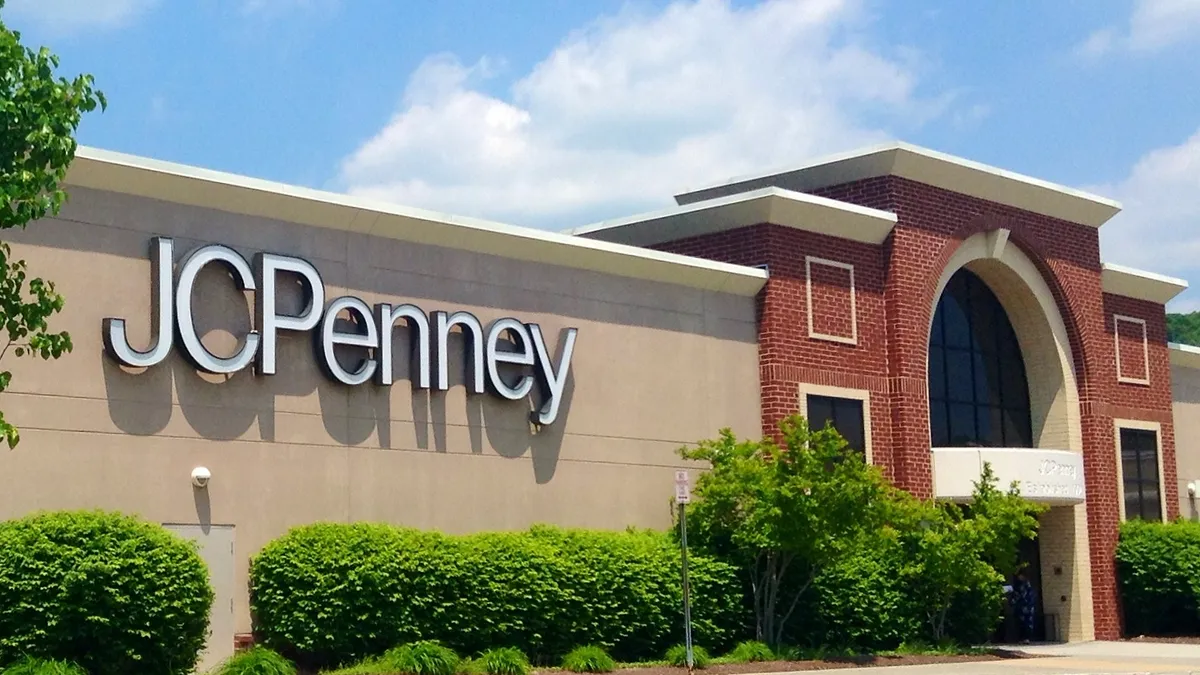
A deal to sell a portfolio of more than 100 J.C. Penney stores to a private equity firm is off, according to a regulatory filing from the trust tasked with selling the property.
The firm, Onyx Partners, and Copper Property CTL Pass Through Trust, established during Penney’s 2020 bankruptcy, in July announced that Onyx would acquire 119 stores for $947 million.The closing was expected in September, but was delayed several times.
The trust was set up to manage the leases of 160 stores and six distribution centers but its ultimate mission was to sell that real estate to third-party buyers as soon as possible.
When the sale to Onyx was announced over the summer, Copper Property executives faced questions about the scale of the portfolio, its price and whether it would have been more lucrative to turn it into a real estate investment trust. Under the terms of the Onyx deal, the average price per property was $8 million, at least $2 million lower than previous sales facilitated by Copper. Executives on a call with trust investors expressed urgency, citing a deadline that had already shifted several times.
Copper Property seemed to be banking on the sale to Onyx. Most recently, on Dec. 9, the trust said the closing date was moved to Dec. 22 to “allow sufficient time to complete all steps required” but said it continued “to strongly believe that closing will occur.” Monday's filing indicates that the agreement is terminated if the closing doesn't happen by Friday, the day after Christmas.
When asked why the deal fell through, Copper Property executives declined to comment and Onyx didn't immediately respond.
Nick Egelanian, president of retail development firm SiteWorks, said it is difficult to know exactly what happened but that there are three major possibilities: the lenders have cold feet; the buyer has cold feet based on the underlying real estate value; or the buyer has cold feet due to J.C. Penney’s performance.
“It also could be a combination of these and other factors, but I am really speculating,” he said by email. “It’s a really good question.”
The department store’s sales continued to slide all year, though in Q2 the declines slowed and it swung into the black, attributed to better markdown management and effective tariff mitigation. The retailer doesn’t report comparable sales and didn’t quantify what it said were on-and-off store traffic improvements.
As of the start of the year, J.C. Penney is run by Catalyst Brands, a joint venture between Sparc Group and the retailer, formed in an all-equity transaction. Shareholders include Simon Property Group, Brookfield Corporation, Authentic Brands Group and Chinese fast-fashion site Shein. Sparc Group had been a joint venture of Authentic, Shein and Simon.
Catalyst also runs Aéropostale, Brooks Brothers, Eddie Bauer, Lucky Brand and Nautica, brands whose intellectual property is all owned by Authentic.