


Consumers this holiday season might use AI tools to help inspire their gift purchases and compare prices — but they won’t be giving up all the decision making to technology.
While AI adoption throughout the shopping journey still has a ways to go, consumers' interest and experience with it has improved since last year.
Many people's discovery journeys are continuing to change this year as they become more comfortable with AI, Gartner Senior Principal Analyst Emily told Retail Dive, adding that “people are using AI tools at the beginning of their shopping journey as a source of inspiration.”
One-third of consumers are very or extremely willing to use generative-AI-backed tools or chatbots for holiday gift recommendations, according to data from Gartner’s 2026 Holiday Advertising and Consumer Trends report. Currently, just 13% of shoppers use AI tools or chatbots to inspire their holiday shopping.
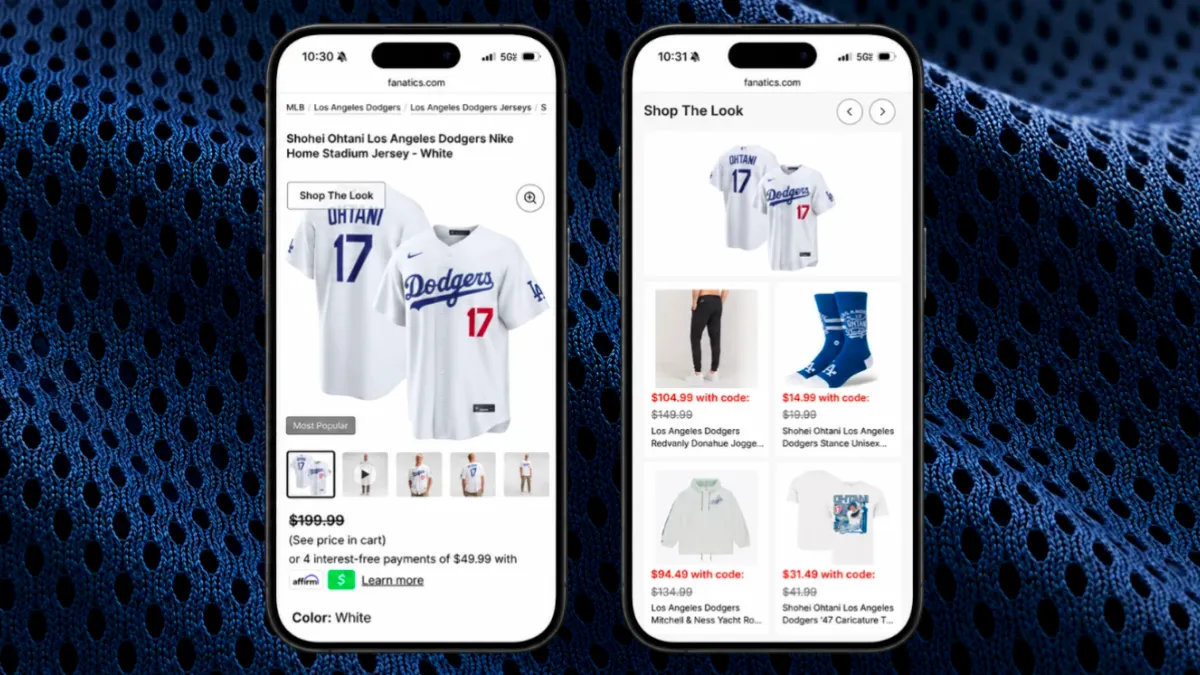
Big retailers — such as Walmart — are investing in agentic across the buying journey, both on-site and externally. But it will take time for consumers to broadly utilize it to finalize purchases.
Consumers don't want AI tools to take over the final stages of the purchasing journey, “especially when it comes to holiday shopping, because they want to maintain autonomy over choice,” Weiss added. “The human nature of gifting is real deep and anthropological, and that you want the thought and satisfaction of at least making the final selection.”
Part of the reason consumers aren’t entirely ready to let AI make purchases is because of trust.
Survey results from William Blair released in October found a majority of respondents indicated they wouldn’t let AI make a purchase without a review and a majority said they were unwilling to share bank and credit card data with the technology. The main concern in doing so is the potential for data breaches and unauthorized purchases.
More broadly, shoppers do not want to outsource all the decisions into agentic commerce yet, Katie Thomas, who leads the Kearney Consumer Institute, told Retail Dive.
AI becomes a price watchdog
One way consumers are using AI beyond discovery and inspiration is to compare prices.
Almost two-thirds of consumers have used AI to either occasionally or frequently compare prices across products, with a nearly direct linear relationship to household income, according to William Blair’s survey. The most common reason consumers would use AI for the holidays is to compare prices or deals, according to Bank of America’s 2026 report on holiday spending.
“I think people are going to use it to price shop for them,” Thomas said. “There's been a lot in the press lately about dynamic pricing, personalized pricing. That's stressing people out. And I've had conversations now with high income, tech savvy folks who are building their own agents to do things on their behalf or search on their behalf, so I do think that it will be a very useful tool for this holiday season that that consumers will use just because of how much it's advanced in the last year.”
Pricing strategies have been a concern not just for consumers, but also the U.S. government lately.
Walmart over the past month repeatedly defended itself against public allegations that the company has or could personalize prices for consumers, with concern stemming in part from anxiety about the retailer’s use of digital shelf labels.
Last week, Walmart and Target — along with several airline companies, ride-sharing firms and food delivery entities — received orders from the Federal Trade Commission to provide information for the government agency to study the use of personal data to set prices. That move came just a few days after the FTC joined 20 U.S. states in suing Dollar General for allegedly engaging in deceptive pricing practices.
Outside of pricing comparisons and shopping, AI usage broadly continues to gain steam.
William Blair’s survey found that 88% of respondents used an AI tool in the past six months, with broad-based use across age groups and income levels. Over 80% said they use AI at least occasionally before purchase, with 30% using it every time.
Compared to last year, the underlying models AI tools utilize have improved dramatically and the benefits for consumers may become more tangible, head researcher at The Martech Weekly, Keanu Taylor, told Retail Dive. That improvement has given more retailers the confidence to put generative AI in front of their shoppers.
“I think for consumers, this is the year that they'll really feel agentic commerce and AI in their shopping experience through the holidays,” Taylor added.