Dive Brief:
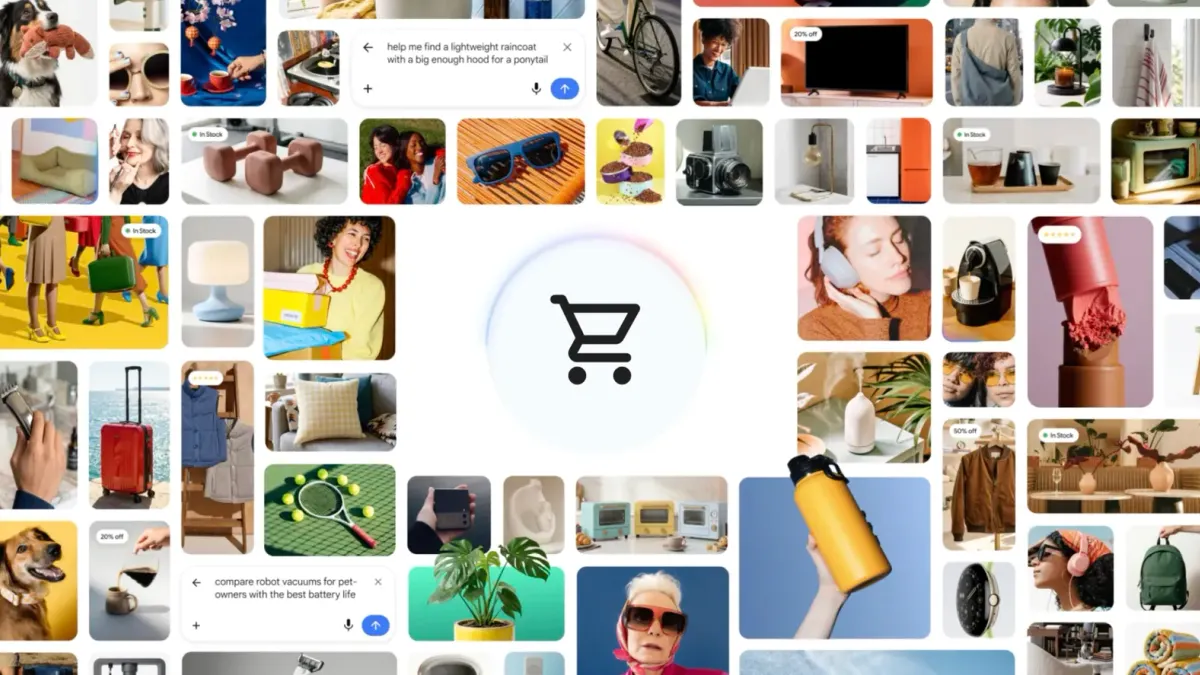
- Continuing its AI-powered shopping push, Google launched its Universal Cart, the company announced last week.
- With the tool, shoppers can add items to their cart across merchants and services, including Google Search, Gemini, Gmail and YouTube. From there, the cart will search for discounts, aggregate price history and notify shoppers when out-of-stock products are available again, Vidhya Srinivasan, vice president and general manager of ads and commerce at Google, wrote in a company blog post.
- Google will introduce the tool in the Gemini app and on Google Search in the U.S. this summer and integrate it into YouTube and Gmail shortly thereafter. Nike, Sephora, Target, Ulta Beauty, Fenty, Steve Madden, Walmart and Wayfair will be among the first to integrate the tool, per the blog post.
Dive Insight:
Google continues to hone in on its shopping features in hopes of delivering a streamlined shopping journey.
At the start of the year, Google launched the Universal Commerce Protocol — a standard for agentic commerce. UCP is hoping to establish a common language for agents and systems to operate across consumer surfaces, payment providers and retailers.
Launching UCP, as well as an Agent Payments Protocol to help agents make secure payments on a user’s behalf, is part of a larger system that supports Google’s Universal Cart.
“While the full potential of agentic commerce is still unfolding, we’ve been laying the building blocks for this future for years,” Srinivasan said. “Now with Universal Cart, we’re excited to put that foundation to work for shoppers.”
Beyond finding shoppers’ desired products, Google also wants to stop consumers from making the wrong purchases. As shoppers search for products, Universal Cart will notify them of possible product incompatibilities and recommend suitable alternatives, the company said. The tool will also analyze a user’s payment, perks and customer loyalty data to hunt for merchants offering the best deals.
Additionally, once users are ready to make a purchase, they can check out with Google Pay or transfer items to the merchant’s site to complete the transaction. “No matter which way you buy, the brand stays the merchant of record,” Srinivasan said.
Last year, Google released a suite of AI shopping tools, including a vision match function to help shoppers find items by using a description to generate AI images of the products they are seeking. The company also updated its virtual try-on tool to include pants and skirts in addition to dresses and tops.
Google also launched several more AI-supported shopping tools ahead of the holidays. U.S. Gemini users could enter shopping queries to receive shopping recommendations, compare prices and view product comparison tables. The company also introduced its “Let’s Call Google” tool, enabling shoppers to call local stores to check product availability, ask about store deals and verify prices.
Retailers are flocking to AI platforms, forecasting that the technology will fundamentally reshape how people shop. However, as those platforms consolidate the shopping journey, having a digital middleman could sever retailers’ ties to valuable customer data, experts caution. Kartik Hosanagar, marketing professor at the Wharton School of the University of Pennsylvania, noted that, “Whoever controls the agents now has the power.”