Dive Brief:
- Fragrance, skin care and self-care sales helped drive strong growth in the U.S. beauty industry for the first half of 2026, according to a report from Circana.
- Prestige retail beauty sales were up 7% year over year to $17.1 billion in the first six months and mass retail sales also increased 7%, to $39.2 billion, for the period. These results underscore “the resilience of beauty spending despite ongoing consumer selectivity,” per the report.
- Throughout the first half of the year, shoppers focused on getting a bang for their buck, said Larissa Jensen, global beauty industry adviser at Circana. "Beauty continues to benefit from consumers' willingness to shop across price tiers, selectively investing in products that deliver the strongest emotional and functional value,” Jensen said in a statement.
Dive Insight:
Even as consumers prioritize their spending, robust growth in the beauty sector suggests that cautious shoppers are still choosing small indulgences.
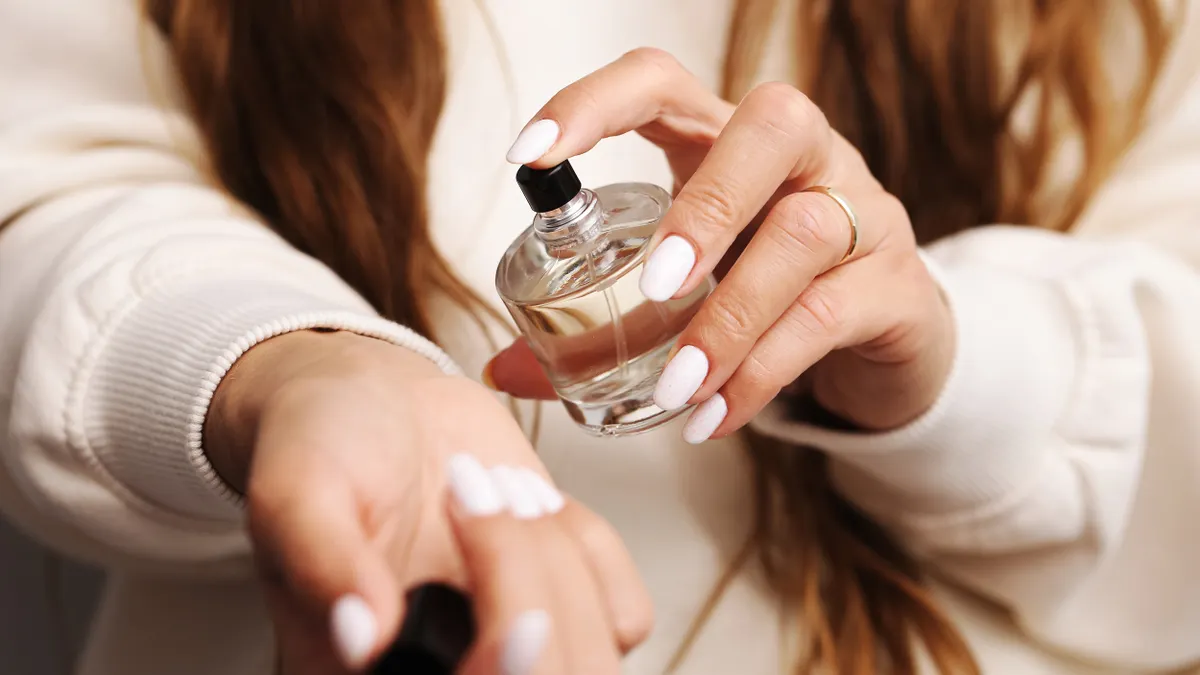
Fragrance was one of the strongest overall categories in the first half of the year. In prestige retail, fragrance sales rose 6% and average prices rose 5%, although unit sales stayed flat. Circana said sales growth was led by shoppers trading up into higher-concentration formulas, with eau de parfum and perfume both posting double-digit growth. Women's fragrance sales drove dollar and unit increases in the luxury sector. Meanwhile, fragrance was the fastest-growing mass market beauty category, with increased consumer demand and higher pricing driving sales up 15% and units up 7%.
Skin care was the fastest-growing prestige category, with sales up 9% and units up double-digits. Body care grew 16%, driven by demand for cleansers, lotions and deodorants, and sun care was up 19%. Prestige hair care was also extremely robust, with nearly 60% growth in hair serums driving prestige hair care sales up 11% and units up 8%.
At the mass level, skin care “outperformed the mass beauty market overall,” with every category posting dollar and unit sales growth. However, mass retail hair care was less robust, with sales up 7% and unit sales down.
Makeup offered more subdued growth, with prestige sales up 3% and unit sales softened. At mass, makeup sales were up 5%, but unit sales declined.
“Looking ahead, beauty industry growth will continue to be shaped by strong consumer engagement in key segments alongside the ongoing evolution of how consumers shop,” Jensen said. “As e-commerce and social platforms play a larger role in discovery and purchase, brands that create seamless paths from inspiration to transaction will be best positioned to capture future growth.”
As customers equalize their spending across mass and prestige, retailers are reassessing their strategies.
Mass retailer Target ended its shop-in-shop partnership with Ulta Beauty this month after a yearlong wind-down, but is continuing to pursue beauty customers with its prestige Beauty Studio concept.
At the same time, Ulta gained prestige market share in the first quarter of 2026, and is opening a new experiential store in New York City’s Times Square in late 2027.