

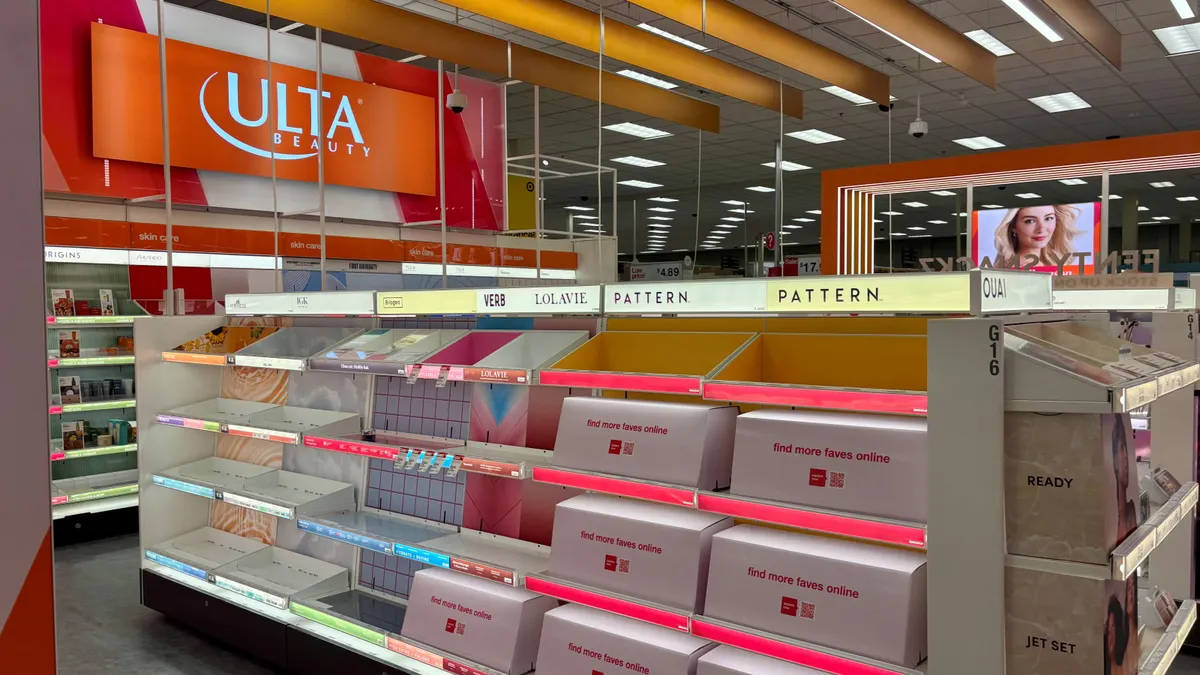
Target and Ulta Beauty’s shop-in-shop partnership came to an end Sunday, but that isn’t the end of Target’s efforts to win market share in the beauty sector.
The separation was a year in the making, with both retailers issuing a joint statement about the decision last August. Account linking between Ulta Beauty Rewards and Target Circle accounts will no longer be available, though Ulta Beauty Rewards points accumulated through eligible purchases at Target prior to Sunday will remain in Ulta shoppers’ accounts.
“Even without Ulta, Target’s beauty business is huge,” GlobalData Managing Director Neil Saunders told Retail Dive in emailed comments. “So, the ending of the partnership is something they will take in their stride — even if it probably did initially come as a bit of a blow.”
Helping fill the void of losing the 600-plus Ulta shop-in-shops is the new Target Beauty Studio design. The mass retailer had 2,002 stores in its full U.S. fleet as of May 2, per a quarterly filing.
Target is introducing the Beauty Studios in about 600 locations, but has not yet released an opening date or list of locations for the new Beauty Studios.
Nearly one-third of Target’s stores housed Ulta Beauty shop-in-shops
Target’s new chief merchandising officer, Cara Sylvester, teased the experience during a financial community meeting in March that outlined a massive turnaround plan spearheaded by CEO Michael Fiddelke.
Target plans to integrate beauty-specific rewards into its loyalty program, Sylvester said at the time.
The Beauty Studio concept is “a sign that it is not giving up on more premium, inspirational, and innovative beauty,” Saunders said. Target's ability to have more control is a good thing long term with the potential for better margins.
Target's solid first quarter earnings showed the retailer was potentially making headway on its turnaround plans, as net sales jumped 6.7% year over year to $25.4 billion. Its beauty net sales increased about 9.5% to nearly $3.4 billion.
Both prestige and mass beauty are experiencing growth in the U.S. — and major retailers want in on the action.
Walmart has also delved deeper into the beauty category. The mass retailer in April announced it will expand a new specialized beauty store associate role to 425 stores across the U.S. following a successful pilot.
Target and Walmart are vying to take a piece of the beauty market, which continues to thrive despite macroeconomic pressure on consumers. Prestige retail beauty sales in the U.S. grew 7% year over year to $17.1 billion during the first six months of 2026 and mass retail sales increased by the same amount to $39.2 billion, according to Circana data released Tuesday.
Specialty retailers — such as Sephora and Ulta — are no longer the only major players in beauty.
“The line between ‘mass retailer’ and ‘beauty specialist’ is getting thinner from both directions at once,” Ally McPartland, beauty and luxury manager in Kearney’s consumer and retail practice, said in an emailed comment to Retail Dive. “The beauty consumer is no longer choosing between mass and specialty. They're assembling their basket across channels, judging every retailer on the same scorecard: curation, experience, convenience, and community.”
About 45% of U.S. beauty shoppers buy through mass channels and 44% purchase through specialty, McPartland said of data from Kearney’s upcoming "Future of Beauty" report.
“Where that goes next depends less on which channel a shopper 'belongs' to than on how each retailer responds to where consumers’ preferences and behaviors are headed,” McPartland said, noting that customers going to stores such as Walmart for groceries or household items can not fill their entire beauty basket in the same trip.