For Paralympic swimmer Anastasia Pagonis, makeup has always been a passion. But when she lost her usable vision at age 14, Pagonis had to find new ways to apply and shop for her favorite products.
“Most people take independence for granted, which is something that you can lose hold of quickly when you have a disability,” Pagonis said in an email. “The ease of discovering new products became challenging.”
Many beauty products on shelves today are inaccessible to individuals with disabilities, whether they are part of the blind and low-vision community or face dexterity challenges, like arthritis.
Pagonis credits her mom for helping her identify products and shades. For the past five years, her mom has helped create QR codes to go on Pagonis’ products. Pagonis can then scan those codes to hear an audio recording of her mom describing the product, including its finish and any application tips.
That innovation caught the attention of E.l.f. Beauty. The beauty brand and Pagonis have been working together over the past two years and in August launched the “Beauty For Every Eye” bundle. The products include the same tools Pagonis’ mom had been providing her with for years, but the QR codes lead to Pagonis herself describing the product and how to use it.
“Our research and work together revealed that, often, the blind and low-vision community has to either rely on sighted people or creative solutions to tasks such as discerning a tube of mascara from a lip gloss tube on the vanity,” Laurie Lam, chief brand officer at E.l.f. Beauty, said in an email. “We found that the journey towards inclusivity is an ongoing process, and taking the time to learn how your community, those that are both abled and disabled, interact with your products and packaging is a vital step to providing universally accessible packaging to every eye, lip and face.”
While more brands are actively working toward creating packaging that’s more universally accessible, it’s not widespread across the beauty industry yet. Companies not prioritizing this may risk missing out on a real business opportunity, according to Deb Gokie, vice president of Consumer Health and Ease of Use at the Arthritis Foundation.
“They're leaving a lot of money on the table,” Gokie said.
Where the industry stands
Creating universally accessible packaging isn’t a priority for many brands right now. The reasoning could boil down to a lack of awareness, according to Kailey Waskall, a practicing occupational therapist and creator behind the Occupation Beauty Instagram account, which reviews product accessibility.
“I think some brands are trying really hard, but I think, mostly, brands just aren't aware of what inclusive packaging or universal packaging is, or they've never specifically had to think about it from a disability perspective,” Waskall said. “I just don't think it's something a lot of brands are thinking about at this point.”
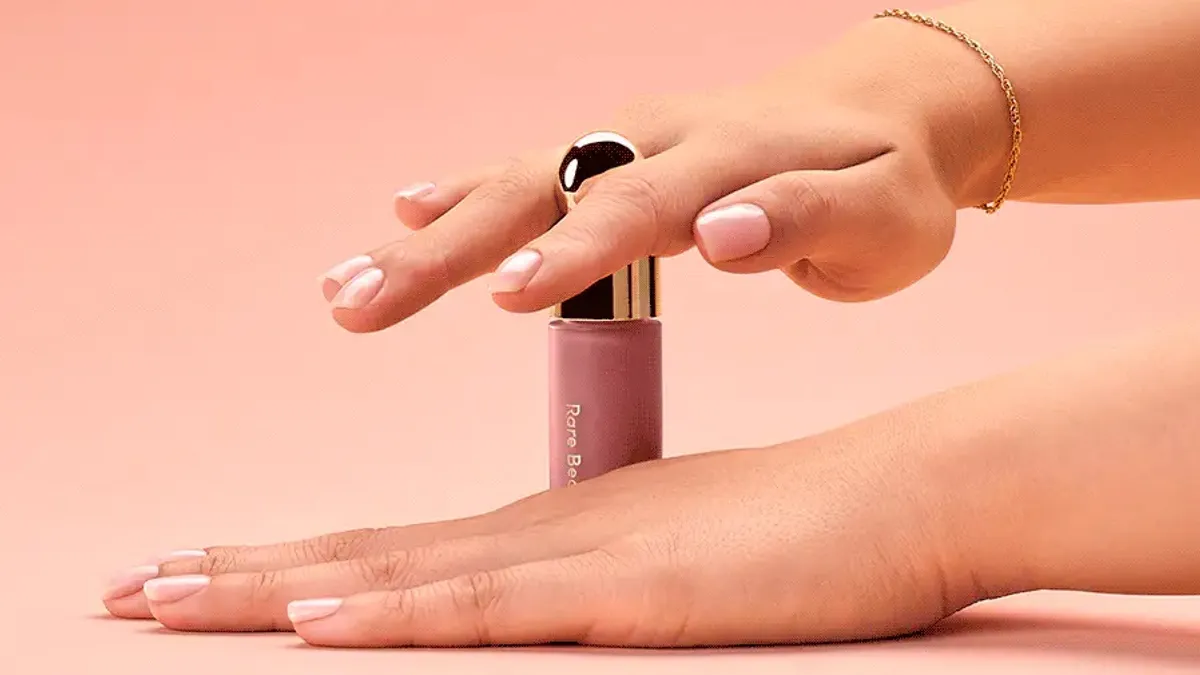
Rare Beauty and Guide Beauty are two brands that have been thoughtful about how consumers interact with and use their products and have designed the packaging to accommodate various needs. The founders of those brands consider product design on a personal level: Rare Beauty was founded by Selena Gomez, who has spoken about her dexterity issues, while Guide Beauty was founded by celebrity makeup artist Terri Bryant, who began experiencing dexterity challenges in her hands and eventually was diagnosed with Parkinson’s disease, leading her to design products that are easier to use and apply.
But bringing awareness to the industry at large, to executives who might not have that personal experience, has been a challenge.
“It takes a lot of investment in terms of cost.”

Joyce Kim
Chief Product Officer, Rare Beauty
Then there are the operational and financial boundaries that can make creating more accessible packaging prohibitive.
For “more indie brands that want to really dive into this space, the reality of it is, is that making any packaging that's customized in this way, it takes a lot of investment in terms of cost,” said Joyce Kim, chief product officer at Rare Beauty. “It's really challenging.”
But for larger companies and brand conglomerates that may have the capital, the size of their portfolio can pose a challenge, according to Bryan Rahning, a director at PERLab, the product redesign practice of Kearney.
“They have their tried-and-true designs that they continue to iterate upon, and those designs have been grounded in classical designs that are not meant for a variety of different levels of accessibility, whether it be vision, mobility or other sort of cognitive ability,” he said. “I think that the ability to get that change requires a momentum effort when you have a portfolio as large as they do. They haven't started to move that elephant yet.”
Rahning noted that some companies in the personal care space are making more noticeable efforts when it comes to increasing product accessibility. For example, Procter & Gamble has taken steps to add tactile indentations and symbols to products like shampoo and conditioner and laundry detergent pods to help low-vision and blind individuals identify the products. But the prestige beauty space has been slower to adopt tools to make packaging more accessible, Rahning said.
“In the prestige beauty space, it is really hard to get new designs approved,” he said. “You have a lot of packaging suppliers that they're consistently dealing with, and the new product launch cycle just takes a long time for some of these larger companies.”
Smaller startups, he added, might actually have an advantage over larger companies in that they are more nimble and can test out new designs quicker.
Another factor brands are considering is how sustainability fits into making a product more accessible.
“Most of these design elements require additional packaging from a design perspective, and the industry is definitely in a process of trying to become more sustainable,” Rare Beauty’s Kim said. “It's kind of strange — trying to hit accessible packaging with using less plastics because we're trying to be more sustainable, while trying to have the capital, or the money basically, to do these customized tools. There's just still barriers in the space of how to accomplish all of that. … I don't know if it's easily scalable at this point.”
How companies are addressing the barriers
Creating packaging that was easy to open and close came about organically for Rare Beauty because of Gomez’s personal experience.
The brand started to hear feedback from its customers about how accessible they thought its products were. Rare Beauty wanted to learn more about what elements made its products easier to use, so it launched the Made Accessible Initiative in partnership with the Casa Colina Research Institute.
“We plan to use all the information and education that we're learning and apply that to future packaging decisions. The biggest goal is that the beauty industry does the same.”
Joyce Kim
Chief Product Officer, Rare Beauty
The Casa Colina Research Institute conducted a study to determine what features make a product easier to open and close, apply or hold for individuals with upper extremity disabilities. Over the course of two weeks, participants tested seven of Rare Beauty’s products and provided feedback on usability.
“This study gave our patients the chance to reintroduce makeup into their lives in a way that was more accessible,” Hannah Cone of the Casa Colina Hospital and Centers for Healthcare said in a statement on Rare Beauty’s website. “It showed that even with limited hand and arm mobility, you can still partake in the beauty community.”
The study examined the brand’s Soft Pinch liquid blush, Soft Pinch tinted lip oil, Positive Light liquid luminizer, Liquid Touch brightening concealer, Positive Light tinted moisturizer, Liquid Touch weightless foundation and Kind Words matte lipstick. Following the study, the brand has identified three key features to make its products more accessible: packaging that’s easy to use, packaging finishes that give users a secure grip and applicators that are comfortable to hold and use with precision.
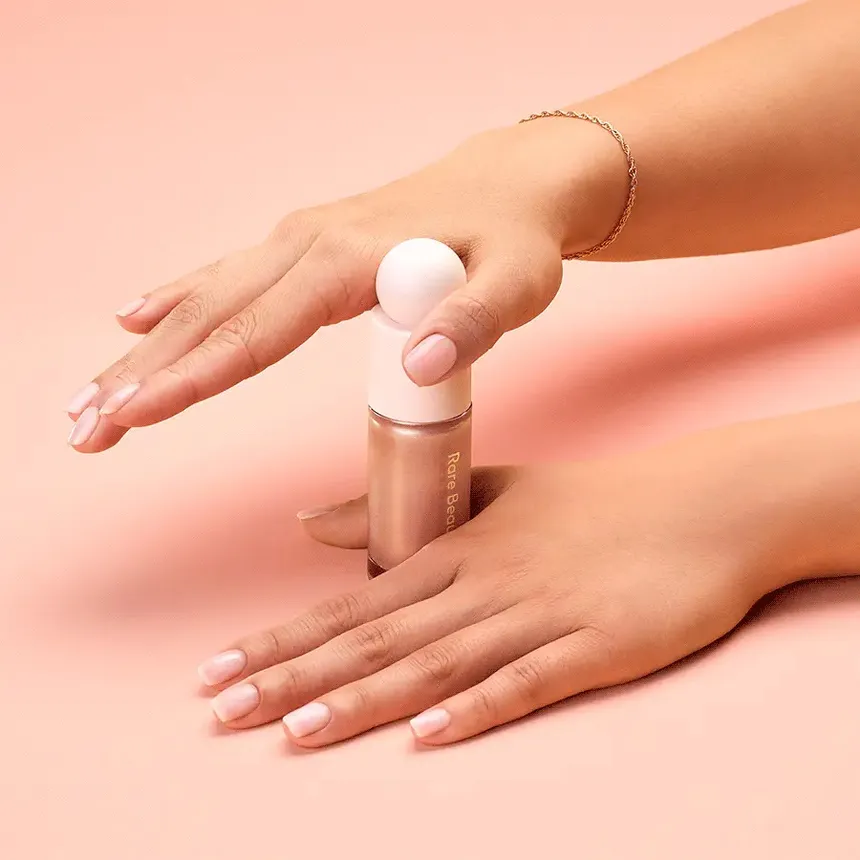
Rare Beauty found that its Positive Light liquid luminizer, for example, features a cap design that allows for a secure grip, an applicator that can easily be removed and a bottle size that allows for comfortable hold and a firm grip.
“We plan to use all the information and education that we're learning and apply that to future packaging decisions,” Kim said. “The biggest goal is that the beauty industry does the same.”
Target has also taken steps to make resources available for creating more accessible packaging. The Arthritis Foundation in May announced it partnered with the mass merchant to develop its Ease of Use Design Guides, which it said are the “first guidelines for easy-to-use products and packaging developed in the United States as resources for engineers and designers in the requirements definition and design development stage.”
“We were having a lot of companies that were bringing products to us, and it would go through testing and they wouldn't pass,” the Arthritis Foundation’s Gokie said. “The design was fabulous, but they might have forgotten to put a tab on the inner seal, and no one could get it open.
“What we were trying to do with the design guidelines, and what we are working in collaboration with Target to do, is to design and offer up resources and design guidelines for engineers and industrial designers, so that when they're at the stage of design, they have a very easily accessible design guide to help them when they're in the prototype stage versus when the product is already at market because if there's something that they need to change, it's often cost prohibitive to go back in and redesign once it's at market.”
The guidelines were influenced by the Arthritis Foundation’s Ease of Use Certified program, which independently tests products to determine if they are easy to use for individuals with mobility limitations.
The effort, funded by Target, has led to the creation of several guides, including one on “Bottles and Bases” and another on “Components,” intended to help designers and engineers across the industry develop packaging that’s easier to use.
The “Bottles and Bases” guide highlights some potential factors that could make using a product more challenging, such as being too heavy, having a linear force requirement that’s too high and requiring excessive grip span. The guide offers several suggestions to make products easier to use such as making products under five pounds for items that require a single-handed carry or less than 10 pounds for a two-handed carry; easy-to-remove seals; and comfortable grasp areas that do not exceed 2.5 to 3 inches.
“Any product that comes through, it’s our goal — we want them to pass because we want to bring more products to market that are eligible for the arthritis community,” Gokie said.
Who benefits from universal design
Arthritis is the No. 1 cause of disability in the U.S., according to the Arthritis Foundation, and it alone affects some 60 million adults and about 300,000 children. And over one in four adults in the U.S. have some type of disability, according to data from the U.S. Centers for Disease Control and Prevention.
It’s important for brands to consider the various needs of people with disabilities when creating a product’s packaging. The benefits, however, extend beyond those communities.
“Everybody benefits from it,” Gokie said. “When you have packaging that is accessible, if it's easy for someone with arthritis or chronic pain or visually impaired, it's really much easier for all consumers.”
"The disability community is the one community that anyone can enter at any time."
Kailey Waskall
Occupational therapist and creator behind the Occupation Beauty Instagram account
Beyond the beauty industry, many things that were originally designed with accessibility in mind have become fixtures in everyday life.
“Curb cuts were originally made for people in the disability community — having those little tactile dots right by a curb,” Waskall said. “But now moms with strollers or families with strollers, it helps them. If you're trying to unload something heavy and you're pushing a dolly, you're not going to want to go up a curb.
“So these changes that seem … like, ‘Oh, you're only catering to this one community’ really help everyone. Universal design is there to just make the world more accessible and that helps everyone.”
Prioritizing universal design can also play into customer loyalty: More than 70% of consumers said they would switch brands or products if they were Ease of Use Certified, according to a 2016 Nielsen Ease of Use Survey cited by the Arthritis Foundation. And it can determine whether a consumer continues to use a product if they develop a disability.
“The disability community is the one community that anyone can enter at any time,” Waskall said. “When you get older, you can … develop a disability. Just think about if you, right now, have this holy grail product, and you plan on using it your entire life, and then you hit an age and you acquire a disability, and all of a sudden you can't use this holy grail product. That's going to leave a [bad] taste in your mouth about that brand.”
Aside from hindering brand loyalty with customers, not prioritizing accessible design can pose a business threat.
“From a logistical business side, they are missing out on a huge subset of the population, especially as we have an aging population,” Waskall said. She noted that for individuals who develop a disability, it could cause them to change how they interact with their products. “If you're able to right now say, ‘Hey, we design products accessibly,’ you're going to continue and really foster a very engaged and loyal customer base,” Waskall added.
Beyond the revenue opportunity, working toward making packaging more accessible can also help support companies’ goals around inclusivity, according to PERLab’s Rahning.
“A lot of these brands are built on stories and claims around inclusivity,” he said. “A lot of the elements of universal design are very much in line with the types of brand stories that they're trying to tell. I think that they can give them some credibility in some of those stories that they're putting on their products already — actually put some teeth behind it.”
Is a more accessible industry within reach?
Rare Beauty and Target have funded research to determine what makes a product’s design accessible. And Lam said E.l.f. Beauty’s partnership with Pagonis marked “the first step in our journey” to make beauty more accessible.
But there are “low-hanging fruit” ways for brands to make their products more accessible, according to Kim.
“Creating an entire collection is the more challenging part,” she said. “But I think there's small things that brands can do to make their packaging more accessible.”
Waskall has created videos on her Occupation Beauty account that show how users can adapt their beauty products to make them more accessible, like adding rhinestones to a compact to add texture or wrapping self-adhesive tape to a lip liner to make it easier to grip.
But there are relatively small changes brands can make to their designs to make them more accessible to begin with.
Adding texture or using a matte finish, for example, can allow users to better grip a product, while a shiny exterior can make the product slippery. Integrating angled edges into a product’s design, like Fenty Beauty did with its Eaze Drop Blurring Skin Tint, can also make it easier to grip and prevent it from rolling away when set down.
And giving users the ability to use a single product in multiple ways can also help make it more accessible, according to Waskall. She highlighted the Makeup by Mario Softsculpt Multi-Use Bronzing & Shaping Serum with Hyaluronic Acid, which allows individuals to use a pump to dispense the product or unscrew the cap to access a wand applicator for more precise application.
“Universal design doesn't need one design. It needs options,” Waskall said. “It can be this product that you can apply multiple different ways and you can interact with in multiple different ways, so that it can reach a wider variety of the consumer base.”
Brands should also consider at what step in an individual’s routine a product will be used. “Even if you don't have a disability, if you're trying to open a container right after you've put on your morning moisturizer, your hands are going to be slippery and it's going to be harder to get grip onto the packaging,” Waskall said.
There isn’t a one-size-fits-all solution to making products more accessible. Some formulations require specific packaging to prevent the product from drying out, to protect it and to ensure there aren’t issues when storing and shipping the product. And consumers have individual needs when it comes to a product’s packaging.
“I don't think it's realistic to think every single product is going to work for every single person,” Waskall said. “There are certain foundations that are for people with dry skin, there are certain foundations that are for people with oily skin. But overall, people with all skin types can easily find a product for the most part.”
"Universal design doesn't need one design. It needs options."
Kailey Waskall
Occupational therapist and creator behind the Occupation Beauty Instagram account
Including people in the disability community in the conversation and finding out what elements make it easier or harder for them to use a product will naturally lead to companies creating more inclusive designs.
“Disability is not a monolith,” Waskall said. “There's not going to be one right answer. But I think making small changes can make big impacts, even if that's as small as putting a QR code on your packaging [or] adjusting your packaging texture so that it's more matte or more of a soft touch versus slippery.”
A more accessible beauty industry is within reach, Kim said, “it just has to be a priority.”
“I think once these types of brands that have a big reach make it a priority, then definitely others will follow.”