
The Speed of Product Discovery Today
The evolution of social media has put retail cycles into overdrive. TikTok, in particular, has become a powerful launchpad for products, with over 1.04 billion active monthly users. Brands across industries are capitalizing on the platform's ability to spark viral moments and, in turn, high demand.
Traditionally, it could take anywhere from six to 24 months for a product to go from concept to store shelf. But in the TikTok era, brands need to move much faster. The average viral trend lasts just five to 10 days before attention shifts. And with 42% of Gen Z consumers in the U.S. discovering new products on TikTok, the need for speed has never been more critical, especially in visual merchandising.
Below are three real-world examples of brands that had to meet viral demand head-on in physical stores.

Audemars Piguet x Swatch: Royal Pop
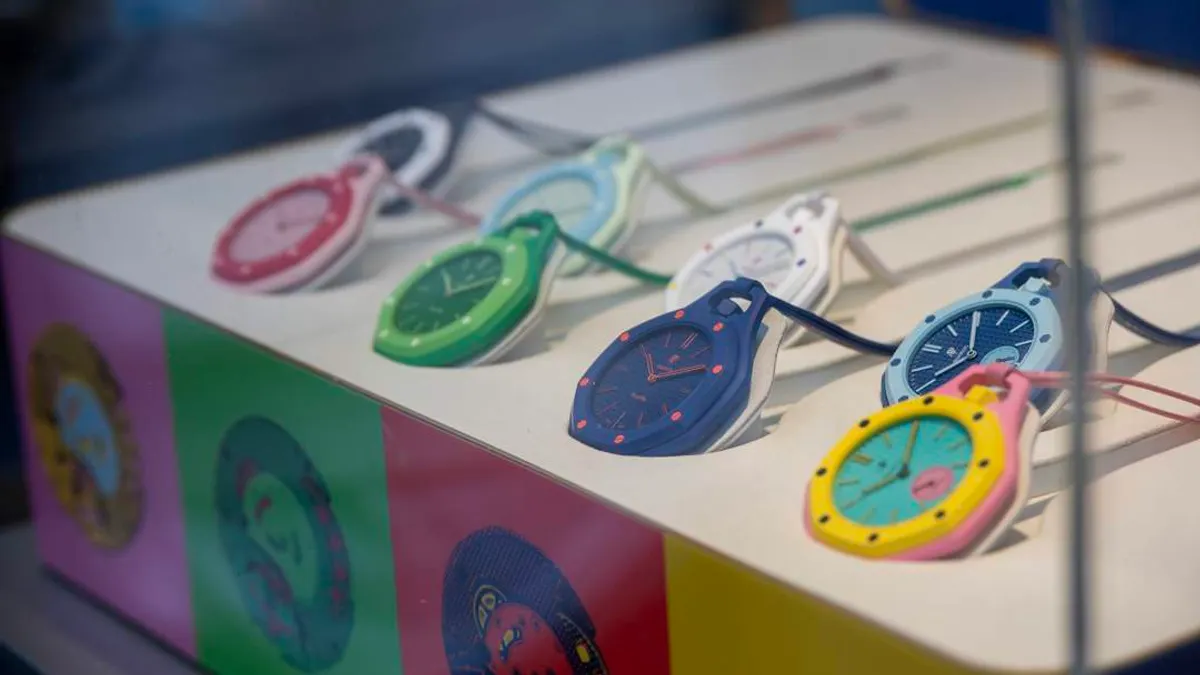
Some partnerships make you wish you had a seat at the table with the ultimate visual merchandising challenge: two brands with radically different visual identities and display philosophies sharing a single store corner. When Swatch and Audemars Piguet unveiled their Royal Pop collaboration in May 2026, people were camping outside Swatch boutiques worldwide before the doors opened. Overnight queues. Sell-outs within hours. Resale prices hitting 6x retail within the same day. Stores across France closed entirely for safety reasons, just as Pop Mart had done with Labubu two years prior.
What made this drop different wasn't the product alone. People weren't just buying a bioceramic pocket watch at $400. They were buying exclusivity, cultural relevance, and access to a luxury narrative that had previously been out of reach. Audemars Piguet, a brand historically known for saying no to everything, made a calculated move: making the Royal Pop collaboration available in Swatch stores only. Not on AP's website, not in AP boutiques. Only exclusively available through Swatch's retail network. AP takes no inventory risk, no distribution risk and no brand dilution risk. The Royal Oak stays untouched. Royal Pop creates an entirely new generation of fans.
AP's world is controlled, precise, hushed. Swatch's is colorful, playful, high-volume. Bridging that gap in a consistent, brand-safe way across hundreds of Swatch locations worldwide requires AP to provide extremely precise VM guidelines, and Swatch store teams to receive, understand and execute them flawlessly, with no room for interpretation and no AP representative standing in the store.
When adjustments are needed, whether a display isn't working, a colorway is selling out faster than others or a fixture needs to be adapted, that communication loop between HQ and the field has to be fast, clear and frictionless.
Takeaway: When the physical store is the only channel and the brand isn't in the room, VM execution carries the full weight of the brand experience. Precise guidelines, clear planograms and a fluid communication chain between teams aren't operational nice-to-haves. They're the only lever of control a brand has left.

Rhode Beauty’s Pop-Up Playbook
Hailey Bieber’s beauty brand, Rhode, smartly used a combination of social media (primarily TikTok) and physical pop-ups to create brand awareness, influence and, in turn, demand. Rhode first started out as an “online-only” D2C beauty brand creating a gap between consumers and the need for a necessary tangible experience. To fill that gap, Rhode created pop-up environments for consumers to try their products offering other experiences like ice cream trucks, photobooths and exclusive “sneak-peeks” to future products. These pop-ups also created “cultural moments” for its audience, strengthening Rhode’s brand value in the eyes of its consumers.
As Rhode expanded their presence through pop-ups, demand started to rise and queues began forming wherein consumers would wait hours in line just to try their latest product. For a brand that started with only 10 SKUs, this type of demand and popularity was clear evidence of the power of social media for consumer discovery.
Takeaway: Temporary store formats offer a low-risk way to translate TikTok buzz into real-world engagement. But translating a social media identity built on short-form video into a physical browsing experience requires deliberate, trend-responsive visual merchandising from day one.

Nestlé Carnation at Walmart
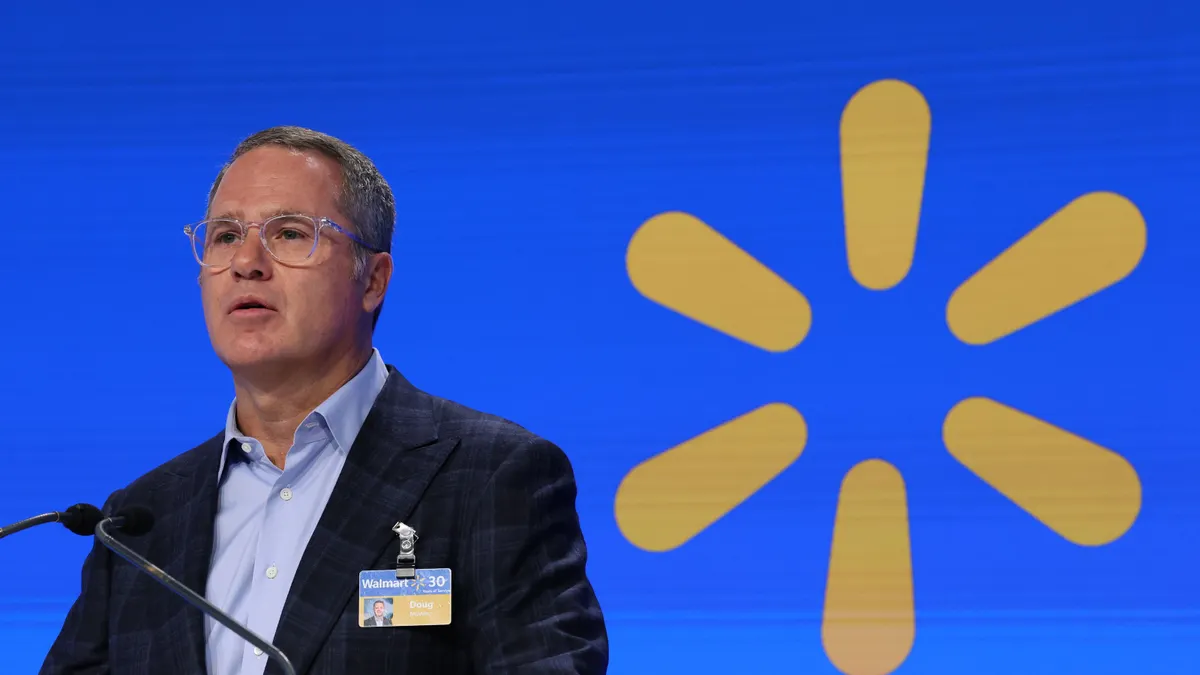
After chef influencer Tineke Younger shared her viral mac and cheese recipe on TikTok, one ingredient stole the spotlight: Nestlé's Carnation evaporated milk. The moment led to a limited-edition product collaboration, with Walmart planning shelf placement for an item nobody had forecasted as a breakout.
Takeaway: Even everyday grocery products can go viral overnight. Endcap strategy, influencer-themed signage and clear product placement need to be ready to deploy fast, which only works if the planogram infrastructure is already in place.
How Can Your Brand Stay Ready?
Across all three cases, the brands best positioned to capitalize weren't necessarily the ones who reacted fastest. They were the ones whose merchandising infrastructure was already built for speed: accurate planograms, clear space directives and layouts validated before they reached the floor.
That's the logic behind how retail leaders use tools like IWD: not to scramble after a trend hits, but to build the upstream precision that makes fast, consistent deployment possible when the moment arrives. The results speak for themselves. As Francesca Elston, Visual Merchandising Manager at Dermalogica, puts it: "Time spent doing planograms has dropped dramatically, from 80% of my time to 25%." Data-driven planograms, 2D and 3D layout validation and seamless deployment across store networks mean that when a product takes off, execution is already one less variable to worry about.
Because in the TikTok era, the moment always arrives faster than expected.
IWD provides visual merchandising software used by retail brands to build, validate and deploy planograms across store networks. Learn more at iwd.io.