
A shopper asks an AI assistant to find a wool coat under $200, made with traceable fibers, that ships before Friday. The agent compares options, checks specifications and recommends a few coats that fit the request.
But what if the shopper didn’t know they wanted a wool coat until they saw it on someone else?
Earning a place among AI recommendations is becoming an important priority for retailers. But brands also have an opportunity to influence what shoppers want before they begin searching. An image, an idea or an unexpected discovery can inspire someone to imagine a product in their own life and consider a purchase they hadn't planned.
“Commerce is moving upstream, into the moments when people are still figuring out what they want,” says Abhay Singhal, co-founder of InMobi and CEO of InMobi Advertising. “Sometimes that starts with a search, but often it starts with seeing something that feels right, imagining it on yourself or picturing how it might fit into your life.”
Standing out on the shortlist
As retailers may not expect, Millennials lead daily use of AI tools for shopping research at 39%, nearly double Gen Z’s 21%, and more than half of U.S. consumers now use AI to find and compare products, Pacvue reports.
AI shopping agents work by narrowing — asking clarifying questions, then building a shortlist of products that fit the shopper’s preferences. Once several products clear those filters, the agent still needs a reason to pick one. A product described in the same category language as its competitors becomes interchangeable. The distinctiveness that shapes brand positioning also gives an agent a reason to choose you and the shopper a reason to care.
That distinctiveness works best as concrete attributes agents can access, evaluate and compare, such as fabric weight, fit or fiber origin. BCG advises making product data “authoritative, semantically rich, factual and machine-readable.”
It also has to hold up beyond your site. In one McKinsey analysis, just 1% of the sources LLMs cited for consumer goods brands were brand-owned websites. When descriptions elsewhere conflict or lack detail, AI models are less likely to include a brand or represent it accurately.
Precision cuts both ways: The same detail that matches a product to the right request also rules it out of the wrong ones. A shopper who asks an agent for a 100% wool coat won’t be shown one listed as 60% wool and 40% polyester, however complete the listing.
“If somebody can suddenly ask a very detailed question about your product, the answer may be that your product isn’t what they want,” says Sucharita Kodali, vice president and principal analyst at Forrester. Being reliably matched to the requests you can satisfy is worth more than appearing in ones you can’t.
Data can only express differences that already exist. “You need products people want,” Kodali says. “The interfaces people use to find those products may change, but having something worth finding is still the most important part.”
The recommendation still has to win over the shopper
61% of shoppers say product images and videos are the most important product page element when deciding whether to buy, ranking above descriptions, reviews and even price, according to Salsify.
Consistency matters too. If the page tells a different story than the agent did, such as a different price, a missing size or a vague material claim, the shopper’s confidence drops at the moment it matters most. Singhal’s advice for keeping the handoff intact: “Link to the exact variant and keep promotions consistent.”
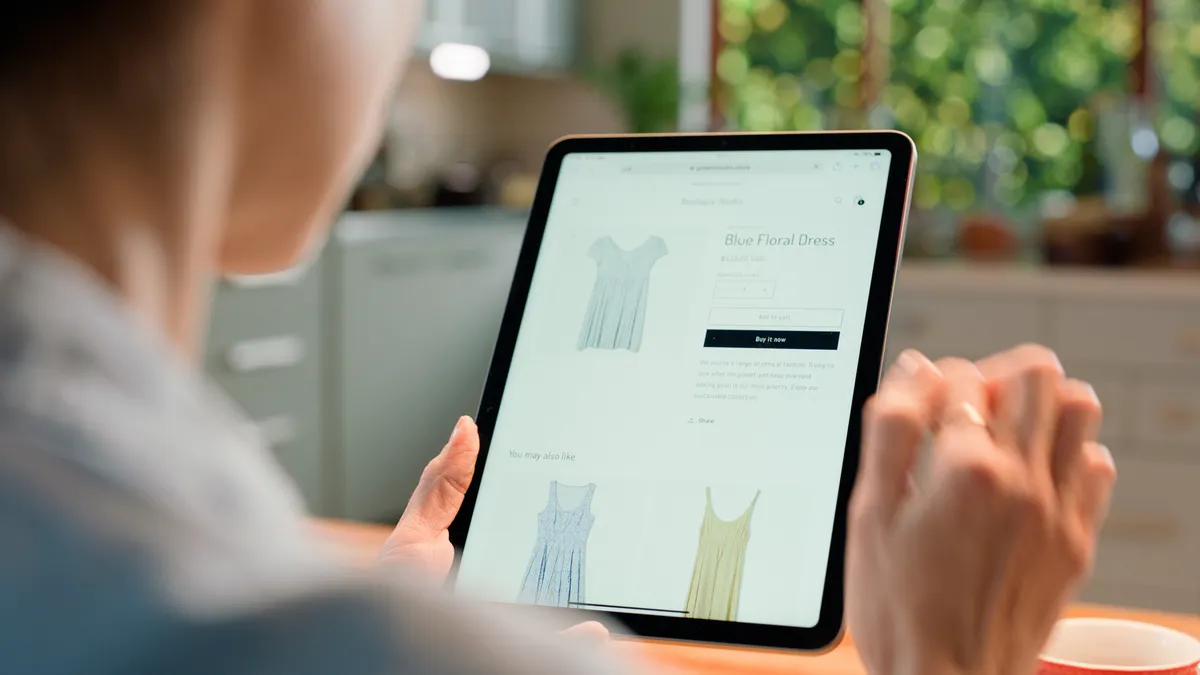
Confidence also comes from something more personal: understanding how a product might look, fit or function in the shopper’s own life. For fashion and lifestyle purchases, that’s often the last question left to answer, and it’s where visualization is starting to play a bigger role.
Even when an agent’s pick fits the request, shoppers want to see for themselves. Only 46% of consumers fully trust the recommendations AI provides, and 89% double-check AI information before buying, according to IAB.
That makes the product page a confirmation step. “The AI-assisted shopper may arrive at a product page with much of the research already done and a clear candidate in mind,” Singhal says. “At that point, the page has a different job: confirm the decision. That means showing the product in real context, answering the last questions on fit, scale and specifications and giving the shopper credible signals such as current reviews.”
Driving discovery and desire before intent
“AI gives brands a new way to participate in those moments by bringing together context, deep product intelligence and visualization,” Singhal says.
InMobi's Glance brings that idea to life through an AI-powered personal shopping experience across smartphones and connected TVs, with an expansion into PCs announced through Lenovo and Motorola Qira. Available across more than 60 million devices, Glance introduces relevant products during moments of everyday discovery. Through Visual Dialogue, shoppers can upload a selfie, see how different looks might appear on them and refine recommendations through conversation before continuing to the retailer's website to purchase.
Glance is also adding True Fit’s fit intelligence to that experience this holiday season. The integration pairs AI-generated visualization with size recommendations informed by real purchase and return data, aiming to answer two questions that often decide whether someone buys: How will this look on me, and will it fit? For apparel retailers, that added confidence could also help reduce fit-related returns.
The next phase of AI-powered commerce will give retailers more opportunities to influence what consumers discover, consider and ultimately buy. Brands that make their products easy for agents to understand and compelling for people to imagine owning will be better positioned to earn recommendations, inspire demand and turn discovery into sales.
Let inspiration-led discovery bring new shoppers to your brand. Learn how Glance helps shoppers discover, visualize and choose your products on smartphones, PCs and connected TVs.