

Dive Brief:
- Walmart anticipates price increases in the second quarter due to heightened fuel costs, Chief Financial Officer John David Rainey said on a call with analysts Thursday. The company took a roughly $175 million hit to operating income from “higher-than-planned fuel costs,” he noted.
- The retailer’s first quarter revenue grew 7.3% year over year to $177.8 billion, according to a Thursday announcement. Both global and Walmart U.S. e-commerce sales jumped 26% during the period.
- Despite the new fuel pressures, the mass retailer reiterated its full-year guidance provided in February, just before the war in Iran started. Walmart expects Q2 net sales to grow in a range from 4% to 5%.
Dive Insight:
While Walmart’s first quarter performance demonstrates strength, the retailer is not immune to exogenous pressures such as tariffs last year or the current fuel headwind, Rainey told analysts.
“We're always focused on providing low prices for customers,” Rainey emphasized on the call regarding the higher-than-planned fuel costs. “That said, these are real impacts to cost of goods sold for us and our suppliers, and if the current elevated cost environment persists, we'd expect somewhat higher retail price inflation in Q2 and the second half of the year.”
But Walmart’s CEO, John Furner, remained upbeat on the company’s ability to compete with price. The executive highlighted that Walmart initiated over 7,000 rollbacks in the quarter and will “continue to operate in an everyday low price strategy” across the business.
Macroeconomic pressures, particularly prices at the gas pump, are also impacting consumer behavior at Walmart.
“The spending patterns of higher-income households have also shifted slightly at Walmart,” GlobalData Managing Director Neil Saunders said in emailed comments Thursday. “Spend from this cohort used to be restricted to food and essentials, but more consumers are now crossing the aisle to shop non-food.”
Higher-income customers are spending with confidence across many categories, while lower-income shoppers are acting more budget-conscious, Rainey told analysts.
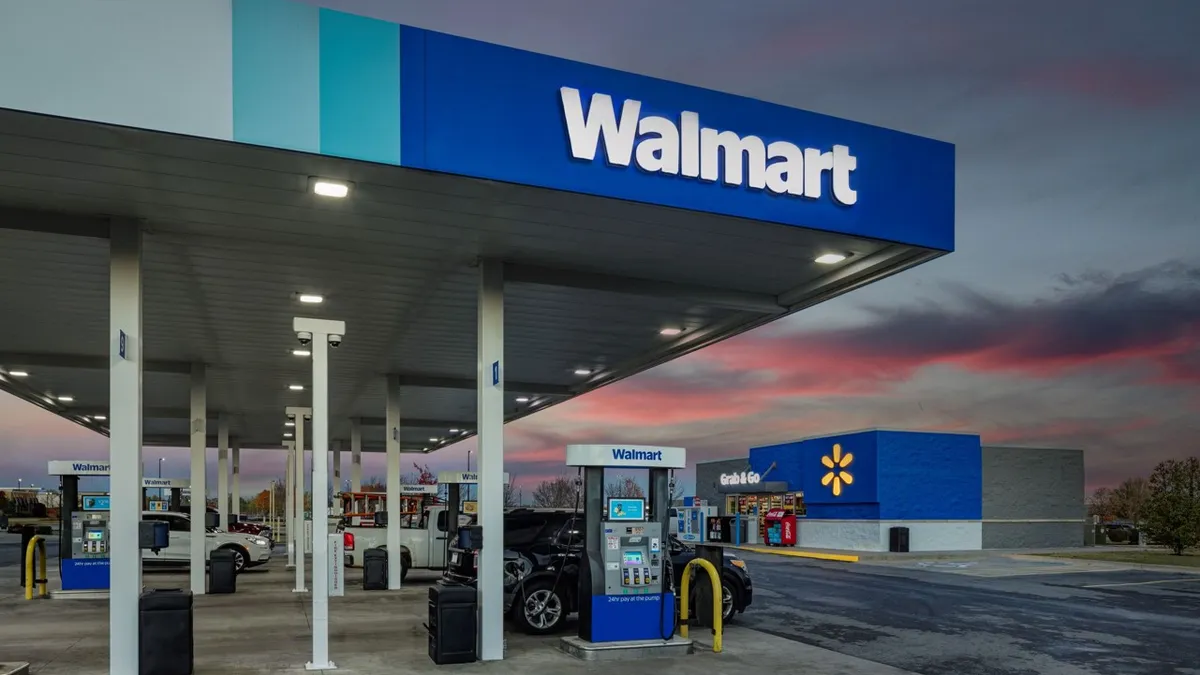
“We have a large fuel business, and we see that in the most recent period the number of gallons that customers fill up with when they come to our fuel stations fell below 10 for the first time since 2022,” Rainey flagged. “That's an indication of stress.”
Overall, the retailer’s latest results were solid and near-term pressure poses an opportunity, TD Cowen analysts said in a Thursday note.