Dive Brief:
- Sleep Number’s debt and liquidity issues have raised “substantial doubt” about its ability to continue as a going concern, the mattress company said in financial filings Thursday.
- If the company can’t obtain the capital it needs to fund operations and meet debt obligations, it will have to resort to measures like restructuring, including possibly bankruptcy, per the filing.
- Last year, Sleep Number’s net sales fell 16% year on year to $1.4 billion, gross margin shrank by 60 points to 59% and net loss widened more than sixfold to $132 million.
Dive Insight:
Last year, in the midst of a slow-moving turnaround, Sleep Number shook up its top ranks, including bringing on a new chief executive, independent board member and chief financial officer.
On Thursday, CEO Linda Findley, who arrived in April after leadership stints at Blue Apron and Etsy, told analysts that the company has “radically reset the business by lowering our fixed cost structure and built a leaner, more nimble organization.” That includes slashing over $185 million in annualized costs, identifying another $50 million to cut and embarking on a capital structure review.
“We are still in full turnaround mode, and our progress in 2025 doesn't change the fact that we still have hurdles to clear in 2026,” she said.
The wider backdrop is not good for Sleep Number. After enjoying a surge during the pandemic, home-related sales in the U.S. remain in the doldrums. The mattress sector in particular has grappled with disruption from direct-to-consumer brands in the last few years, plus last year’s merger of U.S. retailer Mattress Firm and global wholesaler Tempur Sealy into one giant company dubbed Somnigroup.
The company’s challenges, including the debt and liquidity issues it flagged this week, are formidable, and it may have to close more stores, UBS analysts led by Dan Silverstein said in a Thursday research note. The company has a “very high risk” of default over the next 12 months, according to RapidRating's Financial Health Rating.
“Our math suggests there's not a lot of room for cushion, especially looking ahead to 3Q, as the Y/Y benefit of cost-outs will be tougher to come by in the second half of the year,” Silverstein said.
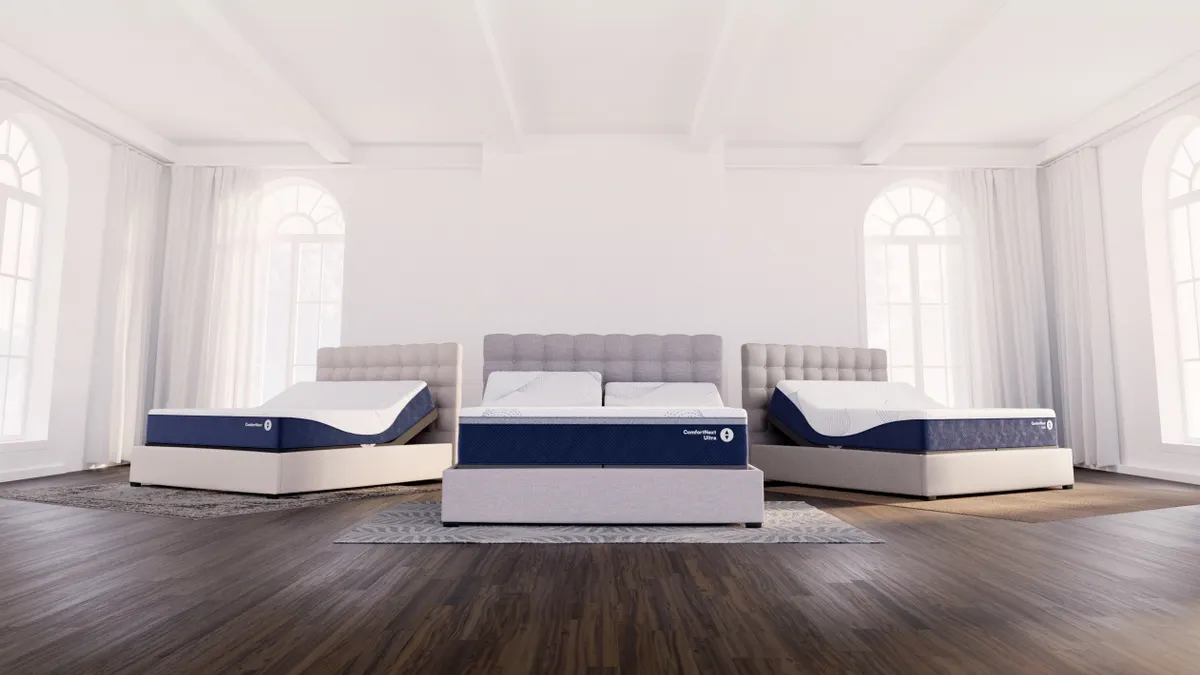
Still, Sleep Number’s turnaround has recently picked up the pace, and the company has new products coming in, UBS said. On Thursday, the brand unveiled what it said is its “largest product reset in almost a decade,” five new beds that will be available March 23 online and in stores.
“It's clearly moving quickly to drive change across nearly every facet of the business,” Silverstein said. “Plus, it announced it is undergoing a strategic review process, which could provide it other ways to bolster its near-term liquidity position. This could add another factor that extends [Sleep Number’s] runway.”