Dive Brief:
- Nike CEO Elliott Hill said Thursday that the brand is in the “middle innings” of its comeback, with uneven performance across the business, but is “nowhere near our potential.” That comes as second quarter revenues grew 1% year over year to $12.4 billion.
- Hill touted progress in Nike’s largest region of North America, which was up 9% in the quarter to $5.6 billion, but noted the brand faced ongoing challenges in Greater China, which fell 17% in the quarter.
- Likewise, the turnaround varies by brand. Nike brand revenues, which account for the vast majority of the company’s business, grew 1% in the quarter. Converse, on the other hand, was down 30% year over year as the brand undergoes a reset, and Hill said Jordan also has “some room to dimensionalize beyond streetwear.”
Dive Insight:
Nike’s turnaround path is more complex than analysts originally anticipated and taking longer than they expected.
“While we agree with management's overarching strategy (focus on sport, re-engagement with wholesale, etc.), it's becoming evident that the company's issues prior to CEO Elliott Hill's arrival were far deeper than we initially realized,” Needham analysts led by Tom Nikic said Friday.
The performance in North America is encouraging, analysts said, and Hill upheld the region as a blueprint for the rest of the retailer’s turnaround. A recent leadership change has all of Nike’s geographic heads reporting to Hill now, and he stressed that he is working closely with all of them to make changes by region.
“North America is driving a healthy, repeatable offense and showing us what winning looks like,” Hill said. “It's a great signal for our future success in other geographies.”
Analysts agree that the positive signs in North America are encouraging, especially since that region was a focus point of Nike’s recent actions, but there’s a long way still to go.
“The challenge for Nike is to replicate this success across other sporting divisions, which is something the group is working on, and we believe will start to deliver towards the end of this fiscal year,” GlobalData Managing Director Neil Saunders said in emailed comments.
Saunders added the brand needs to develop a stronger offering in casual and fashion apparel, where it’s falling behind competition, and called its position in China “particularly dire.” To that point, Hill reiterated multiple times that Nike’s turnaround will move at different speeds across categories, geographies and brands, with China specifically needing a longer timeline. Nike didn’t invest in its store footprint well enough in China, leading to a cycle of soft demand and higher promotions, Hill said.
But even in North America, there remain some deep challenges. The rightsizing of Nike’s classics franchises is ongoing, with revenue from those styles down 20% year over year and creating a $550 million headwind. While Hill stressed a “relentless flow of innovative product” coming, GlobalData analyst Louise Deglise-Favre noted the brand has yet to refresh much of its footwear ranges and is lagging behind Adidas.
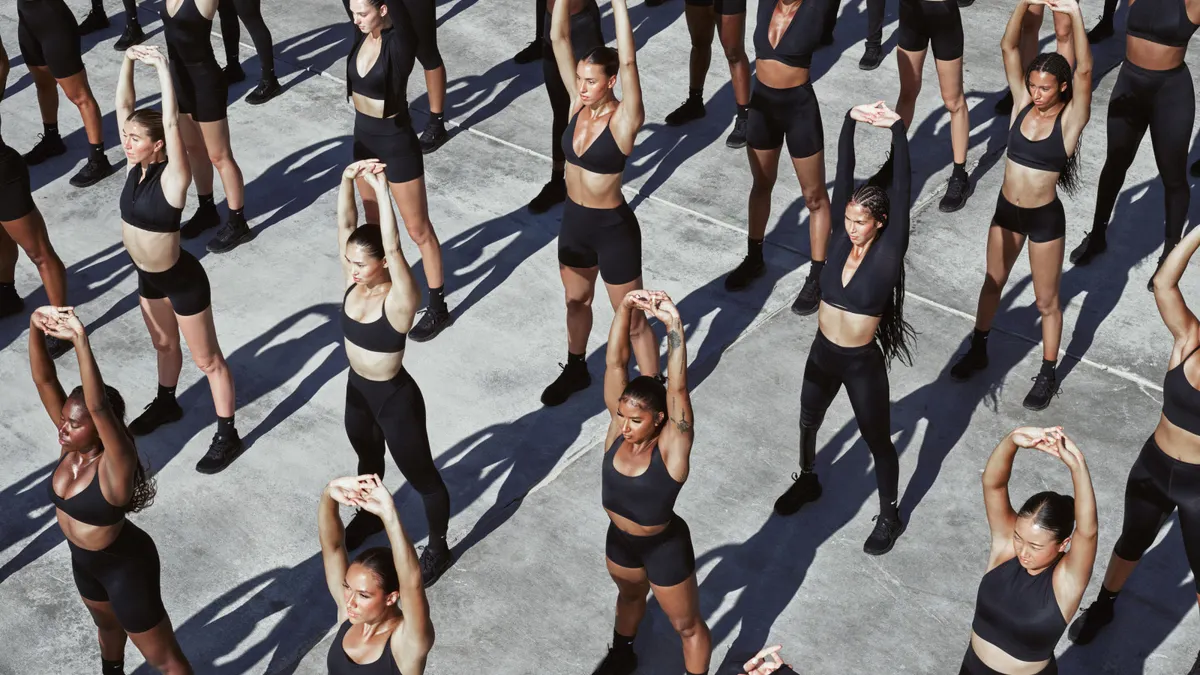
Apparel is more encouraging, particularly with the launch of NikeSkims, which allows the activewear giant to better compete with upstarts in the athletic space. Indeed, Hill said Nike intends to expand NikeSkims to other geographies due to its strong performance in North America.
Nikic also flagged a concerning disparity between wholesale and DTC sales in the quarter, both globally and in the North American region specifically. In Q2, wholesale in North America grew 24% and DTC declined 10%.
“While some of the wholesale growth is driven by an intentional desire to engage more closely with the channel (after shunning it under the prior regime), and some of the DTC decline is driven by an intentional pullback in oversaturated styles, we'd feel much better about what we're seeing if DTC were performing better and the brand wasn't so reliant on wholesale sell-in (which can lead to inventory issues down the road),” Nikic wrote.