Macy’s takes its whimsy very seriously, and its Thanksgiving Day Parade, which is about to have its 100th run on Thursday, is arguably its most recognizable brand asset. The parade has been the topic of podcasts and books, and there’s even a wiki fandom site.
“As we say, it's the largest and highest viewed variety show on television and in New York City,” said Will Coss, executive producer and vice president of Macy’s Branded Entertainment division. “There's nothing else like it.”
Coss oversees the creative ideation, design and construction of Macy’s annual events, including the Thanksgiving Day Parade and the 4th of July Fireworks. He manages a studio team of more than 50 professional artisans, including master carpenters and electricians, metal workers, sculptors and painters.
“Everything that you see in the parade is handcrafted and handpainted,” Coss said, adding that most years, the parade involves about 18 months of pre-production and production planning.
Of course, this isn’t most years.
“The 100th anniversary parade was in the works for five years,” Coss said. “I've been at my role at Macy's for a little over five years, and in my earliest days, we had started with our eye on the prize, and our eye steadily focused on delivering this iconic milestone. So it's been many years in planning and development, and we’re really very pleased with where we’ve landed.”
Immigrant roots
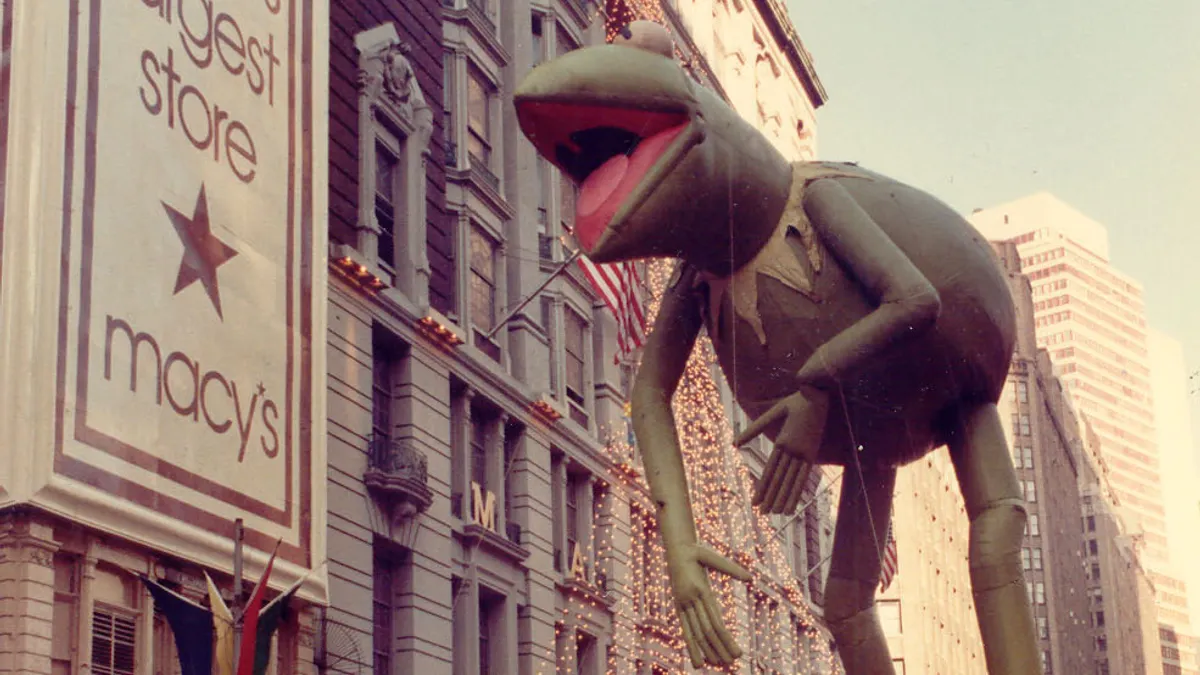
The parade started in 1924 when a group of mostly immigrant Macy’s employees found themselves craving the traditional midwinter festivals they left behind in Europe. The first few years featured live animals from the Central Park Zoo and inflatables were introduced in 1928.
Macy’s used to release the balloons at the end of the parade, offering $100 to anyone who returned one. In 1932, a reward-seeker in a plane collided with one of the balloons and that tradition ended. Once in 1971, Macy's had to ground its inflatables due to heavy rain and winds. And then there was also the infamous Cat in the Hat disaster in 1997, when high winds caused the character balloon to hit a lightpost, injuring four people and putting one woman in a coma. The Cat in the Hat was permanently banned from the parade after that.
“New York is absolutely one of the main characters of the parade.”

Will Coss
Executive producer and vice president of Macy’s Branded Entertainment division
For the most part, though, there have been relatively few public problems in the 103 years since Macy’s began hosting the event. And apart from the three years between 1942 and 1944, when Macy’s paused the event to support the war effort, the parade has not missed a year. In fact, dependability is one of its biggest strengths.
“The structure of the parade has remained consistent, and I believe that's one of the reasons why it’s been so successful,” Coss said. “There's a level of familiarity with it. There's a level of comfort knowing that this parade is going to deliver.”
Evolving traditions
A lot has changed over the past century, and Coss said that one of his priorities is maintaining a sense of heritage.
“The goal of the parade isn't to reinvent the parade each and every year, it's to refine and evolve,” Coss said, adding that, “the core categories of the parade have remained consistent since our very first parade. We’ve had floats, we’ve had marchers, we’ve had some version or interpretation of character representation.”
Nonetheless, Coss said, there's still an opportunity to add new elements such as “a little bit of technology” or “some new current entertainment.”
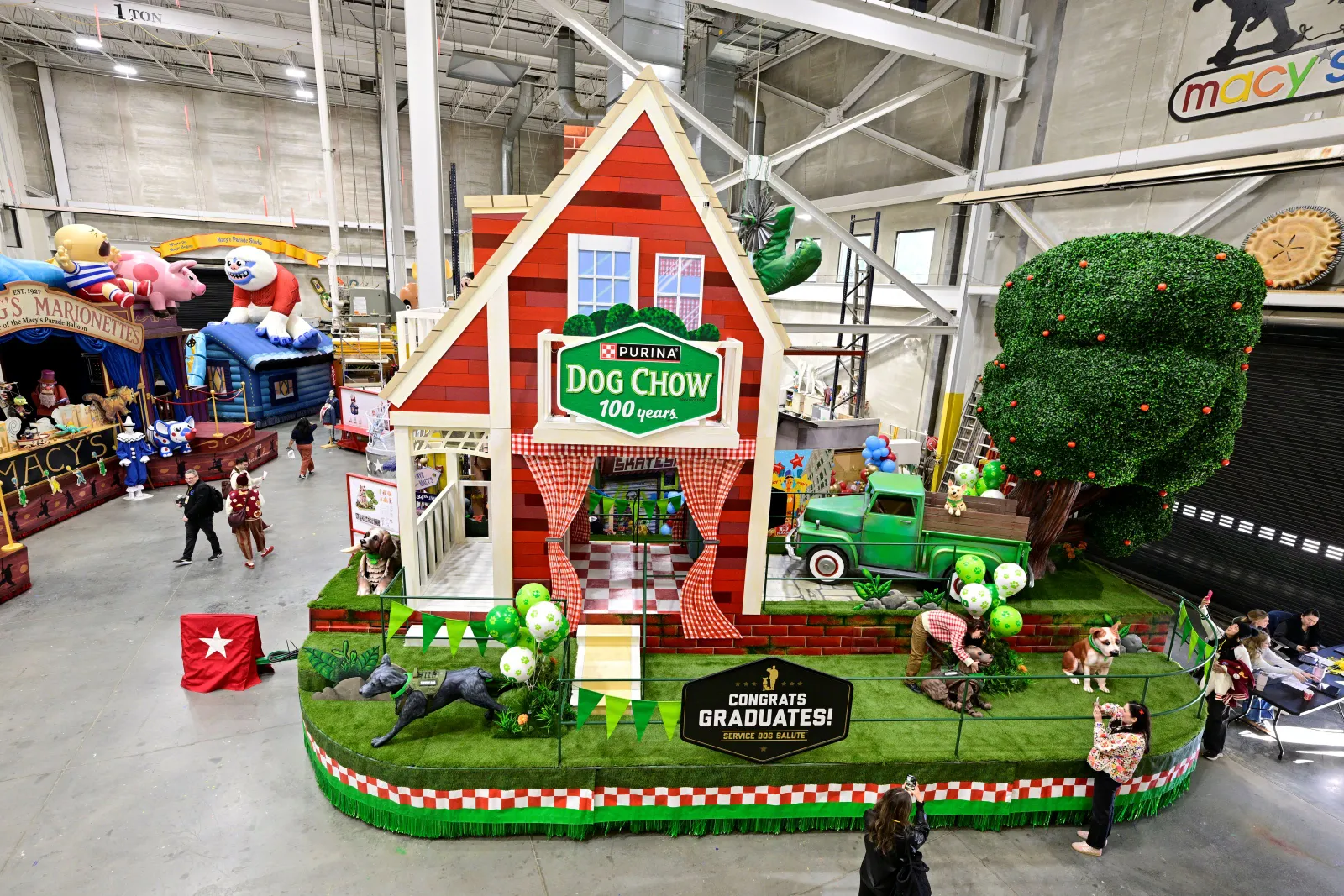
The 100th parade will feature more than 30 floats, including a new Purina service dog tribute float and a new DoorDash float. Performers this year include Baha Men, Indigo Girls, JoJo and Queen Latifah. Macy’s is also planning to deliver 100 inflatables, with new balloons featuring Bluey, Peanuts characters and Disney, as well as a Levi’s sponsorship. The parade will also include historical characters such as Popeye, Curious George and Bugs Bunny.
The location is also part of the show.
“New York is absolutely one of the main characters of the parade,” Coss said, adding that “this parade can only exist in New York City, and we’re grateful it does.”
Macy’s estimates that approximately 3.5 million people line the city’s streets each year to watch the parade as it winds its way down a 2.5-mile route that stretches from Central Park West and 77th Street down to 34th Street and Herald Square.
In addition, there’s a substantial viewing crowd watching at home. NBCUniversal, which Coss said has been the exclusive broadcast partner for the parade since 1953, reported that about 35 million people watched the television broadcast last year.
“There are very few things in the U.S. that seem to get the simultaneous physical audience of this kind,” said Kirthi Kalyanam, executive director of the Retail Management Institute at the Leavey School of Business at Santa Clara University. “With the fragmentation of media, with streaming, there are very few things now that are really monoculture.”
Money matters
An event of this scale comes with a sizable price tag, but that’s where things get murky.
Macy’s declines to talk about the cost of the parade, so any data regarding expenditures or proceeds is conjecture. However, a 2023 breakdown from GoBankingRates estimated the total at about $13 million per year, with floats costing between $30,000 and $100,000, depending on size, and inflatables costing about $90,000 for returning brands and $190,000 for newcomers.
The broadcast rights also constitute a considerable slice of the financial pie. In 2025, NBCUniversal and Macy’s renewed their partnership in a 10-year programming rights deal that runs through 2034 and includes Macy’s 4th of July Fireworks show. The Wall Street Journal estimated that through the terms of that deal, NBCUniversal pays Macy’s about $60 million a year. Of course, NBC then gets to sell ads, and Fast Company reported in 2025 that NBC was selling 30-second ad spots during the parade for as much as $900,000.
Mark Lipton, professor emeritus and former graduate professor of management at The New School, said there’s a good reason Macy’s stays quiet about costs.
“It's our pagan festival.”
Kirthi Kalyanam
Executive director of the Retail Management Institute at the Leavey School of Business at Santa Clara University
“It works like a private club, not like an ad buy,” Lipton said. “Membership comes through history. It comes through relationships, and like any club, club members don't want to talk about the dues. I think this opacity really protects Macy's leverage because if prices and criteria were public, then the partners in this club could start comparing and bargaining, and they can't do that.”
Lipton added that the mystery surrounding the financials makes the ROI just as inscrutable as the cost.
“Nobody wants to admit in public that they can't measure the return of an investment they made in this parade,” Lipton said. “And when an industry goes quiet, the quiet is data.”
The criteria for getting into the parade are equally mysterious, but industry experts agree that the value isn’t just measured in dollars. It’s also calculated by the promotional value it offers brands. And few things are prioritized in the parade as much as play.
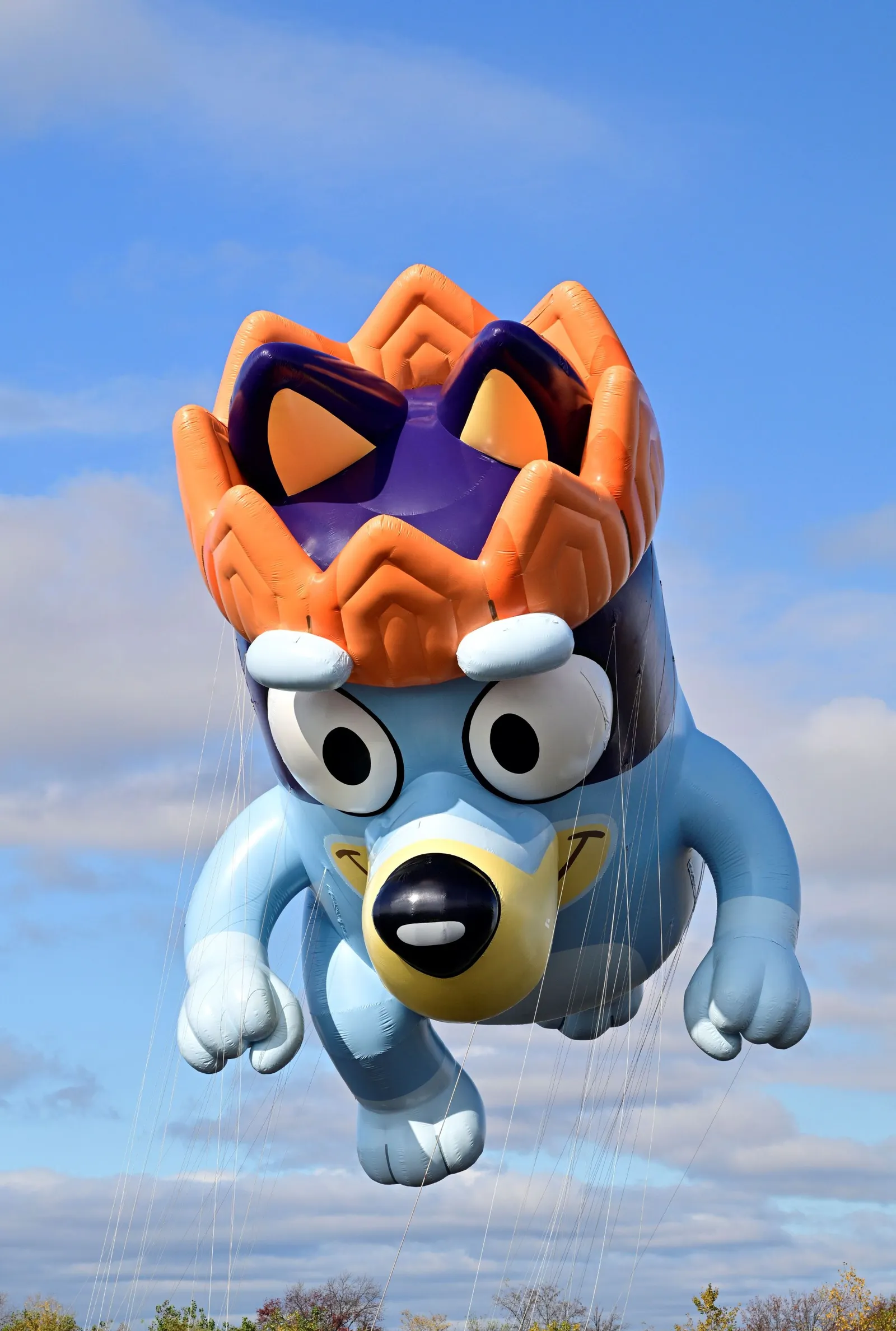
“I think that it is a very important and long-serving platform for the toy industry,” Jenn Lynch, senior manager of creative communications for the Toy Association, said. “I think when you look at our industry as a whole, it's an extremely brand-driven, character-driven industry [and] licensed toys make up a big piece of the pie. So when you talk about that, and the timing of the Macy’s Thanksgiving Day Parade, which is right ahead of that critical toy shopping window, it works out really well and aligns really nicely together.”
Of course, there’s also the value for Macy’s as a brand, especially now as the company works on its turnaround.
“Rather than thinking about the parade as this huge line item expense every year, they think about it as a capital asset that they're investing in,” Lipton said. “Not to sell, not as the bump in toy sales from the parade, but to solidify what Macy's is in the American eye and mind.”
Retail and ritual
“What brands are really buying is the ritual,” Lipton said. “It happens to be on TV, but it isn't media. It's a family ritual that people repeat every year… and rituals carry deep meaning across generations.”
“The parade renews a franchise's place in a family's memory, and I think they're trying to do that, rather than selling this year's toy,” he added.
Lipton also said the parade’s signaling is especially important now, “considering the apocalyptic events we've seen over the last decade or two decades of retail. One big signaling thing that the parade clearly emits is, ‘We're not going anywhere.’”
"Thousands of people come together on Thanksgiving morning to deliver this great spectacle."
Will Coss
Executive producer and vice president of Macy’s Branded Entertainment division
Kalyanam agreed, and said the social significance of the parade also echoes back to its early days as an immigrant-driven celebration.
“This is a very precious cultural event in the U.S.,” Kalyanam said, adding that it “sounds very crass to say” because it appears to be about shopping. But he rejects that notion. “No,” he said. “It's our pagan festival.”
The kind of emotional connection people have to the parade lingers long after the event ends, said Lynch.
“I remember, freezing cold, sitting on my dad's shoulders at the Macy's Thanksgiving Day Parade when I was a kid,” Lynch said. “My aunt worked for Macy's, and so she and my uncle were balloon handlers for a number of years. And yeah, there's a true tradition around it. And obviously, I think that it's such a special event, and it's such a special moment, that despite people turning to streaming platforms, it's still one of those that still brings people back around the television during the holiday season.”
Ultimately, Coss said, the whole production is about people.
“The parade above and beyond its fabrication, above and beyond the technical elements, is our opportunity to bring people together,” Coss said. “Friends, strangers, coworkers, colleagues. Thousands of people come together on Thanksgiving morning to deliver this great spectacle. And we take great pride in that, and know that it's a unique opportunity to be in a position to deliver something that brings so many people together for a special occasion, to share and enjoy the whimsy and just a little bit of bright entertainment on an early Thanksgiving morning.”