

Dive Brief:
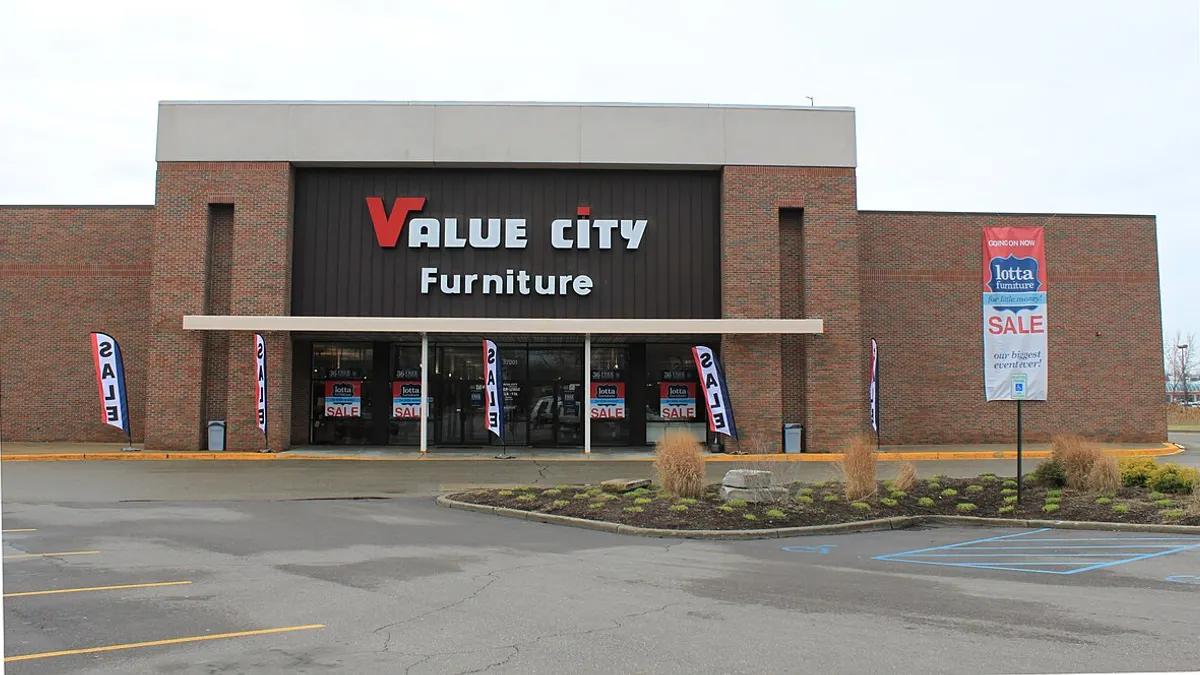
- A stalking horse bid for Value City Furniture owner American Signature Inc. would sell the company to entities owned by the founding Schottenstein family and contemplates a chainwide liquidation, according to court documents.
- The proposed purchase price is nearly $147.9 million, of which about $83.2 million would be paid in cash, per a motion from the debtors filed in court on Nov. 26 seeking approval for the bid procedures and the authorization to enter into the purchase agreement.
- An objection to the motion by The Official Committee of Unsecured Creditors was filed Wednesday, suggesting a going concern sale or restructuring would be the best outcome for stakeholders. The committee also noted “a healthy dose of skepticism” given several factors of the proposed sale, including that it would benefit the Schottenstein family over unsecured creditors.
Dive Insight:
The family-owned and operated American Signature Inc. — which includes Value City Furniture and American Signature Furniture — was founded in 1948 and filed for bankruptcy last month. A stalking horse bidder proposal during the process has ruffled the feathers of some creditors who are owed millions by the bankrupt company.
“The Schottenstein family owns and, up until a month ago, controlled, the Debtors,” the objection states, alleging that the family neglected to retain a financial adviser or restructuring officer until one month prior to filing and did not hire an investment banker until 12 days prior. “Instead, three days after the Petition Date, the Debtors entered into a stalking horse bid with a newly formed Schottenstein entity to conduct a full-chain liquidation of the Debtors with uncertain value remaining for unsecured creditors owed more than $230 million.”
Currently, offers are being solicited on 23 of American Signature Inc.’s store leases through A&G Real Estate Partners, per a Wednesday press release. The locations average 50,000 square feet and are located across 12 states.
According to American Signature, a conflicts committee was created that included an independent director who determined the stalking horse offer was a fair bid. Additionally, the stalking horse bidder was represented by separate counsel.
When asked if American Signature or the Schottenstein family had any comment regarding the objection that was filed, the company pointed back to its press release.
Both the stalking horse bidder and guarantor are directly or indirectly owned by the Schottenstein family. The Schottenstein family also controls the prepetition ABL lender, the DIP lender and the proposed liquidator, according to the objection. The family has connections to several major retailers, with Jay Schottenstein serving as CEO and executive chairman for American Eagle as well as executive chairman of Designer Shoe Warehouse owner Designer Brands.
Creditors raised concerns about the speed of the sale process, which is roughly four weeks, requesting “a real sale process and a reasonable investigation.” The proposed sale schedule would aim to close a deal by Jan. 9. The unsecured creditors also said the debtor-in-possession financing of just $8 million is constraining the sale process and objected to a $1.5 million reimbursement for the Schottensteins to do diligence on a company they own.
The reimbursement money has also been objected to by the U.S. state trustee for regions three and nine, per a motion filed Wednesday that includes several other objections to the debtors’ stalking horse bidder motion.
“Given these incredible limitations over the holiday season, and in the absence of any prepetition marketing, the proposed timeline is unlikely to yield competitive bidding or generate value for unsecured creditors,” the unsecured creditors said. “The Committee understands the Schottensteins’ desire to consummate a quick sale with little or no marketing that will insulate them from liability ... But the Schottensteins’ efforts to insulate themselves from claims is subject to heightened scrutiny and must be viewed in light of the potential impact on unsecured creditors.”