
Landing a retail or wholesale account is a milestone. It expands reach, creates predictable volume and validates the brand. But for many companies, the first purchase order is not the finish line. It is the beginning of a more complex operating model.
Direct-to-consumer fulfillment teaches brands to optimize for one order at a time. Retail fulfillment requires optimizing for a retailer’s network. An order must not only leave the warehouse accurately and on time; it must arrive in exactly the format the retailer expects. That can mean correct labeling, cartonization, pallet configuration, EDI documents, advance ship notices (ASNs), routing instructions, appointment scheduling and delivery windows.
This is why retail compliance should be treated as a core fulfillment discipline, not an administrative detail.
What is retail compliance?
Retail compliance, also called vendor compliance, is the set of operational requirements a retailer or wholesaler assigns to suppliers. It can include how products are packed, labeled, palletized, routed, documented and delivered. Requirements vary by trading partner, but the goal is the same: make inbound receiving predictable.
Retailers run high-volume distribution networks and depend on standards to move product through receiving with minimal manual intervention. For example, many retailers require GS1-compliant labels that include a Serial Shipping Container Code (SSCC) to identify specific cartons or pallets. The labels act as “license plates,” helping match physical shipments with the digital shipment information and track them through the supply chain.
For brands, the challenge is that each retailer may have different rules for label placement, shipment documentation, ASN timing and other receiving requirements. A carton label accepted by one retailer may not satisfy another. One customer may require palletized freight; another may require floor-loaded trailers. Shipment data may need to be transmitted in a specific format at a specific time.
Why do chargebacks happen?
Chargebacks are often viewed as financial deductions. Operationally, they are signals that physical execution and data execution did not line up.
Common causes include inaccurate advance ship notices, missing or unreadable labels, wrong carton counts, incorrect pallet configurations, missed delivery windows, routing guide errors and late or incomplete EDI transactions. These may sound small, but at scale, small misses become margin erosion, payment delays and retail scorecard risk.
The risk grows as brands add channels. A DTC order, marketplace order and wholesale order may draw from the same inventory, but they should not move through identical workflows. Each retail order needs compliance rules embedded into how the warehouse waves, picks, packs, labels, stages and ships.
How can brands build compliance into fulfillment?
First, translate retailer requirements into operational steps. Vendor manuals, routing guides and EDI specifications cannot sit in a folder. They need to become SOPs at the pick line, pack station, labeling station and shipping desk.
Second, configure systems to prevent errors before they leave the warehouse. WMS and EDI workflows should validate order quantities, carton contents, labeling, SSCC and ASN data before shipment.
The strongest compliance programs do not depend on a person remembering every retailer exception. They put rules into the workflow.
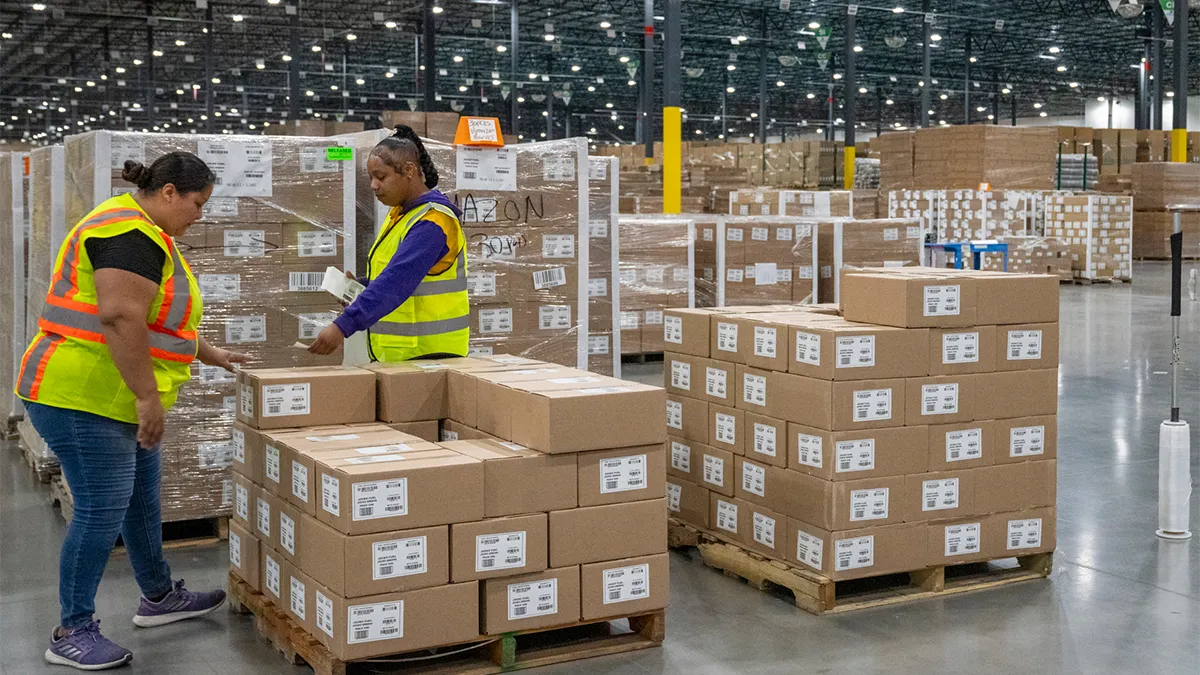
Third, design quality control around the highest-risk points. For many brands, that means verifying labels scan correctly, carton contents match the ASN, pallets are built to spec and routing instructions have been followed. A final compliance check before shipment is far less costly than a rejected load or disputed chargeback after delivery.
Fourth, treat compliance as a living program. Retail requirements change. New retailers bring new rules. Promotions alter volumes. Product assortment changes packaging needs. Operations teams should review scorecards, chargeback trends and exception reports regularly, not only when a retailer escalates an issue.
What should brands do before the first retail shipment?
The best time to solve retail compliance is before the first purchase order ships. Brands should confirm trading partner requirements, test EDI connections, validate labels, map routing decisions, document retailer-specific SOPs and train associates before volume ramps.
This is especially important for DTC brands entering wholesale for the first time. The growth opportunity is real, but the fulfillment model changes quickly. A brand that can ship thousands of parcels accurately may still struggle with retail compliance if it has not built processes for cases, pallets, appointment windows, retailer routing, UCC/GS1-128 labels and ASN accuracy.
What role can a 3PL play?
A 3PL with retail fulfillment experience can own much of this complexity. That starts with onboarding: translating each retailer’s requirements into the right system configuration, warehouse workflows, labels, routing processes, documentation and training.
It continues through daily execution: picking and packing to retailer specs, managing EDI and ASN timing, staging compliant pallets, coordinating transportation and tracking performance by retailer.
The most valuable 3PL relationships are proactive. They identify chargeback patterns, update SOPs when routing guides change and help brands prepare for new retail launches. They also bring perspective from supporting multiple industries and retail channels. While each brand is different, many compliance failures follow familiar patterns and can be prevented with disciplined setup.
The bottom line
Winning a retail account is only the first milestone. Keeping that account, protecting profitability and scaling across retailers requires a fulfillment operation that can meet each trading partner’s requirements consistently.
Retail compliance is not separate from fulfillment. It is fulfillment. The brands that recognize that early are better positioned to grow wholesale confidently, avoid preventable chargebacks and build stronger relationships with the retailers and wholesalers that can shape their next stage of growth.