
Each time a retailer changes an EDI specification, something has to update. A field gets added to the 856. A new qualifier shows up in the 850. The change goes out in an implementation guide, and somewhere in a vendor's operation, a countdown clock starts.
At a managed service provider, that process is predictable and slow. The vendor submits a change request. The provider schedules the work, updates the mapping code, runs a test cycle and releases a new configuration. Best case, that takes several weeks. In the meantime, that vendor is sending transactions against an old spec, and the retailer is sitting on exceptions that will eventually become chargebacks. Across a vendor base of several hundred suppliers, those tasks accumulate faster than anyone clears them. This has been the defining operational reality of EDI since the standard was adopted.
The part AI is actually changing
Much of the AI conversation in EDI has landed on the monitoring layer: smarter dashboards, better anomaly detection, exception workflows that surface problems earlier. Those capabilities are worth having, but they are improvements to detection, not to the maintenance problem that generates the errors in the first place.
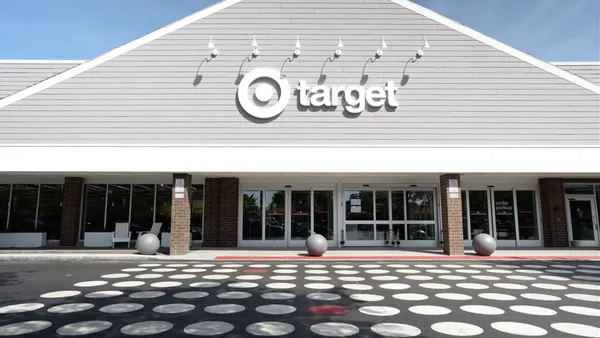
The more significant change is happening at the transformation layer. This is the code that translates between a company's internal data and each trading partner's specific EDI format. Target's 850 requirements are not the same as Walmart's, even though both are purchase orders. Traditionally, an EDI specialist wrote that translation manually, one partner at a time, one transaction type at a time and updated it by hand whenever a partner changed its spec.
Orderful and platforms like it are now writing that code using AI and, more importantly, maintaining it. When a trading partner updates its requirements, the platform reads the new spec and the transformation updates with it. The vendor's integration stays the same. The complexity underneath adjusts without a change request, a waiting period or a consultant.
What this looks like in practice
Every Man Jack, a men's personal care brand sold at major retailers, migrated 57 trading partners to Orderful in six months. Transaction processing that had taken up to 24 hours dropped to seconds. That compression did not come from having a faster team. AI reads each partner's specification, generates the compliant configuration and presents it for human review. The specialist review step stays in place. The weeks of manual mapping work before it do not.
Testing follows the same pattern. AI generates test scenarios from actual partner guidelines and historical transaction data, which removes the coordination cycles that typically push go-live timelines out by weeks. The work compresses because the machine is handling what used to require a specialist.
The divide that is opening in 2026
It is worth being precise about what "AI in EDI" actually covers, because the term now describes a fairly wide range of capabilities. Some providers have built AI that makes their service teams more effective with better error classification, faster resolution workflows and smarter support routing. These are genuine improvements and real vendors are seeing real value from them.
What they do not change is the underlying architecture. The mapping layer still requires human maintenance, spec changes still generate change requests and new partners still take months to onboard. The managed service model works the same way it always has, with AI making it run more smoothly rather than changing what it requires.
Vendors that fall behind on retailer compliance standards aren't careless. Their architecture just needs more manual work than retailers' pace of compliance change allows for. As retailers move faster on compliance requirements heading into the fourth quarter of 2026, that gap will show up in scorecard conversations and vendor agreements before it shows up anywhere else.
The retailers building more resilient supply chains are paying attention to which infrastructure their vendors are running on, not just whether those vendors are currently compliant.
Learn more about how Orderful helps brands stay compliant with every retailer they work with.
Orderful is a modern EDI platform that helps brands and retailers simplify vendor onboarding, eliminate chargebacks and build more resilient supply chains.