Dive Brief:
- Moody’s Ratings is maintaining its negative outlook for the global retail and apparel sector due to high prices, cautious consumers and, in the U.S., a sluggish labor market, according to an April 28 report.
- Excluding online sales, Moody’s said the sector's worldwide adjusted EBIT is expected to remain flat or decline 2% in 2026, after a 1.6% decline last year. At the same time, a fragile consumer base is looking for value and convenience despite dwindling affordability, which means retailers are constrained when it comes to raising prices, in spite of rising supply-side costs.
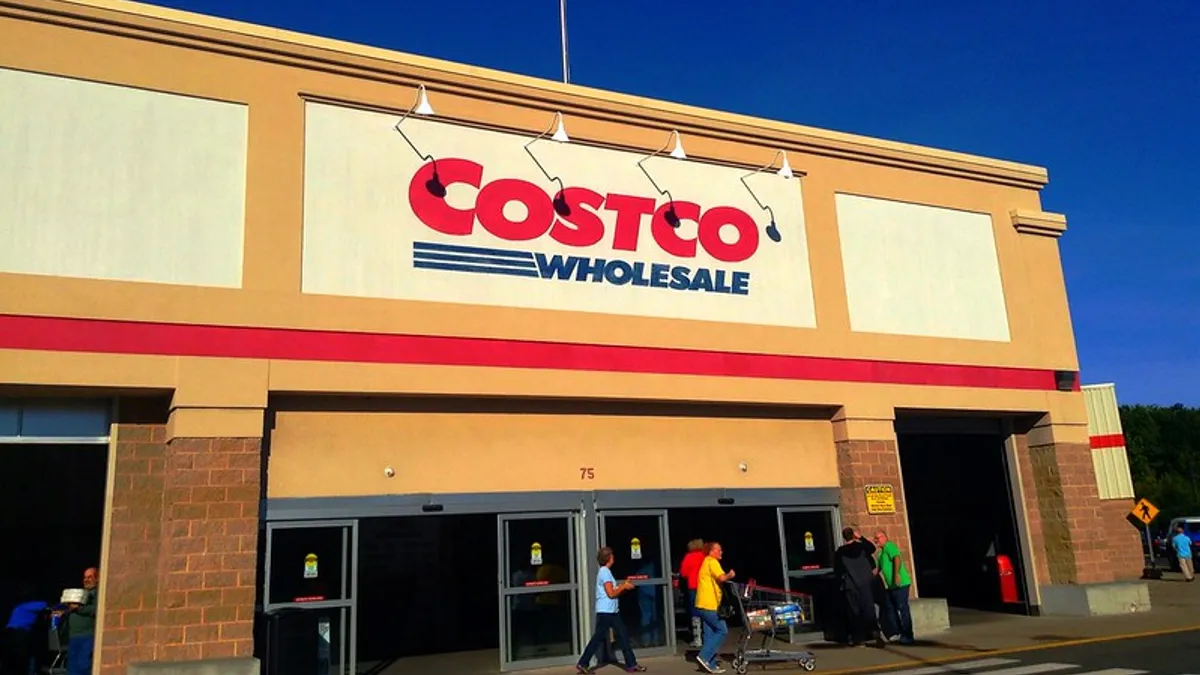
- The emphasis on value and convenience bodes well for large chains including Walmart, Costco and Target in the U.S. In North America, consumers battling inflation will also turn to dollar stores and off-price apparel retailers including TJX, Ross Stores and Burlington.
Dive Insight:
U.S. apparel and footwear retailers are expected to feel pinched throughout the first half of 2026 despite a temporary tariff reduction to 10% on most imported goods, Moody’s said. That’s due to weakened discretionary spending and higher residual costs associated with selling off previously purchased inventory.
Walmart is the biggest winner in the U.S. right now, said Moody’s. The company has benefited from “innovation supporting its value offering and best-in-class convenience,” analysts said, adding that the large-scale chain store has even lured higher-end shoppers looking for a respite amid rising retail prices.
At Costco, most of its EBIT comes from membership fees, which Moody’s said “reduces its exposure to higher product costs.” Meanwhile, Target is working on its operational turnaround and investing in its stores.
However, department stores, with their focus on discretionary and home spending, have continued to underperform, and apparel, footwear and accessories companies are also wrestling with diminished discretionary demand, higher fuel costs and the holdover impact of higher tariffs from the beginning of 2026. Moody’s said that competition is stiff and consumers are looking for brands “with clear, differentiated value propositions.”
While Ralph Lauren and Tapestry are excelling, due in part to strong marketing and international expansion, Nike is expected to continue its downward slide as its turnaround efforts prove more challenging than anticipated. Under Armour is also struggling with its turnaround, Moody’s added.
Globally, Moody’s said its macroeconomic outlook “assumes slow growth amid temporary credit implications from the Middle East conflict, but conditions have become more fragile since the start of the conflict in late February.” Analysts added that the Iran war has led to higher energy prices and reduced fuel supplies, and while some of those increases may be temporary, “significant geopolitical risks still persist, even if the Middle East conflict subsides.”
In the meantime, higher-income earners are driving consumption growth in the U.S., while lower- and middle-income households are grappling with rising prices for essentials.
“Affordability remains a critical consideration, particularly for middle-income and lower-income consumers, and consumer confidence is waning amid high oil prices,” Moody’s said. “In the US, households earning $65,000-$135,000 annually, historically a major contributor to overall spending, have been unable to outrun inflation. A decline in wage income for the lowest earners has further reduced their spending power.”
Against this backdrop, expanding e-commerce and artificial intelligence-aided shopping may lead retailers to shutter more than 40,000 stores over the next five years, as department stores and specialty retailers face the most uncertainty, according to recent data from UBS analysts led by Michael Lasser.