With the U.S. government’s October retail sales report finally out, after getting delayed by the shutdown earlier this year, analysts now have 10 months of data to parse about 2025 — and it seems clear that consumers are on the hunt for value.
This increasingly includes shopping for secondhand items, and that may be showing up in the calculation of retail sales, analysts say.
Autos, e-commerce, restaurants and bars dominate these reports, accounting for more than half of the retail sales reported by the U.S. Commerce Department every month, according to Wells Fargo economists Tim Quinlan and Shannon Grein. For its monthly tracker of retail sales, Retail Dive narrows its coverage to the discretionary segments that are its focus, leaving out automobile sales, fuel, restaurants, grocery and other categories.
This slice is worth a closer look, the Wells Fargo economists said in a Tuesday research note.
“Spending shifts in the smaller categories may not drive the headline, but they do often provide clues on the decisions that households are making with their spending,” they said.
On Tuesday, the economists pointed to “miscellaneous store retailers,” a tiny segment that is not even part of Retail Dive’s tracker, and includes florists, thrift stores and pet supplies. Much of the 8.5% year-on-year increase in that segment over the last 10 months, reaching $147.5 billion, could be coming from sales of secondhand goods, they said.
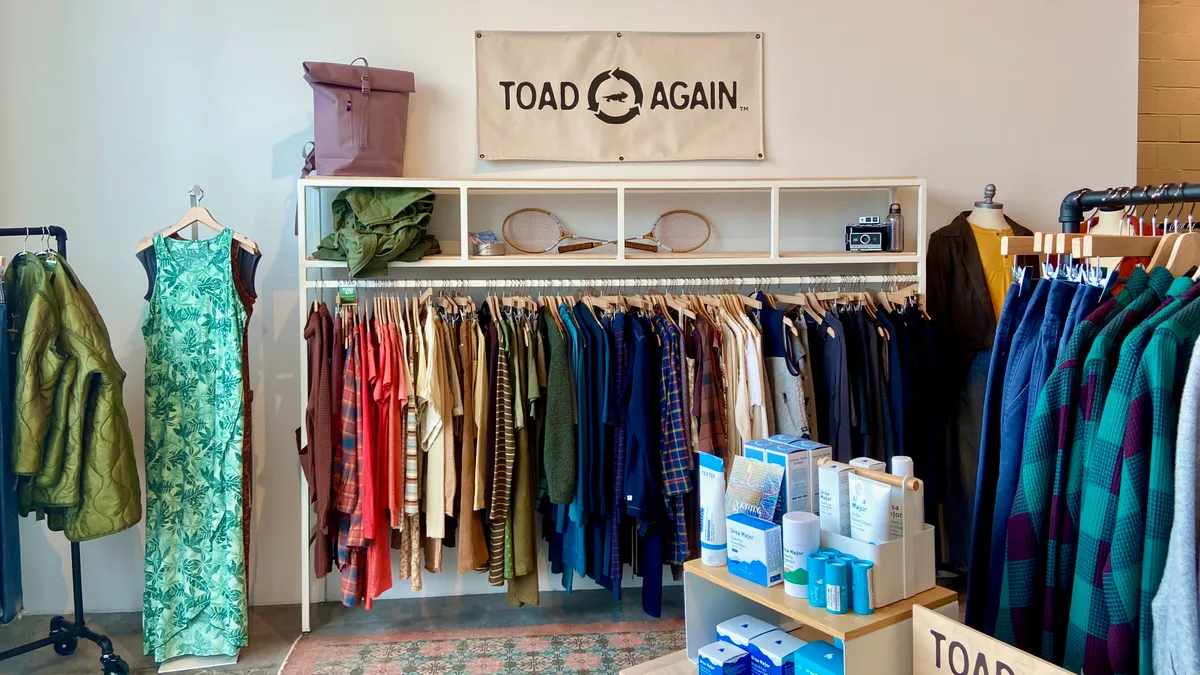
“We suspect at least some of the increased traffic in this category is attributable to households seeking to blunt the impact of tariffs by buying used merchandise,” they said. “Big retailers like Patagonia and even luxury brands have launched resale programs.”
This tracks with other research, including from GlobalData, which crunches numbers for ThredUp’s annual secondhand report. In March, the companies reported that, in the U.S. last year, used apparel sales grew five times faster than the broader retail clothing market, and are projected to reach $74 billion by 2029, with a 9% average annual growth rate.
Even before that, the firm and OfferUp found evidence that stigma around buying used items has faded, and that now seems to apply to holiday purchases as well.
In October, GlobalData and ThredUp found that in 2025 shoppers planned to put 40% of their holiday budgets toward secondhand items. Consumers seem to be following through on this, as GlobalData tracking has revealed much higher interest in used items for gifts as well as self-purchases.
“A combination of two things seems to be at play,” GlobalData Managing Director Neil Saunders said by email Tuesday. “First, consumers are desperately trying to make their holiday budgets stretch further, and secondhand is a way of extracting greater value for money. Second, there is much wider acceptance of secondhand giving and receiving, which puts it more smartly in the frame as a holiday category.”