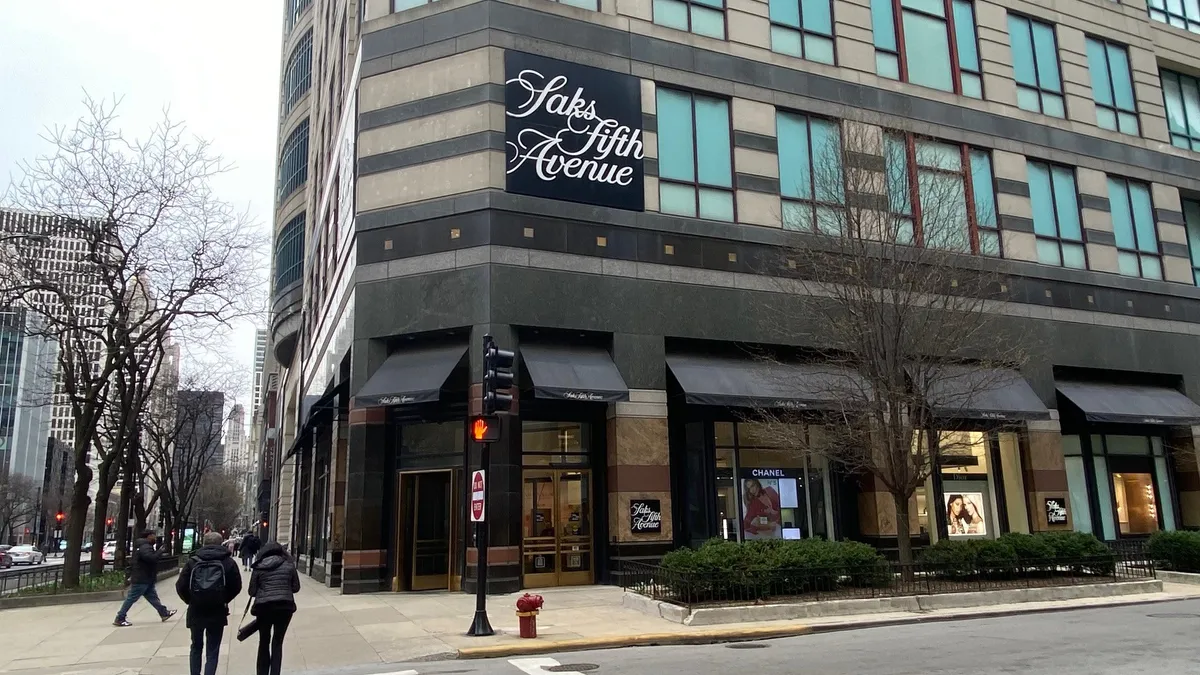
Since cobbling together $2.7 billion to acquire Neiman Marcus Group at the end of last year, Saks Global has spent the better part of 2025 under siege.
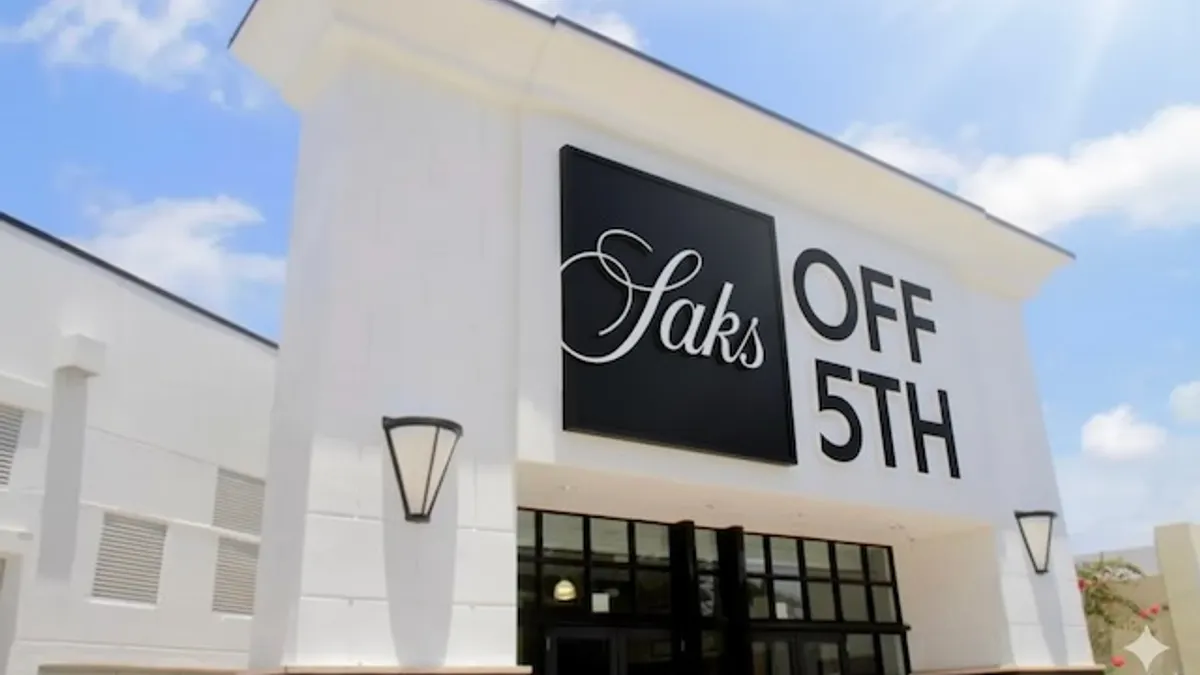
The company is now a luxury retail conglomerate encompassing department stores Saks Fifth Avenue, Neiman Marcus and Bergdorf Goodman plus off-pricer Saks Off 5th and home goods retailer Horchow. Rather than taking the market by storm, though, Saks Global’s sales have been weaker than expected. Moreover, it’s operating under the weight of $4.7 billion in debt, struggling to pay vendors and watching a long line of merchants and other top executives take their leave.
According to CEO Marc Metrick, all is going to plan. “Across Saks Global, we are making meaningful progress on our transformation strategy,” he said in a statement in October. Saks Global has not responded to several questions or to multiple requests for comment for this article.
Many analysts and turnaround experts aren’t so sanguine. Of those who see a bankruptcy next year as inevitable, some view a restructuring as an opportunity with upsides. Others see a lot riding on Q4. Michael Appel, founder of turnaround and strategic advisory firm Appel Associates, is in the latter camp.
"They’re in the business of selling merchandise, so they need to get the vendors behind them.”

Michael Appel
Founder, Appel Associates
“If they're able to show some progress against the dismal performance since they took over, they might have a chance,” he said by phone. “But there's been so much turmoil at the company, in terms of all these management changes, and they’re not paying all their vendors on a timely basis. They're in the business of selling merchandise, so they need to get the vendors behind them.”
How it’s going
Saks Global is operating under a financial strain that analysts say is impeding its ability to obtain inventory and pay for goods it’s already ordered. A $600 million deal with bondholders in June buttressed its finances but did little to assuage credit analysts.
In September S&P Global ratings analysts Frederico Carvalho and Amanda O’Neill upgraded their July assessment, and no longer hold that the bond maneuver was “tantamount to a default.” But they did reiterate their liquidity concerns, based on the higher debt and the prospect that the “much-needed” cash infusion would be devoured by necessary investments into the business.
“In our view, the company’s competitive advantage will weaken as competitors with more financial capacity increase share, which will require additional effort and resources to reengage its customer base,” Carvalho and O’Neill said.
Saks Global sales decline as Bloomingdale's and Nordstrom gain
Competitors, namely Nordstrom and Bloomingdale’s, have already increased share, according to Bloomberg Intelligence, citing transaction data from Bloomberg Second Measure. Between January 2024 through this October, transactions at Saks Fifth Avenue and Neiman Marcus fell double digits as Bloomingdale’s and Nordstrom posted increases. Even in off price, Saks Off 5th is closing stores while Nordstrom Rack continues to expand.
“Clearly, the trends that we have been identifying all this year have continued,” Bloomberg Intelligence Senior Retail Equity Analyst Mary Ross Gilbert said by video conference. “We're seeing good strength with Bloomingdale's, and Nordstrom is private but the transaction data says they're doing well too.”
Gilbert believes it’s likely that Saks Global is seeking a buyer for a minority stake in Bergdorf Goodman, with a $1 billion price tag, as The Wall Street Journal reported in September. Several observers say a potential buyer would probably want a majority stake, but, by holding onto at least 51%, Saks Global could fully integrate Bergdorf’s results into its balance sheet, so “their numbers could look better than they really are,” Gilbert said
“But does it mean that they'll make the vendors 100% whole?” she said. “That's something that needs to be investigated... Because right now they take longer to pay, so that makes them less attractive. And we can see it in the data, because we're seeing Bloomingdale's picking up share and Nordstrom picking up share.”
The vendor problem
Saks Global describes itself as a luxury retail and real estate company. But its defining characteristic so far may be a debilitating breakdown in its vendor relationships. This has cost the company timely inventory, painted a picture of financial instability and helped bequeath share to Nordstrom and Bloomingdale’s.
The debacle began on Valentine’s Day with a memo from Metrick to vendors, less than two months after closing the Neiman Marcus deal. In it he acknowledged an 18-month backlog of overdue payments to suppliers, striking a tone that unnerved longstanding partners, and presented an unorthodox payment plan. Saks Global’s new terms would be to hold off on meeting obligations until summertime, then stretch out payments over a year. Vendors refusing to ship inventory over past-due invoices risked getting blackballed.
Payments have been slow at best. Increasingly vendors are the ones jumping ship, or contemplating it, as bills remain unpaid — one told Retail Dive in November that Saks Global owes them hundreds of thousands of dollars. In June executives insisted things were back on track, but in October Metrick said inventory shortages were contributing to sales weakness. By contrast, at spaces run by brands themselves, inventory was adequate and sales were strong, according to Saks Global’s Q2 report. The company didn’t immediately return requests for an update on the vendor and inventory issues.
"If business is really tough, I don’t think they make it past the holiday."
Mark Cohen
Former Director of Retail Studies, Columbia Business School.
It’s unclear whether the company has been able to stock up properly for the holidays. Overall, it’s a rough way to enter Q4, a crucial period for most retailers, including all department stores. For Saks Global, it could be existential, according to several analysts and many of its own partners.
“The people running Saks and now Neiman's have run the business into the ground, in terms of failing to pay vendors and having destroyed their customer service DNA. If business is really tough, I don't think they make it past the holiday,” Mark Cohen, a department store veteran who previously ran retail studies at Columbia Business School, said by phone. “I think it's a train wreck. It’s just a question of when we hear the loud noise and see the smoke and fire.”
Synergies
The fundamental argument in favor of most mergers rests heavily — and often precariously — on the promise of saving money by merging operations, also known as achieving synergies.
Saks Global has been chipping away at this since before the Neiman Marcus agreement closed by downsizing the corporate ranks. This year, in addition to more than one round of layoffs, the company has shaken up its leadership team a few times. Longtime Saks and Neiman executives and merchants have trickled out, even after roles were expanded, and recently high-level turnover reached Bergdorf Goodman. In an Oct. 31 statement addressing a string of departures that month, a Saks Global spokesperson said the company has “made significant progress on our integration plans and on a much faster timeline than anticipated.”
“As part of this process, we determined that with a simplified leadership structure we will be able to more efficiently execute on our transformation strategy, which centers on advancing the customer experience, strengthening our brand partner relationships, and improving our financial performance,” the spokesperson said.
“Maybe you have cost synergies five years from now, but the consolidation requires more spending."
John Sparacino
Principal, McKool Smith
There’s big money at stake. Saks Global has targeted an annualized cost reduction target of $600 million over the next few years. Such efforts can be costly in the short run, though, and the savings usually take a while, if they appear at all, according to John Sparacino, a principal specialized in bankruptcy and restructuring at law firm McKool Smith. He takes the $600 million target “with a big grain of salt,” he said by phone.
“Anytime I see statements like that, they raise more questions than they provide answers,” Sparacino said. “Maybe you have cost synergies five years from now, but the consolidation requires more spending — it’s a significant combining of systems that might come with considerable costs in and of themselves. So do you survive long enough to realize those cost savings at some point down the road?”
Not all departures have been about downsizing. Saks Global in late November sued Bergdorf Goodman chief merchant Yumi Shin over her move to Nordstrom. Shin moved to dismiss the case, citing numerous problems including jurisdiction and fairness, and filed her own lawsuit in Delaware.
Sameness
Saks Global’s greatest risk may lie at the convergence of its vendor troubles and the combination of its operations. Both could erode traces of individuality at its three luxury department stores.
Losing brands, as they have over payment issues, jeopardizes each retailer’s exclusive offer, Appel said.
Saks Fifth Avenue and Neiman Marcus overlap in more than a dozen spots
“The success of a store like Saks or Neiman's or Bergdorf’s is really based on the curated assortments,” Appel said. “That means a combination of the big names and smaller and medium-sized vendors that make the assortments interesting and compelling and keep the customers coming back.”
Similarly, combining merchant teams homogenizes the assortment, he said.
“You lose the sense of identity that the vendors and the buyers have when they represent and are focused on that one brand,” he said. “It sounds good on paper because they're going to save all this money. But what they're giving up is the ability to tailor the assortments to their customer base. The Neiman customer is a different customer than the Saks customer.”
Timothy Peterson, president of consultancy Data Glam, believes the Bergdorf Goodman customer also could get lost in the synergies.
“If Bergdorf starts to become more like Saks or Neiman's, that's the thing that people fear the most,” he said by phone. “New York will have finally lost one of its truly great last big luxury places that's distinctive. If it's gone, then the era really is closed, in a sense.”
Saks Global needs to put concerted effort toward ensuring each nameplate remains unique, experts said. This is especially true at the 15 or so locations — about 40% of each retailer’s footprint — where Saks and Neiman stores are cheek by jowl.
“I’m in the camp that bankruptcy is inevitable, and I think it's a desired outcome — they could close non-performing locations well in advance of the lease expiring."
Glenn McMahon
Managing Partner, MAC Advisory and Consulting
“I think it is risky for a mall to have Neiman's and Saks,” Peterson said. “I don't see how it would work over time, unless they really come up with plans to say Neiman's is going to be these things and it's not going to overlap with Saks. I would say that this is what they they had to think about seriously. And that's also what I would say about Bergdorf’s, which at this point still feels distinctive.”
One way to make the job easier would be to shutter some locations, which restructuring could facilitate, according to Glenn McMahon, managing partner at MAC Advisory and Consulting.
“I agree with the premise that they have a lot riding on Q4. I would say that even before the deal was signed in December there were indications all along that this was going to go south pretty quickly,” McMahon said by phone. “I’m in the camp that bankruptcy is inevitable, and I think it's a desired outcome — they could close non-performing locations well in advance of the lease expiring. And that's what they need to do, because they have duplicate locations in the same exact malls.”
Regardless of whether it comes to bankruptcy, it could mean the end of an era if sameness creeps in across Saks Global.
As customers move toward Saks Global’s rivals, so will brands, according to Tom Ott, who runs the merchandising consultancy Retail & Fashion Solutions. Ott was previously a menswear merchant at Saks Fifth Avenue and after that chief merchant at Saks Off 5th. Not just smaller brands that throw up their hands, but also big names like Chanel or those at luxury houses LVMH and Kering, which are also increasingly opening their own stores, he said by phone.
“It makes me sad, what’s going on, because Saks and Neiman's are the two strongest American luxury retail names, period, full stop,” Ott said. “It should be about new vendor identification, new brands that are found throughout the world, that are brought back, and there's a differentiated product matrix.”
“They’re in a war they're not going to win against the brands themselves,” he said. “It's like a self-fulfilling prophecy on the sales line for them, and there's no plan or merchandising strategy to get out of it.”