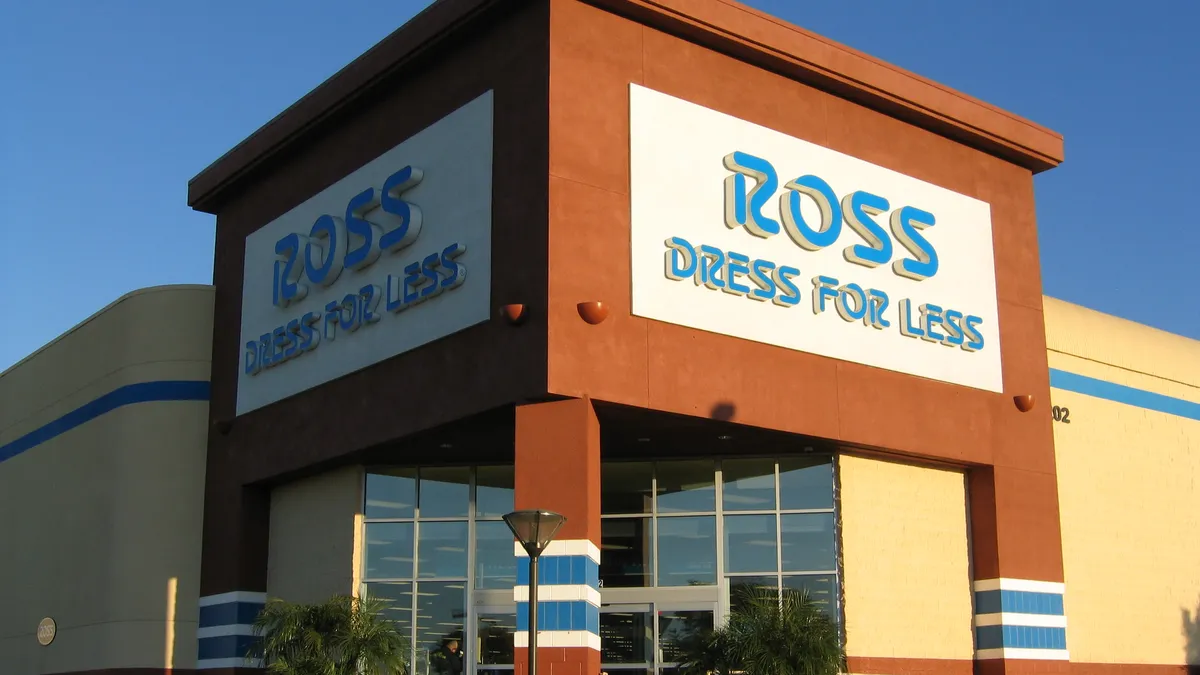
Off-price retailers have been plucking market share from mainstream retailers for years now. In recent weeks the three major off-price retail chains in the U.S. — TJX Cos., Ross and Burlington — posted another quarter of strong sales, margins and profits, and all three emphasized that they will continue to add to their store fleets.
This has been a nightmare for department stores in particular, which have ceded both sales and EBIT dollars to off price for more than a decade, according to research last year from UBS analysts led by Jay Sole.
As they bump up against each other in more markets, they could start grabbing market share from each other, too.
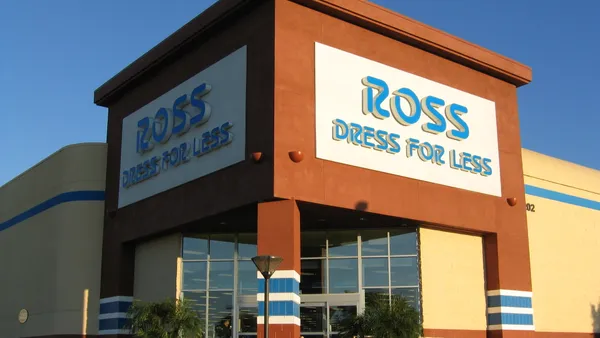
At TJX Cos. Q4 net sales rose 9% year on year to $17.7 billion; at Ross sales in the period rose 12% to $6.6 billion; and at Burlington total sales rose 11% to $3.6 billion. The brick-and-mortar expansion plans at all three suggest they see plenty of room for more growth.
“You're going to see us — in a nice way, as we always try to do culturally — continue to be more aggressive than we ever have before, in driving top line, taking market share, opening stores — wherever we think there's the right calculation of transfer sales,” TJX CEO Ernie Herrman told analysts.
In North America, all three are opening stores at a similar pace. Ross plans 85 new stores this year, slightly more than in 2025, and envisions growing its Ross chain to 2,900 and DD’s Discounts to 700, CEO James Conroy told analysts earlier this month. Burlington plans 110 net new store openings this year, executives said earlier this month. TJX sees room for 1,700-plus more stores globally, ultimately reaching 7,000; this year the retailer plans 146 net new stores, representing store growth of about 3%, with over 100 of them in the U.S. and 13 in Canada.
Ross’ Conroy brushed aside the notion that it’s looking to compete with peers, saying that the retailer just wants to get its “fair share” of sales that are flowing to off price from a variety of traditional stores.
“The bigger forfeiture of market share is coming from mainstream retail,” he said. “One of our other off-price competitors just posted a very solid quarter as well and they're a bigger business than us. So it would be foolhardy to say we're taking a lot of share from them. I think the share shift is more from mainstream retail, department stores and other places like that to off-price in general.”
One reason these three may be relatively safe from each other is that they have somewhat different audiences, with Burlington attracting a lower-income customer and TJX a middle- to upper-middle-income consumer. Still, as the segment grows, some analysts see a brewing share battle from within the segment.
“While we continue to expect Offprice to gain share from traditional retailers, we expect the debate regarding potential for intensifying market share shifts among Offpricers will likely ramp through the year,” Evercore ISI analysts led by Michael Binetti said in a Thursday research note.
That goes for not just customers, but also the ability to obtain the merchandise that makes off-price stores so appealing to shoppers, according to Guggenheim Senior Managing Director Simeon Siegel, speaking by phone.
“As off-pricers grow and continue to flex their muscle — showing what's obviously an incredibly strong business — it is also always worth questioning what happens when you see a clash of the titans,” he said “So far I don't think we are there, but at some point, it's worth asking, ‘Do off-pricers begin to compete, both for the same customers, but also for the same inventory?’”