NEW YORK — While they may have gotten their starts online, most DTC brands will admit there’s merit in taking their brands offline.
A key reason is because consumers, particularly Gen Z shoppers, still like going into stores to see a product in person before purchasing.
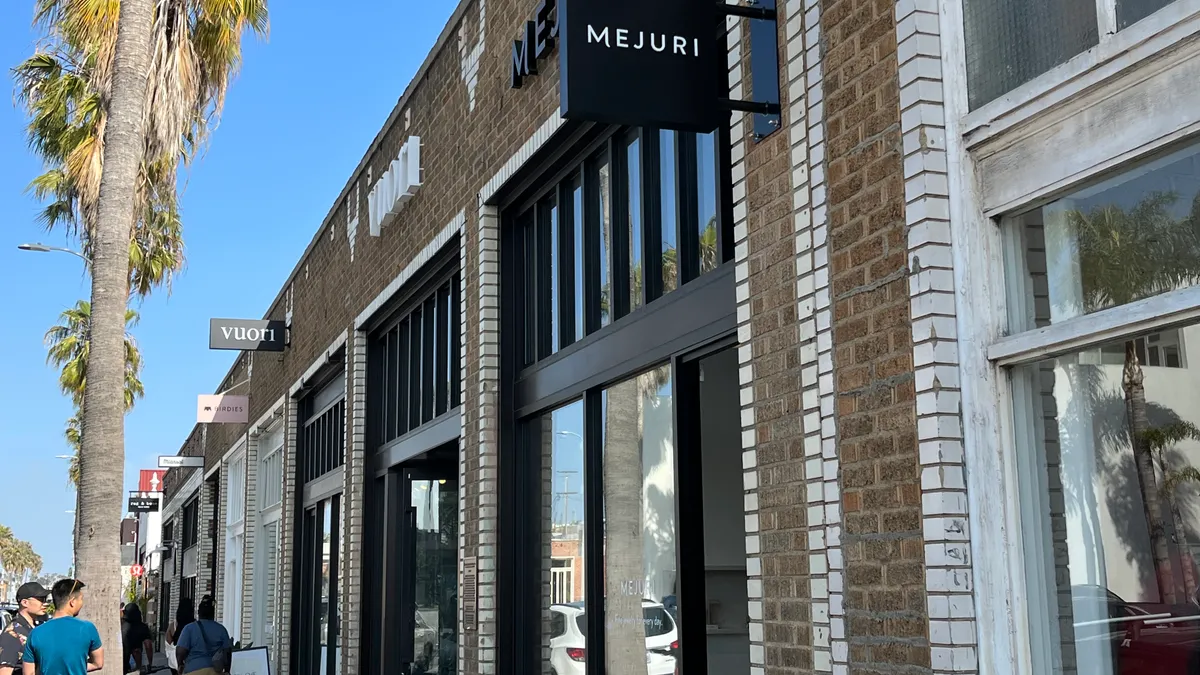
Jewelry brand Mejuri, which was founded in 2013, started inviting its customers into its office two years after launching so they could touch and feel the merchandise. The brand, which officially opened its first store in 2018, now boasts a footprint of 55 locations.
“We assumed a lot of the people who were going to come to our stores were existing customers,” Noura Sakkijha, CEO and co-founder of Mejuri, said during a panel at NRF’s Big Show. “But to our surprise — and I'm glad that I was wrong — we found that 60% of the people buying in store are net new customers.”
The jewelry segment in particular skews heavily toward in-store purchases, with two out of every five transactions occurring in store, according to Sakkijha, further pushing the brand to embrace physical retail.
Mejuri has been intentional in the details of its stores. In a nod to its early days of inviting customers into its office to see products, the brand designed its retail spaces to showcase its products without the glass-enclosed cases typically found in jewelry stores, encouraging them to pick up and look at the merchandise.
The brand has also found that the customer lifetime value is higher for individuals that shop in store versus online, Sakkijha said. “There is something about coming [in] and touching, feeling the products and really seeing the brand in real life that creates more loyalty.”
Beyond Yoga initially built a strong wholesale presence as a way to expand its distribution. But more recently, after Levi's acquired it in 2021, Beyond Yoga has worked to grow its store fleet.
“The customer is really craving that direct connection with the brand, and we see it across generations,” Katie Babineau, chief marketing officer at Beyond Yoga, said during the panel.
The activewear brand opened its first permanent store in 2022, and last year doubled its store footprint, now boasting 14 locations, according to its website.
And seven-year-old diaper brand Coterie — which was acquired in October by Harry’s owner Mammoth Brands — has leaned into wholesale to reach new and existing customers. While the majority of its sales still come through its DTC channel, the brand currently sells through Wegmans, Whole Foods and Erewhon.
“Whole Foods is really working for us,” Coterie CEO Jess Jacobs said.
Coterie is responsible for 100% of the category growth in Whole Foods, is the No. 1 diaper brand selling there and is responsible for 86% of the grocery store’s diaper sales, Jacobs said.