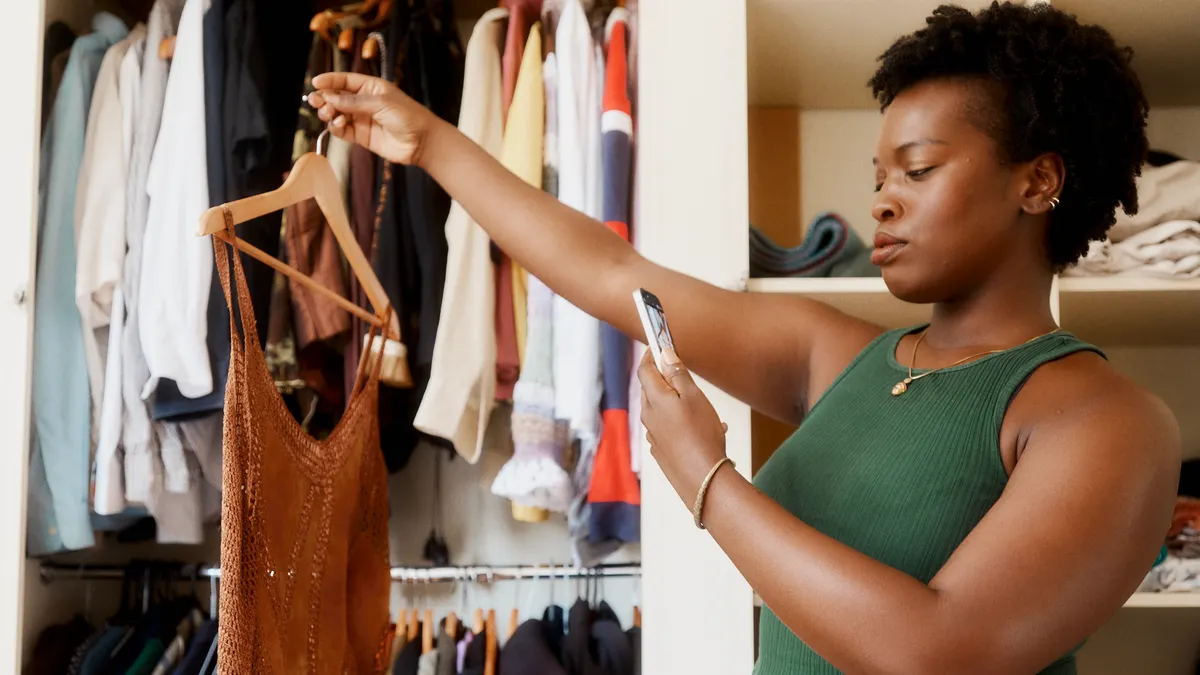
U.S. consumers last year shelled out their extra spending money on smaller items — including used goods, apparel and dining out — rather than big purchases like electronics, furniture, hotels and air travel, according to research from the Bank of America Institute earlier this month.
“2025 was defined by savvy consumers looking to stretch a dollar,” said Liz Everett Krisberg, head of the institute, and David Michael Tinsley, senior economist. They noted “a clear split in discretionary spending” by categories, based on Bank of America credit and debit card data.
With a weakening job market and consumer sentiment on the wane, this kind of caution is expected to continue in 2026, according to recent research from Moody’s.
Tax refunds could provide a reprieve, though, because they’re expected to be as much as 18% higher this year — and that money tends to go toward discretionary spending, according to another Bank of America Institute note.
Last year, lower-income households in the U.S. got a bigger boost from tax refunds compared to the average U.S. household, based on their discretionary spending on travel, goods and leisure, Krisberg and Tinsley found. For those households, “refunds often exceed a month’s budget, potentially giving them more room for discretionary splurges.” This reflects the “K-shaped” economy in the U.S., with lower-income consumers bearing the brunt of challenges like inflation and a slowing job market while higher-income consumers prosper.
This year, refunds could infuse about $65 billion to household budgets, Krisberg and Tinsley said, citing BofA Global Research.
“Tax season could pack a punch in 2026,” they said.
It would likely be a temporary punch, though, as the employment picture will be the biggest factor in consumer spending in 2026.
“Bottom line: refunds might briefly narrow the ‘K-shape’ and give discretionary spending a lift, but the long game still depends on the labor market,” they said.