Dive Brief:
- After two years of stagnation and decline, the U.S. toy industry returned to growth in 2025. Total annual dollar sales grew by 6% year over year, according to Circana, while the average sales price increased 4% and units sold increased 3%.
- Growth was concentrated in a handful of categories, with six of 11 “supercategories” tracked by Circana posting dollar growth. It was led by games and puzzles, which was up 37% in dollar sales.
- Shoppers have signaled their willingness to buy pricier toys, with those products priced between $30 and $69.99 rising 18% from a year prior, the fastest of any segment. By contrast, toys priced below $5 and between $15 to $19.99 recorded the steepest declines.
Dive Insight:
The shift to more expensive toys indicates a consumer demand for collectibles, premium and “feature-rich,” products.
American toy shoppers have gravitated toward toys tied to entertainment, sports and gaming franchises, reinforcing fandom-driven purchasing decisions, Circana’s analysis found.
“The U.S. toy industry enters 2026 with solid momentum, supported by licensing, collectibles, and a strong content pipeline, but with meaningful uncertainties ahead,” Juli Lennett, U.S. toys industry adviser at Circana, said in a statement.
While demand for toys in other categories grew last year, outdoor and sports, plush products and dolls saw the greatest declines. Weather disruptions in the early part of 2025 impacted seasonal categories.
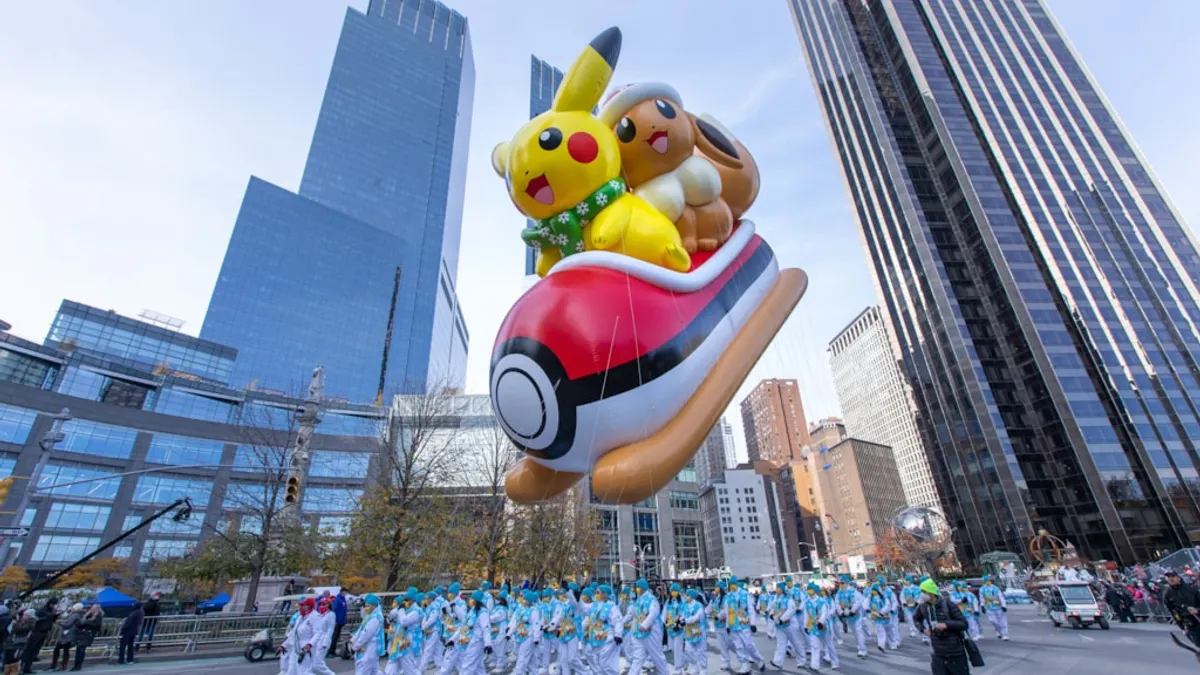
Pokémon toy sales surged 87% from the previous year to $2.5 billion in the U.S. It is the first brand in the last 20 years to exceed the $2 billion mark in annual sales, according to Circana. Meanwhile, six other toy properties grew last year, with double-digit gains catalyzed by entertainment, sports licensing, and video game-related franchises, the report noted.
“While tariffs have not yet materially impacted prices for consumers, their downstream effects remain unpredictable, layered with other factors such as inflation, credit pressure, and consumer confidence shaping discretionary spending,” Lennett said in a statement. “The brands best positioned to win will be those that activate demand through licensing and innovation, balance fandom with evergreen play, create emotional resonance with consumers, and build communities that turn enthusiasm into sustained demand.”
Rising demand has impacted toymakers like Hasbro and Mattel. Hasbro’s Q4 net revenues surged 31% year over year to $1.4 billion, while full-year revenues rose 14% to $4.7 billion. Mattel’s Q4 2025 net sales jumped 7% from a year prior to $1.8 billion, but full-year net sales dipped 1% from the previous year to $5.3 billion.