Retail operations have undergone a tremendous amount of change in the past few years. The pandemic reconfigured most of daily life, including how the public interacted with stores and e-commerce. The retail industry overwhelmingly saw its operational needs evolve.
New standards kicked in, and in many ways companies are still finding steady ground. Delivery, store count and fulfillment have all been reexamined. Operations that streamline tasks while still serving the customer are rising to the top.
Enclosed are stories about how retailers are developing and advancing operations. Here you will find the latest information regarding store openings and closings, digital labels and supply chain automation, among other topics.
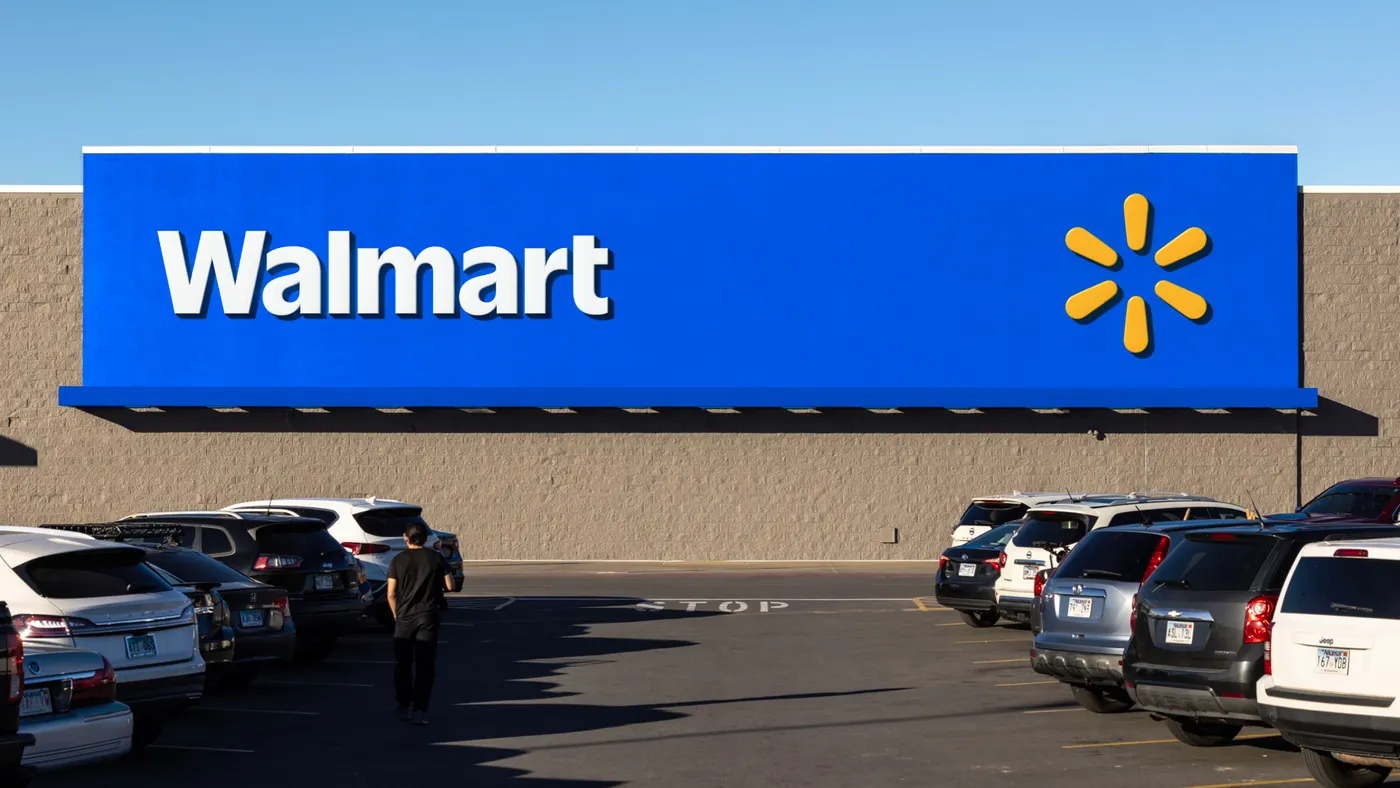
Walmart expands digital shelf labels to all US stores
By the end of this year, all locations will feature the tags, which help associates change prices, restock items and fulfill online orders quicker.
By: Tatiana Walk-Morris• Published March 4, 2026
After introducing digital shelf labels to about 2,300 U.S. locations, Walmart is expanding the technology to all of its locations within the next year.
The system allows the retailer to easily update product prices, reduce errors and eliminate the need for paper labels. The technology helps store staffers identify low-stock items and fulfill online orders quickly via a mobile app, which activates LED lights on the relevant shelf labels.
The company will maintain the same price for all customers in any given storeregardless of demand, time of day or which customers are shopping. The labels run on a closed system and don’t interact with shoppers or collect their data, the retailer said.
Walmart’s digital shelf labels are part of the retailer’s ongoing efforts to modernize its supply chain and order fulfillment operations.
After piloting the technology at its Grapevine, Texas, supercenter, Walmart in 2024 set out to install it at 2,300 locations by 2026. Last May, the retailer opened its first “Store of the Future” supercenter in the U.S., which featured digital shelf labels, an updated vision care center and a full-service fuel station.
Without its paper labels, Walmart’s store associates will now have more time to assist customers. Outside of typical shopping hours, store associates will review and implement approved price changes, so the retailer can maintain consistent prices throughout the day, a move it hopes will earn customers’ trust, the release noted.
“Before [digital shelf labels], that meant walking up and down aisles swapping out paper tags by hand,” the company said in its announcement. “Now, associates manage planned price changes through a centralized Walmart system, making it easier to keep shelf prices accurate and aligned with what customers see at checkout.”
Digital shelf labels are helpful for retailers fulfilling grocery delivery app orders in stores as well. In 2024, Aldi, Gelson’s, and Hornbacher’s partnered with Instacart to integrate the delivery app’s pick-to-light system of its Carrot Tag software. The integration helps workers find items faster using flashing lights.
Along with its new labels, Walmart has deployed other tech tools to improve its inventory management, fulfillment and other supply chain functions. The retailer, for example, is using AI and other automation technology to identify and resolve problems “in real time without requiring constant manual intervention,” Indira Uppuluri, senior vice president of supply chain technology at Walmart, told Supply Chain Dive.
Walmart’s infrastructure investments will continue apace in the near future. Walmart president and CEO John Furner said during an earnings call that its supply chain investments will “probably peak this year and next year.” Days later, the company’s business data applications arm, Walmart Data Ventures, debuted Scintilla In-Store, a store data aggregator for supplier field representatives.
Article top image credit: Courtesy of Walmart
What Mattress Firm gained from contactless delivery
The shipping option has added customer flexibility and freed up drivers’ time despite early hurdles, executives said.
By: Max Garland• Published June 1, 2026
While in-home delivery and setup may be commonplace among mattress sellers, Mattress Firm has seen customers embrace a less traditional shipping option.
Last year, the mattress store chain introduced contactless delivery, Todd Warner, Mattress Firm senior director of logistics and care, said during a session at Home Delivery World 2026 in Nashville. The free option involves a driver dropping off the mattress outside the home, while in-home delivery services charge at least $109.99, per Mattress Firm's website. Roughly 25% of the company's deliveries are now contactless, according to Warner.
"It's another way for us to meet the customer where they needed to be met," he said.
Contactless delivery emerged out of previous challenges. Mattress Firm once offered an option called "threshold," in which drivers moved the mattress just past the front door. The expectation was for a threshold delivery to take 15 minutes, but in some instances it could take 45 minutes if the customers convinced drivers to also set up the mattress for them as well, Maryjane Fanizzi, vice president of logistics, said in a separate conference session. That created the knock-on effect of drivers being late for subsequent deliveries.
To address the issue, Mattress Firm mulled an Amazon-like delivery option, in which the driver simply drops off the mattress at the customer's front door — "kind of like a drop and run," Fanizzi said. Mattress Firm's delivery team was tasked with rolling out a test of the contactless method first.
"We gave it a test in our Charlotte region, and it was an overwhelming success," Fanizzi said. "The customers came back to us and said, 'I don't have to wait for it. You didn't ring my doorbell. I don't have to sign for it. I was in a meeting and you guys just came, set it down, took your pictures, and you left.'"
After the reported success, Mattress Firm leadership tasked the logistics team with rolling out the capability across the entire U.S. in a month, according to Fanizzi. Scaling the delivery option came with its share of hurdles, as there wasn't full buy-in across all of the sales and operations team.
"Even though we proved it worked, they failed to really grasp onto it," she said, adding that "we had to prove to them not many people are going to steal a 200-to-300-pound mattress on somebody's front door."
Additionally, initial customer satisfaction after scaling wasn't as strong as Mattress Firm's tried-and-true in-home deliveries, Fanizzi said. Communication from salespeople to customers wasn't clear on what free, contactless delivery meant, with the expectation persisting that the driver would still set up the mattress in the home regardless.
"The poor delivery guys are standing there and they're going, 'No, we're not supposed to do that,'" Fanizzi said, adding that the situation caused added frustration for customers.
Eventually, the sales team's messaging adjusted to mitigate future customer friction: free means contactless, with no home entry involved. Consequently, customer satisfaction with contactless deliveries began to improve, scoring similarly to in-home, white-glove deliveries, according to Fanizzi.
"It's normalized back out, which means people have accepted it finally, and they're selling it correctly," Fanizzi said.
Article top image credit:
Max Garland / Supply Chain Dive
Sponsored
Closing the cyber resilience gap at the data layer: Why retail CISOs and CIOs must rethink their data strategy
Enterprise infrastructure is evolving fast. So are the threats. AI is driving the need for modernization across on-premises and hybrid multicloud environments, but it's also putting new power in the hands of bad actors, and retailers are squarely in the crosshairs. From POS system breaches to supply chain attacks, the stakes have never been higher. Legacy cybersecurity wasn't built for this threat landscape.
Traditional backups and perimeter-focused strategies can't keep pace with modern attacks. Resilience now means immediate, reliable recovery. Yet despite heavy security investments, a critical blind spot remains at the data layer.
The cyber resilience gap is the disparity between what organizations spend on perimeter security and their actual ability to recover clean data after a breach.
GigaOm explains that while perimeter security, detection, and backup solutions remain necessary, they don't guarantee data integrity, fast recovery, or operational continuity. When, not if, prevention fails, many organizations aren't able to recover quickly enough to avoid disruption, or worse, loss of critical data.
For retailers, this gap hits hardest when it matters most. One hour of downtime during Black Friday or the holiday season can cost millions in lost revenue and do lasting damage to customer trust.
The experts agree: think beyond reactive defenses and traditional backups. Embed resilience directly where your data lives: at the storage layer.
Integrating protection, detection, and recovery into the storage layer cuts the complexity that burdens lean retail IT teams: less tool sprawl, automated response workflows, and consistent policies across on-premises and omnichannel retail infrastructure. NetApp cyber resilience solutions make this a reality.
What are the key outcomes of data layer resilience?
Prioritize the storage layer and you protect operations, automate threat response, and recover fast.
Unify data management, security, and compliance: Safeguard customer transaction data, inventory systems, and e-commerce platforms with built-in encryption and governance across your omnichannel retail infrastructure.
Keep shopping experiences uninterrupted: Recover clean data in minutes, not days, with truly indelible snapshots that guard against tampering and unauthorized access.
Streamline operations: Give lean retail IT and security teams a faster path through real-time detection, automated response, and rapid recovery workflows.
What makes NetApp the most secure storage on the planet?
NetApp secures data by providing the only enterprise storage validated by the NSA for top-secret data management, featuring autonomous ransomware protection with over 99% detection accuracy.
At NetApp, when we say we provide the “most secure storage on the planet”, it’s not just marketing fluff. NetApp is uniquely recognized as the first (and only) enterprise storage provider to have data management solutions validated by the U.S. National Security Agency (NSA), meaning our solutions are secure enough for some of the most sensitive data in the world. The NetApp CSfC/NSA validation for management of top-secret data, paired with rigorous certifications like DoD APL and FIPS 140-3, demonstrate our proven commitment to protecting highly sensitive and regulated data. This is one of many reasons why NetApp is the trusted choice for organizations with the strictest compliance demands.
In extensive, rigorous third-party testing by SE Labs, our built-in autonomous ransomware protection capabilities achieved over 99% ransomware detection accuracy for file workloads. While many vendors claim to offer built-in detection features, truly measurable and tested accuracy for their detection capabilities is rarely provided or proven.
Our customers depend on us to make sure their critical applications and data services are as reliable as possible in any event. In one real-world example, NetApp customer Thor Motor Coach avoided disaster during a faulty CrowdStrike software update that crippled business operations for other organizations world. Before partnering with NetApp, their ERP was down 32% of the time, or about 90 minutes per day. Now they have 99.999% availability, which translates to just 5 minutes of downtime per year.
For retailers processing thousands of daily transactions across multiple locations, that level of availability isn't a luxury. Checkout downtime, in-store or online, directly costs revenue and customer loyalty.
What is real cyber resilience for modern retail CISOs and CIOs?
Cyber resilience isn't just about detecting attacks. It's about how fast and how cleanly your organization recovers when they land.
For retail CISOs and CIOs, that speed is non-negotiable. Omnichannel environments, PCI-DSS requirements, and high-volume transaction data raise the stakes on every minute of recovery time.
GigaOm's advice is clear: embed robust detection and response capabilities into the data layer, align SecOps and infrastructure teams, and design your systems around clean, rapid recovery, and uninterrupted continuity.
Read the full CxO decision brief from GigaOm to see how you can reduce risk exposure, accelerate time-to-recovery, improve operational resilience and continuity, and achieve consistent protection and visibility for workloads and data across both on-premises and hybrid multicloud environments. Close the resilience gap by turning your data layer into an active security surface and move from reactive defense to true cyber resilience.
Frequently asked questions
Q: Why are traditional backups no longer sufficient for cyber defense?
A: Traditional backups can't keep pace with modern AI-driven attacks, leaving a recovery blind spot that prevents organizations from restoring data fast enough to avoid operational disruption.
Q: How fast can NetApp recover data after a ransomware attack?
A: NetApp recovers clean data in minutes, not days, using truly indelible snapshots that block tampering and unauthorized access.
Q: How does NetApp help retailers protect customer payment data?
A: NetApp's built-in encryption, governance, and NSA-validated storage help retailers protect payment and customer data while maintaining PCI-DSS compliance across on-premises and hybrid multicloud environments.
Q: Is NetApp storage compliant with strict federal security standards?
A: Yes. NetApp is the only enterprise storage provider with NSA-validated data management solutions, including CSfC/NSA validation for top-secret data.
Galen Kelleghan
Galen Kelleghan is a Strategic Content Lead at NetApp focused on cyber resilience, shaping compelling stories and practical guidance to help enterprises protect their most critical asset: data. She creates integrated content experiences that connect ideas to measurable business value. Based in Colorado, Galen brings more than seven years of experience spanning global technology leaders such as IBM and innovative startups, including Cleversafe, Inc.
Article top image credit:
Adobe Stock / Nattakorn
Amazon opens logistics network to all businesses
Amazon Supply Chain Services covers freight, distribution, fulfillment and parcel delivery, including for non-Amazon sellers, with Lands’ End among its users.
By: Max Garland• Published May 4, 2026
Amazon has launched a new offering to provide a variety of logistics services to any company, including those not selling on the e-commerce giant's marketplace, according to a news release.
Amazon Supply Chain Services leverages Amazon's network of over 200 U.S. fulfillment centers, 80,000 trailers, 24,000 intermodal containers and 100-plus aircraft. The services include: full truckload, less-than-truckload and intermodal transport; air freight; inbound shipping from China to the U.S., including customs clearance; 2-to-5 day parcel shipping; and bulk storage and distribution.
"Businesses can adopt one, some, or all services depending on their priorities, and flex support up or down as those priorities change," Amazon said on its website.
Amazon and its marketplace sellers have been using the capabilities featured in ASCS for years, but now those services are accessible to any business, including retailers, manufacturers, healthcare shippers and automotive companies. The playbook mirrors Amazon's approach with Amazon Web Services, in which it built out cloud computing infrastructure for its own needs before offering access to other businesses.
“Amazon is bringing the infrastructure, intelligence, and scale of its supply chain services — proven over decades — to businesses everywhere, much like Amazon Web Services did for cloud computing,” Peter Larsen, vice president of Amazon Supply Chain Services, said.
Several brands have already signed up for Amazon Supply Chain Services, per the release. Procter & Gamble and 3M are using Amazon's freight services to move goods, with P&G also leveraging the e-commerce giant’s network to transport raw materials to production sites. American Eagle Outfitters is tapping its parcel shipping capabilities for direct-to-consumer delivery. Lands' End unifies its inventory within Amazon's network to fulfill orders across multiple sales channels.
“Amazon is one of our key e-commerce partners, and we’re excited to leverage Amazon Supply Chain Services to position inventory closer to customers so we can reach them even faster,” Andrew McLean, CEO of Lands’ End, said in a statement. “This consistency is central to our solutions-based approach, enabling us to serve customers with confidence and agility, especially during peak seasons.”
ASCS' launch could help fuel further growth for Amazon's parcel shipping operations by delivering volume for non-Amazon.com sellers. The company already surpassed the U.S. Postal Service as the top domestic delivery provider by volume in 2025, according to ShipMatrix data. Amazon said on its website that it delivers over 13 billion items annually with a 96.4% average on-time delivery rate.
Article top image credit:
Provided by Amazon
Ross accelerates brick-and-mortar expansion with nearly 50 new locations
The discount retailer is on track to open around 110 stores this year.
By: Kaarin Moore• Published July 24, 2026
Ross Stores announced the opening of 47 new stores during the months of June and July. The openings consist of 35 Ross Dress for Less and 12 DD’s Discounts locations.
The discount retailer is on track to launch around 110 stores in 2026, resulting in around 5% unit growth.
"Building on the strong new store performance in 2025 and the spring openings this year, we are excited to grow Ross Dress for Less' store base in Puerto Rico, New York, and Michigan while also continuing to deepen our presence in key Sunbelt states,” Richard Lietz, executive vice president of property development, said in a statement. “For DD's, we are also pleased to expand within our existing markets in California, Florida, North Carolina, and Texas."
The company is “the best shape we’ve been in, in terms of getting leases,” Group President and COO Michael Hartshorn said on an earnings call to analysts in May. The forecast into next year is to maintain 5% unit growth.
Only around 20% of the company’s new store growth is in newer markets, per Hartshorn.
Ross has also been undergoing a refresh on all stores, focused on new perimeter signing and wayfinding and cosmetics repairs. About half of the locations were addressed last year, and the company decided to pause on the effort. The hiatus is so the retailer can see if there are additional changes to implement with the final half of locations.
In the first quarter, Ross reported sales were up 21% year over year to $6 billion, with comparable store sales increasing 17%. Net income was up nearly 36% for the quarter at $650 million.
CEO Jim Conroy referred to the quarter as “outstanding,” with customer traffic as the primary driver of sales.
"Looking ahead, we see attractive opportunities as off‑price continues to grow, and we are well positioned to capitalize on them," Leitz said.
Off-price retailers have been taking market share from mainstream retailers for some time, most notably from the department store sector.
In a spring report, Moody’s Ratings said global retail and apparel sectors had a negative outlook due to high prices, cautious consumers and a sluggish U.S. labor market. However, inflation was driving consumers to dollar stores and off-pricers, including Ross, TJX and Burlington.
Retailers in lower-traffic shopping centers require excellent associates, individualized operations and realistic expectations, experts say.
By: Daphne Howland• Published Oct. 7, 2025
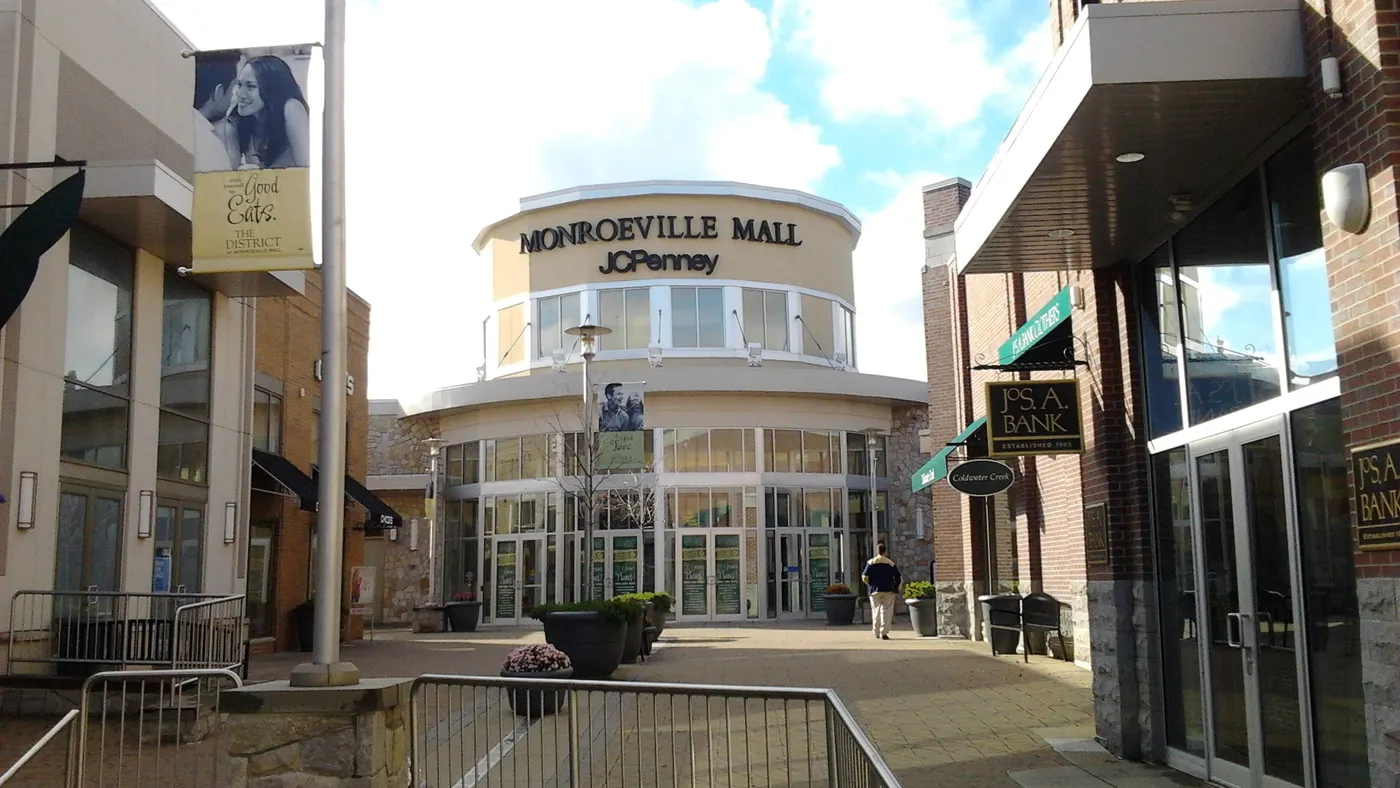
Investors, developers and retailers are taking a fresh look at B malls, especially those in areas with little competition. One thing that hasn’t changed much about these lower-traffic shopping centers — along with their flooring, layout and signage — is the challenge of running a store in them.
“Get the hell out of there. Leave. Being in a B mall is not an optimal situation, just to begin with,” Lee Peterson, executive vice president of thought leadership at WD Partners, said by phone. “But if you're going to be there, there are certain thought processes that go into the A-plus stores that still need to go into those B stores.”
The idea is to maintain the brand's vibe and meet customer expectations on a smaller scale and usually with fewer resources.
Every store is (not) a flagship
Above all, Peterson said, every location — whether in the Flatiron District in Manhattan or a B mall in Lincoln, Nebraska — needs top-notch employees. This requires incentive, and it’s not a coincidence that the most beloved retailers, including Wegmans, Costco and Ikea, pay the best, he said.
“The importance of associates in any store, and especially a store in a mall that could be struggling a little bit, is paramount,” he said. “It's No. 1. When a customer does go there — which they don't do as much as they used to — and there's an associate in there that really knows what they're talking about, who is friendly, who remembers your name, who’ll do anything for you, those types of things create a loyalty that is often missing from a B mall.”
Hiring, like merchandising, should be localized and personal, according to Peterson.
“If associates is the No. 1 reason people go back to stores, then there's a lot of work to be done in B stores,” he said. “And I can almost guarantee you that the way headquarters and now AI is analyzing resumes is a huge mistake.”
Merchandising the store requires thought, too, in order to maximize the sales potential and maintain the brand’s vibe.
“If a retailer puts certain flagship items in flagship stores and not in your B store, what do you think is going to happen?” Peterson said. “That B store is going to fail.”
Still, while starting with a flagship mentality can be effective, a B mall store is likely to do better with less space and a smaller assortment, according to Peterson and Jeff Sward, founding partner at Merchandising Metrics. In some cases, it may be wise to shrink the space and assortment from what it has been, they said.
“Any retailer in a B mall wants to think in terms of the best possible brand storytelling, without succumbing to the exuberance of thinking it's an A store,” Sward said by video conference. “You've just got to make the math work in terms of the investment — in fixturing and visual merchandising and inventory — and buy accordingly so that it sells through and you make a buck at the end of the year. It’s about telling the brand story as robustly as possible without tipping over into over-sorting and over-buying.”
This is a balancing act that requires not just data but also occasional store visits, he said.
“There are no secrets there,” he said. “The retailer’s got to analyze the data through the eyes of the customer. That's why store visits are so critically important for everybody.”
The idiosyncracy of location
Where a store resides in a B mall also matters, experts say.
Considerations for anchors and in-line differ, for example, according to Bryn Feller, managing director and senior vice president at commercial real estate firm Northmarq.
Box stores that have taken over space once filled by department store anchors thrive “with a low-capex, value-oriented model that fits the trade area and embraces alternative access points,” she said by email, citing Burlington, Ross and T.J. Maxx/HomeGoods as examples.
“The tenants who right-size their economics, embrace the community, and collaborate with ownership are the ones who carve out sustainable success.”
Bryn Feller
Managing Director & SVP, Northmarq
“They’ve been able to step into carved-up department space, keep the build simple, and connect to exterior entrances,” she said. “Fitness users like Planet Fitness and entertainment concepts like Round1 or Cinemark have also been very successful at stabilizing B malls because they create a dependable traffic engine.”
Meanwhile, successful in-line stores “are those that build a habit loop with the customer, giving them reasons to come back regularly beyond passive walk-by traffic,” according to Feller.
Both need a good partnership with the landlord, she said.
“Successful tenants in B malls are the ones that proactively engage with mall management, share traffic and sales data, and adjust to where the center is going,” she said. “That’s often on the store manager and district leadership, it can’t all be done from the corporate office. In B malls especially, being plugged into what the landlord is trying to reposition the property into is critical.”
Those stores also remain dependent on anchors no matter how the mall is rated, according to Sward. In one mall with a long-empty Sears store, nearby specialty retailers saw traffic and sales pick up meaningfully after Primark took over the space, he said.
“If you're in an A mall, tucked in the most remote corner where you don't get much foot traffic, it might be a B store, just because of the location in the mall,” Sward said. “That's the idiosyncrasy of location.”
Retailers must appreciate such variables and remain realistic about any shopping centers’ prospects, but particularly at B malls.
“The tenants who right-size their economics, embrace the community, and collaborate with ownership are the ones who carve out sustainable success,” Feller said. “At the end of the day, retailers succeed in B malls by leaning into what the mall is, not what they wish it were.”
Article top image credit: Daphne Howland/Retail Dive
Walmart grows automation usage throughout supply chain
More than half of the retailer’s e-commerce fulfillment center volume now moves through automated systems, lowering shipping costs.
By: Max Garland• Published Nov. 24, 2025
Walmart's U.S. business is seeing improved operational efficiency from automation investments in its supply chain, the company announced.
More than 60% of Walmart's U.S. stores receive a portion of their freight from automated distribution centers, and over half of its e-commerce fulfillment center volume is moving through automated systems, per the release. Walmart said the increased use of automation is driving improved productivity on a per-unit basis.
"That translates into lower shipping costs," CFO John David Rainey said of automated fulfillment on an earnings call. "Our shipping costs have been down consistently for many quarters in the 30% range. This was another quarter where we saw double-digit improvements, and that really helps our e-commerce economics, but also helps the overall SG&A of the company."
Although Walmart has been making progress in its push to implement automation, the retail giant is still in the early innings, David Guggina, Walmart U.S.’ chief e-commerce officer, said during a Goldman Sachs conference. It's deploying automated technology within its perishable and nonperishable distribution networks, but the company is furthest along in the implementation process at its fulfillment centers, where products are shipped to customers, according to Guggina.
"They're about twice as productive as a legacy fulfillment center," he said, referring to the newer automated fulfillment centers. "And they're becoming more and more capable over time as we continue to bring more and more robotics into the different processes."
Walmart has launched several "next-generation" fulfillment centers since 2022 featuring automated technology, with another slated to open next year. The company said in its latest annual financial report that it operates 29 dedicated e-commerce fulfillment facilities.
Why Academy Sports & Outdoors is going against the grain with store openings
Executives touted the retailer’s “outside-in” strategy for new locations, which prioritizes markets that are further away from big cities — and big competitors.
By: Cara Salpini• Published April 27, 2026
Academy Sports and Outdoors has big competitors — Dick’s Sporting Goods made more than double what Academy did last year — but its solution for growth is going small.
Academy CEO Steve Lawrence said on an analyst call that the sporting goods retailer plans to open 125 stores over the next five years (an increase of almost 40%), but it’s not prioritizing locations close to major cities. Rather, the retailer is pursuing an “outside-in” strategy that focuses on opening stores primarily in exurbs and satellite markets before attempting to move inward.
Approximately 40% of those stores will open in legacy markets, 40% will open in states Academy has operated in for at least five years and 20% will open in new markets. The strategy puts Academy closer to where its customers actually are, according to Lawrence. It also pushes the retailer out of the densely populated areas where Dick’s often opens stores.
Three examples of this new store strategy — in Searcy, Arkansas; Zanesville, Ohio; and Palestine, Texas — are roughly 20 to 50 miles from the nearest Dick’s. Others are closer, including a planned location in Celina, Texas.
But all, according to Academy, are focused on capturing the “Always Game Family,” who plays sports, fishes, hunts and focuses on value.
“We think by having this outside-in strategy, we're going to be able to build brand awareness in these new markets and then push our way into the outer suburbs over time,” Lawrence said.
It’s a sound strategy for a retailer like Academy, according to Matt Powell, senior adviser with BCE Consulting.
“Smaller markets are many and most are underserved,” he said in emailed comments, noting that Hibbett pursued a similar strategy at the beginning. “Hibbett’s early business model was to be the only sneaker store in small markets.”
Likewise, Lawrence said at the company’s investor day that he believes Academy is “the best sports and outdoor retailer in our geography.” In some smaller markets, one of the only competitors offering athletic and outdoors goods is Walmart, Lawrence said, leaving a gap for Academy to fill.
“The population is not big enough to support a full-line just sporting goods-only store or a full-line only outdoor store,” Lawrence said. “The fact that we have both sides of the box and carry other things like outdoor puts us in kind of a unique position.”
Also in service of those customers is a broader assortment of goods, both in terms of category and quality. Academy Chief Merchandising Officer Matt McCabe told Retail Dive that the retailer’s assortment expansions are intended to support how customers live their lives; that means providing organizational solutions for sports gear, portable power products for activities like camping and even pet goods.
“It's never going to be a big business for us,” McCabe said of pets, “but it's something that we know that we can have in the store as kind of an accessory … to help our customers pick something up easier and just allow them to go to fewer stores.”
Academy is also increasing the number of high-quality products it sells to avoid losing customers as they grow more proficient in their chosen activity. In the past, the retailer has sold a lot of opening price point items, which it dubs a “good” level. But when it came to “better” and “best” levels of product, it was lacking.
“We were a great place to get your kids their first gear for T-ball … when they decided six months later they hated T-ball and they wanted to play soccer, you could come back in and not break the bank again and move them on to soccer,” McCabe said. “But what we found was — if they stuck with baseball — when they got to about eighth grade or so we were graduating them to other places to get their gear.”
The retailer has worked for several years to improve its “better” and “best” assortments, so that shoppers can stay with Academy even as they become more proficient in their chosen activity. That includes not just sports, but also outdoor pursuits like fishing or even casual activities like barbecuing.
“That's allowed us to expand the customers that we cast a net to and carry them on their entire journey, from when they get started through when they're an expert,” McCabe said. “And along the way, that's allowed us to attract a more affluent customer into our stores as well that maybe wouldn't have thought of us for that in the past, but now comes in and finds that merch and appreciates some of the other value we have in the store too.”
Indeed, Chief Financial Officer Carl Ford said customers with a median household income of $100,000 or more are now Academy’s fastest-growing demographic, which helps to balance out the price pressures facing lower-income households. Still, about half of the retailer’s merchandise mix is at the “good” level, to ensure that Academy doesn’t leave behind its core customer base, McCabe noted.
“Our goal here is not to move away from our existing customer base to attract newer customers. That's like the quintessential mistake in retail,” Lawrence said. “We want to expand our reach.”
Article top image credit: Courtesy of Academy Sports and Outdoors
Retailers could close more than 40K stores in the next 5 years
Tariffs and immigration policies are weighing on the industry and could drive even more closures, UBS analysts found.
By: Daphne Howland• Published April 24, 2026
Growth in e-commerce, aided by AI, is poised to lead retailers to close more than 40,000 stores over the next five years, UBS analysts led by Michael Lasser said in a research note. Department stores and specialty retailers are most at risk, while off-pricers will keep expanding, they said.
Current U.S. policies — including tariffs and net-negative immigration — could drive further closures, too, if they remain in place, the analysts found.
Speed, location, assortment, experience and price are increasingly important differentiators, and consumers are prioritizing experiences over goods. Large chains like Walmart, Costco and Target stand to benefit, as many small and independent retailers struggle to withstand these trends, UBS said.
From the third quarter 2024 to the same period in 2025, there were 5,000 fewer stores in the U.S., UBS said, citing Bureau of Labor Statistics data, a shift from recent years when the country saw more openings than closures.
As of that point, there were fewer than three stores for every 1,000 people in the U.S., down about 12% from 2003. If the country’s population falls — which hasn’t happened yet but could given flat birth rates and today’s immigration policies — the decline could drive nearly 70,000 store closures, per UBS.
“While the sector is closer to equilibrium today than it was several years ago, it has not yet reached stasis,” the analysts said. “This trend should reward the larger, better positioned retailers and penalize the smaller, marginal retailers.”
UBS analysts also see relentless growth in e-commerce as a major reason for closures, though not all observers see this as clear-cut.
Online sales now account for more than 20% of total U.S. retail sales, up from just over 10% in 2019, and the UBS team expects e-commerce to reach 27% by 2030. However, analysts from Colliers and elsewhere believe the impact has stabilized.
It’s possible that retailers haven’t adequately positioned their stores to be worth the trip. Research from WD Partners has consistently found that consumers frequent stores where sensory details and customer service outweigh the convenience of online shopping.
Placer.ai researchers recently found that many retailers are under-leveraging their stores despite shoppers’ preference for physical locations for a variety of reasons — including to check out products in person, enjoy the shopping experience and discover merchandise.
Both Placer.ai and UBS found that AI will help out physical retail as well as e-commerce, though UBS said the “combination of eCommerce and AI-enabled shopping has been steadily siphoning sales away from physical stores, reducing the revenue needed to sustain large store fleets.”
“Physical locations remain critical components of the omni-channel ecosystem, particularly as fulfillment hubs for delivery and pickup,” they said. “Still, we continue to believe the U.S. retail sector has excess store capacity.”
The pressure on consumers from higher prices is also a factor, with tariffs alone driving store closures significantly if they stay in place until 2030, UBS said.
“Higher tariff levels increase the likelihood that a greater share of these costs is ultimately passed through to consumers,” the analysts said, noting that a third of U.S. households make less than $50,000 annually.
UBS estimates that retail sales could drop about 0.5% on an annual basis as retailers absorb about $100 billion of increased costs while lower-income households cut down on spending.
Article top image credit: Daphne Howland/Retail Dive
Primark is retail’s ‘best kept secret.’ It’s ready to move beyond that.
The fashion retailer has a new CEO, is expanding in the U.S. and opened a flagship in New York City. It just wants you to know it exists.
By: Kaarin Moore• Published March 9, 2026
Primark is making moves.
The fashion company recently appointed a CEO, Eoin Tonge, who had been acting as its interim.
The Dublin-founded retailer also recently celebrated its 10-year anniversary in the U.S., has been expanding its nationwide presence with new locations in Texas, Illinois, Tennessee and Florida, and has opened a flagship store in New York City’s Herald Square.
Rene Federico, Primark’s U.S. head of marketing, is just ready for more people in this country to know about the company.
“We talk about ourselves as the best kept secret in amazing retail,” she said in an interview with Retail Dive. “We don’t want to be such a kept secret anymore.”
As consumers search for value even beyond low prices, Primark may be expanding its physical presence at the right moment.
“I think in the U.S., consumers had to compromise a lot, and we’re just unwilling to compromise,” Federico said of the retailer. “We want to give a great store experience, give people great products, great value — let them feel stylish and trendy … and do it in an accessible, affordable way.”
Primark’s (very) recent history
About a year ago, Primark was in a tough spot.
Then-CEO Paul Marchant resigned from the company after an independent investigation was conducted regarding an allegation toward the executive.
“Paul Marchant acknowledged his error of judgment and accepts that his actions fell below the standards expected by the company,” the company said in a statement. “He has now made an apology to the individual concerned and to his Primark colleagues.”
Primark CEO Eoin Tonge
Image courtesy of Primark
At the time of his exit, parent company Associated British Foods announced Tonge as the interim chief. During his time as interim CEO, Tonge improved Primark’s product offer, sharpened its value perception and enhanced digital and marketing capabilities, according to the company. Now Tonge, who was once the chief financial officer and chief strategy officer at Marks and Spencer Group, will be at the helm, leading the retailer into a new era.
He will be joined by Filip Ekvall, who comes to Primark with nearly 20 years of experience from H&M Group, as chief commercial officer, a newly created role. In the position, Ekvall will bring together Primark’s product, retail, digital and customer functions across channels and markets.
While at H&M, Ekvall held leadership positions in Europe, South Korea and the U.K., eventually acting as the global director of sales overseeing around 4,000 stores. That experience may come in handy as Primark looks to expand its international presence.
The retailer has had to grow into a business of global scale, with differing needs across markets, George Weston, chief executive of Associated British Foods, said in a statement. Tonge was named to the top spot after a comprehensive search process, and “the changes he is implementing are at an early stage, but are already having a tangible benefit in a challenging environment.”
Holding steady: The (current) state of apparel
Even in spite of tariffs and inflation, the apparel market has been holding steady. The category rose 4% in January — the latest point of data for the category from the U.S. Commerce Department. Large specialty apparel retailers, who have been clear in earnings calls that tariffs have impacted margins, have been chugging along; Gap Inc. reported net sales increased 2% year over year in its latest quarter, Abercrombie & Fitch Co. was up 5% in Q4 and American Eagle Outfitters was up 10%, a record for the retailer.
Primark itself reported “modest sales growth” in its latest quarter, with overall sales increases driven by its international store expansion, according to a January note by Louise Deglise-Favre, lead apparel analyst at GlobalData.
Constant currency sales rose 12% in the U.S., per GlobalData, even though trading conditions remain volatile due to high tariffs and political tensions.
“Consumers resonated with Primark’s initiatives to strengthen its value proposition through improved product, stronger communication regarding prices and growing digital engagement,” Deglise-Favre said.
Primark is aware that the deciding factor for purchasing decisions for many consumers isn’t solely about price. Discerning shoppers want something fashionable, at the correct price, with great quality, per Primark’s Federico.
“Savvy shopping has become the new cool,” Federico said. “I think that consumers have found it’s kind of a flex.”
A (quickly) evolving Primark
Though it won’t be the first store in the state, the opening of a Herald Square flagship store in New York City is set to kick off a new chapter with the Primark brand in the U.S. The 54,000-square-foot space features apparel, homewares and beauty across four floors.
“Opening a location in the epicenter of U.S. fashion is going to be an exciting milestone for Primark U.S.,” Primark U.S. President Kevin Tulip said in a statement at the time of the flagship’s announcement. “When the opportunity arose to bring Primark to Herald Square in Manhattan, a store with exceptionally high foot traffic, national influence, and perfectly located to attract customers who already know us from other Primark stores in the boroughs and surrounding areas, we knew it was the perfect fit.”
The location is “hugely important for us as a brand,” Federico said. “It’s a signal to the marketplace, to the industry, and to consumers and audiences that we matter in the conversation around style and in retail in general — that we’re a player in those forums.”
“It’s not to discount anything we’ve done up until now … but when you put those three things together — New York City, a Manhattan location on 34th Street, and Herald Square, in a space of that size that has the ability to fully encompass our brand experience — it’s going to be something that is a tool for us in more than just serving customers. It will be a marketing tool, it will really serve to energize the brand.”
But, Primark’s ambition isn’t limited to a Manhattan location. The company has released a flurry of announcements over the past few months.
At the start of the year, it launched its largest-ever activewear range across women’s, men’s and kidswear, which included an expansion into lifestyle, accessories and beauty for the first time.
Primark recently launched its largest activewear collection.
Image courtesy of Primark
The fashion company has also been stepping up its commitment to sustainability; nearly three-quarters of its clothes are currently made from recycled or more sustainably sourced fibers, up from 66% last year. The retailer is also decreasing its greenhouse gas emissions; embedding traceability into its supply chain; and integrating circular design elements into the design and manufacturing of its products.
At the top of the year, the retailer also debuted a youth-focused label, The Primark Scene, designed for young people who are underserved by both kids and adult apparel.
“Let’s face it: Primark has little in common with ABF’s food empire of grocery and bakery brands,” James Watson, U.K. Partner at Argon & Co., wrote in a note at the start of the year.
“Primark’s revenue base is heavily concentrated in the UK, where growth has been largely flat. What’s more, fast fashion is facing a reckoning – grappling with online challengers like Shein and Temu undercutting on prices, while established players struggle with margin erosion and supply chain complexity,” Watson said. “Primark will need to scale international operations and build resilient supply chains via rapid and strategic investment.”
The retailer is in international expansion mode, beyond what it is doing in the U.S. In January, Primark announced plans to open five locations in the Middle East — three in the United Arab Emirates' Dubai in March, April and May, followed by stores in Bahrain and Qatar, after opening a store in Kuwait last fall.
“We’ve taken a very steady and detailed approach to our market expansion,” Federico said. “There’s a general excitement — authentic, genuine excitement — anytime we enter a market.”
Article top image credit: Kaarin Moore/Retail Dive
Target launches new kind of supply chain facility
The Houston Receive Center gives the retailer more inventory-holding capacity before sending products to downstream locations.
The new location, called a Receive Center, is the first of its kind for the retailer and will serve six of Target's regional distribution centers in addition to a flow center. The Houston facility, which employs 185 people, receives and holds products from Target's vendors until inventory replenishment is needed for the downstream facilities.
"Positioned between our Import Warehouses in Georgia and Washington, it complements those coastal facilities by adding regionally based capacity — helping us get products to the right place faster and at a lower cost thanks to shorter distances traveled," Target said in the release.
The new facility type enables the retailer to secure popular items at an earlier time and hold off on distributing inventory until the moment it's needed, preventing distribution centers and store backrooms from getting overcrowded. Items that are seasonal, bulky, tough to forecast or feature long lead times will especially benefit from the facility, according to the retailer.
"Really the intent of that is so that stores can stay in stock, that they can be ready for guests, whether that they're shopping at their local store in Houston, or if they're using online fulfillment methods, or drive-up, next-day delivery, anything like that," Jordan Kirkland, the Houston Receive Center’s senior site director, said in an interview.
The facility is 1.2 million square feet, which translates into roughly 3 million to 3.5 million cubic feet of product storage, according to Kirkland. When the site's inventory needs to move to distribution centers, Target will either load full pallets directly into outbound trailers or run products through a sortation system before they are brought into trailers.
"It's actually two different independent line sorters, and so if one of them goes down or needs maintenance, we can continue to operate with the other ones," Kirkland said. "There's a lot of redundancy built in as well.”
Retail operations have experienced significant changes in recent years, driven by the pandemic's impact on consumer behavior and operational needs. As retailers adapt to new market pressures, innovative strategies are emerging to address challenges such as shrinkage, checkout technology, and merchandising in the evolving landscape.
included in this trendline
Ross accelerates brick-and-mortar expansion with nearly 50 new locations
What Mattress Firm gained from contactless delivery
Amazon opens logistics network to all businesses
Our Trendlines go deep on the biggest trends. These special reports, produced by our team of award-winning journalists, help business leaders understand how their industries are changing.